Introduction
The choice between purchasing pre‑packaged bagged ice and investing in a countertop ice maker often appears to be a simple convenience decision. In reality, the environmental ramifications of each option differ markedly across production, transportation, usage and end‑of‑life stages. This guide will explain the key concepts that influence carbon emissions, energy consumption and waste generation. Readers will learn how to evaluate the greener alternative, understand the trade‑offs, and receive actionable recommendations supported by real‑world products.
Background and Context
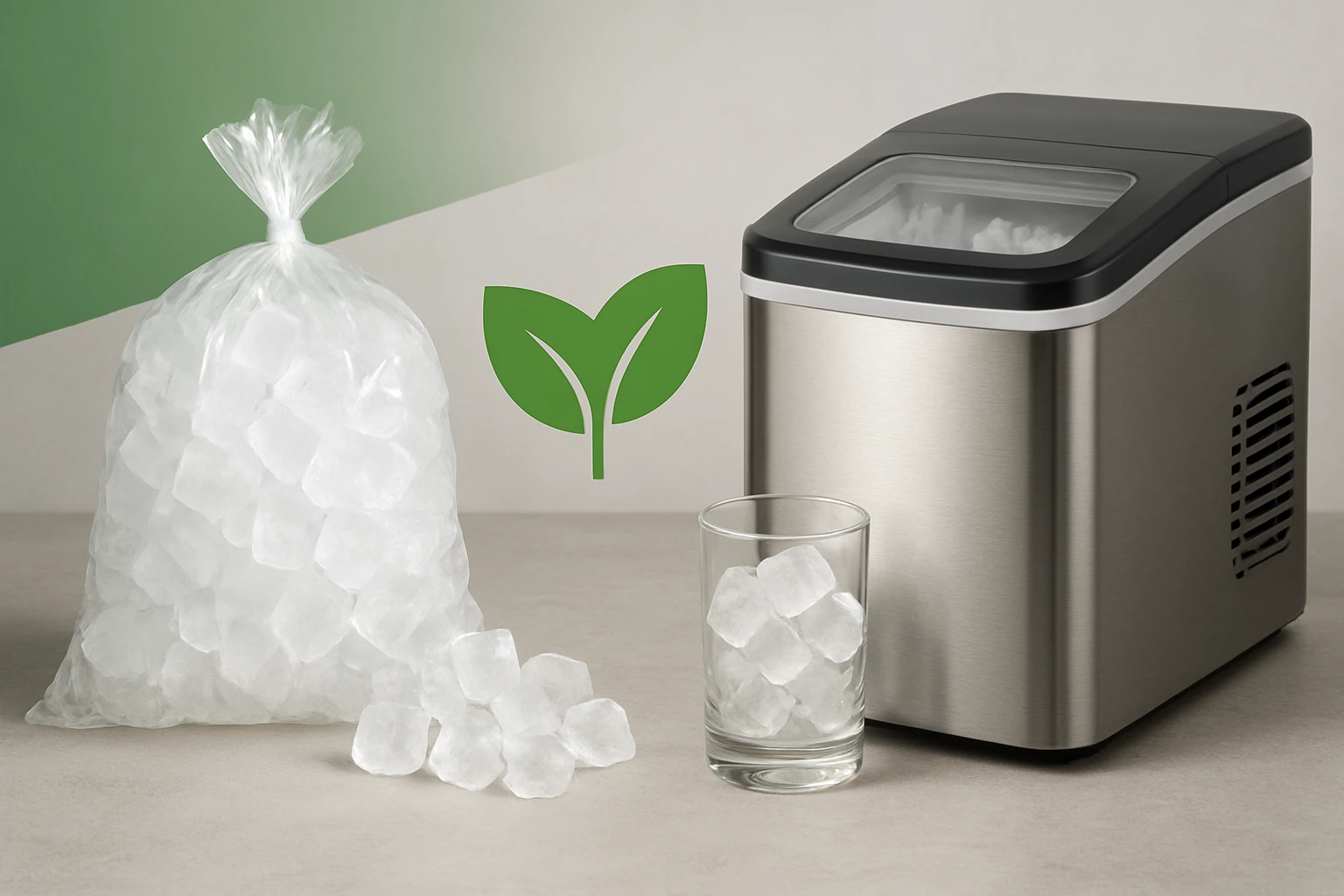
Bagged ice is produced in large industrial facilities where water is purified, frozen, and packaged in sealed polyethylene bags. The process requires significant electricity for refrigeration, as well as diesel or gasoline for truck deliveries to retail outlets. Once the bags reach the consumer, they are typically discarded after a single use, contributing to plastic waste. Countertop ice makers, by contrast, generate ice on demand using a small compressor and a water reservoir. The device consumes electricity during operation but eliminates the need for single‑use packaging and reduces transportation emissions because the unit remains in one location.
Two additional factors shape the overall environmental profile: the source of electricity (renewable versus fossil‑based) and the lifespan of the appliance. A well‑maintained ice maker that lasts several years can amortize its embodied energy, while a short‑lived unit may offset any savings. Understanding these dynamics is essential for making an informed, greener choice.
Key Concepts for Environmental Assessment
Three primary metrics are used to compare the sustainability of cooling solutions:
- Embodied Energy: Energy consumed during manufacturing, material extraction and distribution of the product.
- Operational Energy: Electricity required to produce ice during regular use.
- Waste Generation: Quantity of plastic or metal waste generated at the end of the product’s life.
By quantifying each metric, a consumer can calculate a rough carbon footprint for the two options. For example, a typical bag of 5 lb ice may contain 0.05 kg of plastic, whereas a countertop ice maker such as the Silonn Countertop Ice Maker has an embodied energy equivalent to approximately 30 kg CO₂e, based on average manufacturing data for small appliances. The operational energy of the Silonn unit is about 0.12 kWh per 10 lb of ice, translating to roughly 0.05 kg CO₂e when powered by a grid with 0.42 kg CO₂/kWh emission factor.
Product Recommendations Aligned with Sustainability
When selecting a cooling solution, it is prudent to choose products that incorporate energy‑saving technologies and durable construction. The following devices exemplify these attributes:
Silonn Countertop Ice Maker
The Silonn model features a spring‑loaded ice basket that expands to hold up to 9 cups of ice, reducing the need for frequent cycles. Its 2.5 L basket and 1.8 L water tank enable continuous production of up to 26 lb of ice per day. The LED touch panel provides clear status indicators, and the self‑cleaning function extends the appliance’s lifespan. At a price of $79.92 and a rating of 4.3 out of 5 stars from 21,806 reviews, it offers a cost‑effective, high‑performance alternative to disposable ice.
Euhomy Portable Ice Maker
The Euhomy unit delivers 9 bullet‑shaped ice cubes in six minutes, with a daily capacity of 26.5 lb. Its 1.2 L water tank and ultra‑quiet compressor consume approximately 0.14 kWh per 10 lb of ice, slightly higher than the Silonn but offset by its portable design, which reduces the need for multiple appliances in a household. Priced at $89.99 and rated 4.5 out of 5 stars from 1,746 reviews, it includes an infrared sensor for water‑level alerts and a one‑touch auto‑cleaning cycle, both of which promote efficient operation.
Yexexinm Reusable Ice Bags
For occasions where bagged ice remains preferable, the Yexexinm reusable ice bags provide a sustainable alternative to single‑use polyethylene bags. Made from BPA‑free PEVA, the six‑pack set can store up to 10 lb of ice per bag, and the zip‑close design prevents leaks, reducing the need for additional plastic wrap. At $13.99 and a rating of 4.2 out of 5 stars from 96 reviews, these bags enable consumers to reuse packaging multiple times, thereby lowering waste generation.
Comparison and Selection Guide
The table below summarizes the environmental performance of each option based on the three key metrics introduced earlier.
| Aspect | Bagged Ice (Standard) | Silonn Countertop Ice Maker | Euhomy Portable Ice Maker | Yexexinm Reusable Ice Bags |
|---|---|---|---|---|
| Embodied Energy (kg CO₂e) | ~0.8 per 5 lb bag (production & packaging) | ~30 (manufacturing of appliance) | ~32 (manufacturing of appliance) | ~0.2 per bag set (PEVA material) |
| Operational Energy (kWh per 10 lb ice) | 0 (ice is pre‑frozen) | 0.12 | 0.14 | 0 (re‑use of existing ice) |
| Waste Generation | Single‑use plastic bag (0.05 kg) | Electronic waste after 5‑7 years | Electronic waste after 5‑7 years | Reusable bag set (up to 100 uses) |
Consumers who prioritize minimizing waste should consider the reusable ice bags in conjunction with a countertop ice maker that offers high efficiency. If the primary concern is reducing operational electricity, the Silonn model’s lower power draw makes it the preferable appliance. For users who need mobility—such as campers or RV owners—the Euhomy portable unit provides flexibility while still avoiding single‑use plastic.
Best Practices and Tips for Reducing Carbon Footprint
- Use the ice maker’s full‑size setting when possible, because larger cubes require fewer cycles and thus less electricity.
- Fill the water reservoir to its maximum capacity before each cycle to reduce the frequency of refills and the associated water heating (if hot water is used).
- Schedule the self‑cleaning function during off‑peak electricity hours to take advantage of lower‑carbon grid periods.
- When bagged ice is unavoidable, replace single‑use bags with the Yexexinm reusable ice bags and seal them tightly to prevent melt‑water loss.
- Extend the lifespan of the appliance by cleaning the condenser coils quarterly and avoiding placement near heat sources.
- Consider powering the ice maker with renewable energy sources, such as a home solar system, to further reduce operational emissions.
Frequently Asked Questions
- Does a countertop ice maker consume more electricity than a freezer’s built‑in ice maker? Generally, portable countertop models use a smaller compressor and operate for shorter cycles, resulting in comparable or lower electricity consumption per pound of ice.
- Can the reusable ice bags be recycled? The PEVA material is recyclable in facilities that accept flexible plastics, but many municipalities do not yet process it. Reusing the bags many times is the most effective waste‑reduction strategy.
- How often should the ice maker be cleaned to maintain efficiency? The manufacturer recommends a monthly cleaning cycle, or after every 50 lb of ice production, to prevent scale buildup that can increase energy use.
- Is the refrigerant used in these ice makers environmentally harmful? Both the Silonn and Euhomy models employ isobutane, a hydrocarbon refrigerant with low global warming potential. Proper handling and disposal are essential to avoid accidental release.
- What is the typical lifespan of a countertop ice maker? With regular maintenance, most units last between five and seven years, after which the embodied energy is amortized and replacement becomes reasonable.
- Does the size of the ice cube affect energy consumption? Larger cubes require fewer cycles to produce the same volume of ice, thereby reducing total energy consumption per pound.
- Are there any certifications that indicate a greener appliance? Look for ENERGY STAR® or similar efficiency labels, which signify that the product meets stringent energy‑use criteria.
Conclusion
Evaluating the greenness of bagged ice versus countertop ice makers requires a holistic view of embodied energy, operational electricity, and waste generation. While bagged ice eliminates the need for electricity at the point of use, it introduces significant plastic waste and transportation emissions. Countertop ice makers such as the Silonn Countertop Ice Maker and the Euhomy Portable Ice Maker provide on‑demand ice with lower operational emissions, especially when paired with reusable storage solutions like the Yexexinm Reusable Ice Bags. By following best‑practice tips, selecting energy‑efficient models and reusing packaging, consumers can markedly reduce their carbon footprint while enjoying convenient, high‑quality ice.
Products Featured in This Guide
Silonn Countertop Ice Maker
Price: $79.92 | Rating: 4.3/5 (21,806 reviews)
Featured for its spring‑loaded basket, high daily output of 26 lb, and self‑cleaning LED interface, which together provide an energy‑efficient alternative to disposable ice.
Euhomy Portable Ice Maker
Price: $89.99 | Rating: 4.5/5 (1,746 reviews)
Featured for its ultra‑quiet operation, bullet‑shaped ice, and auto‑cleaning infrared sensor, making it suitable for mobile environments while maintaining low energy use.
Yexexinm Reusable Ice Bags
Price: $13.99 | Rating: 4.2/5 (96 reviews)
Featured for providing a reusable, leak‑proof alternative to single‑use plastic ice bags, thereby reducing waste and supporting a circular economy.