Introduction
This guide examines the energy usage of countertop ice makers, explains how to estimate power consumption, and provides practical strategies to reduce operating costs. Readers will gain a clear understanding of the factors that influence electricity draw, learn how to compare models, and discover actionable tips for energy‑efficient operation. The article also highlights three popular devices that exemplify different performance and efficiency levels.
Background and Context
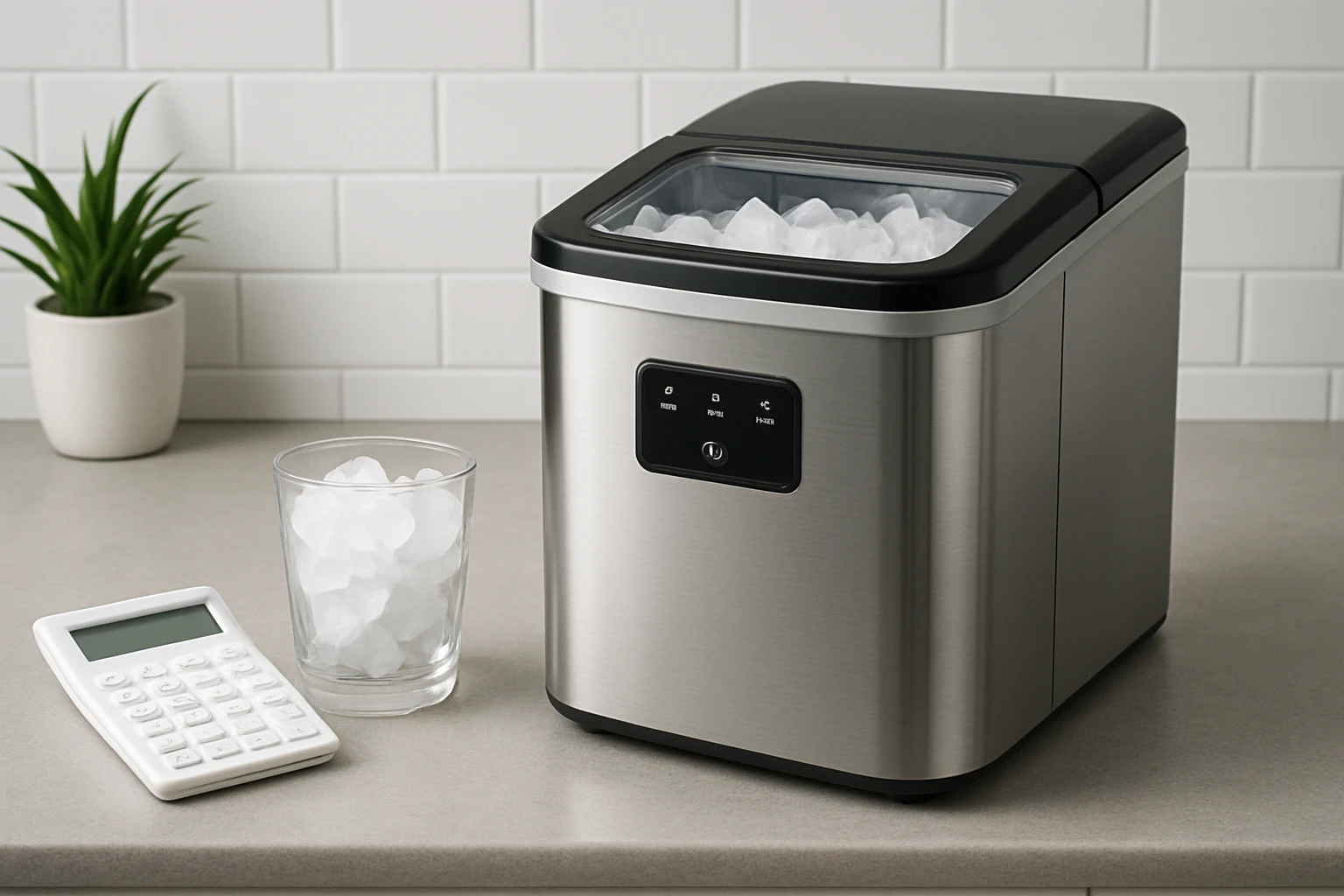
Countertop ice makers are compact refrigeration units that freeze water into ice cubes or nuggets using a built‑in compressor, evaporator, and water pump. Unlike built‑in refrigerator ice makers, these appliances run continuously when active, drawing electricity each cycle. Understanding the underlying technology—compressor type, insulation, and control electronics—helps users anticipate energy demand.
Most units are rated in watts (W) for peak power and kilowatt‑hours (kWh) for daily or monthly consumption. Utilities charge per kWh, so converting wattage to cost is straightforward: multiply kWh by the local rate (often $0.12‑$0.20 per kWh in the United States). Seasonal usage patterns also matter; higher ambient temperatures increase compressor workload.
Energy‑efficient operation not only lowers bills but also reduces environmental impact. Selecting a model with optimized components and employing best‑practice habits can yield measurable savings over the lifetime of the appliance.
Key Concepts in Energy Consumption
Three primary concepts determine how much electricity a countertop ice maker consumes:
- Compressor Power Rating – The motor that compresses refrigerant typically ranges from 70 W to 150 W during active cooling. Peak power occurs when the unit first starts a freezing cycle.
- Duty Cycle – The proportion of time the compressor runs versus rests. A unit that produces ice quickly will have a shorter duty cycle, reducing total energy use.
- Thermal Insulation – Better insulated cabinets retain cold longer, decreasing the frequency of compressor activation.
Manufacturers often advertise "quiet" operation measured in decibels (dB). While noise level does not directly indicate energy usage, quieter models frequently employ variable‑speed compressors that adjust power based on demand, contributing to efficiency.
Measuring Power Use
Consumers can measure real‑time consumption with a plug‑in power meter. The device displays instantaneous watts and accumulates kWh over time. For a typical 24‑hour period, a 100 W compressor running 30 % of the time consumes 0.72 kWh (100 W × 0.30 × 24 h / 1000). At $0.15 per kWh, the cost is roughly $0.11 per day, or $3.30 per month.
When manufacturers provide an estimated daily ice output, users can calculate efficiency in pounds of ice per kWh. For example, a machine that produces 26 lb of ice per day while using 0.8 kWh has an efficiency of 32.5 lb/kWh.
Below are three models that illustrate varying efficiency profiles.
Product Recommendations
The first recommendation is the DUMOS Portable Ice Maker with Handle. This unit creates nine bullet‑shaped cubes in six minutes, holds up to 26.5 lb of ice per day, and operates at a noise level below 40 dB. Its 1.5 L water tank and self‑cleaning function simplify maintenance, while the built‑in handle enhances portability for RVs or camping.
The second recommendation is the Silonn Countertop Ice Maker. It also produces nine bullet cubes in six minutes, but features a larger 2 L water reservoir and a quiet operation mode. The transparent lid and smart sensor stop production when the basket is full, preventing waste of electricity.The third recommendation is the Kismile Nugget Ice Maker. This appliance generates chewable nugget ice, a popular choice for cocktails and smoothies. It produces 35 lb of ice per day, starts the first batch in seven minutes, and includes a one‑click self‑cleaning cycle. Although its noise level is slightly higher at 43 dB, the machine’s rapid output can offset energy use by reducing overall runtime.
Comparison and Selection Guide
| Feature | DUMOS Portable Ice Maker | Silonn Countertop Ice Maker | Kismile Nugget Ice Maker |
|---|---|---|---|
| Price | $49.88 | $79.97 | $154.99 |
| Daily Ice Capacity | 26.5 lb | 26 lb | 35 lb |
| Water Tank | 1.5 L | 2 L | 1.1 L |
| Ice Types | Bullet (small & large) | Bullet (small & large) | Nugget (crushed) |
| Noise Level | ≤40 dB | Quiet (unspecified) | 43 dB |
| Self‑Cleaning | Yes (5‑second press) | Yes (sensor‑based) | Yes (5‑second press) |
| Customer Rating | 4.2/5 (1,589 reviews) | 4.3/5 (21,205 reviews) | 4.3/5 (1,301 reviews) |
| Portability | Handle, 15.4 lb | Standard countertop | Compact, 12.8" × 11.22" × 8.86" |
When selecting a model, consider the following criteria:
- Ice Volume Needs – Estimate daily consumption. Users who require large quantities for parties may prefer the Kismile for its 35 lb capacity.
- Space Constraints – Measure countertop dimensions. The DUMOS model occupies 8.8" × 11.6" × 12.5", making it suitable for small kitchens.
- Noise Sensitivity – Choose a unit below 40 dB if the appliance will operate in open‑plan living areas.
- Budget – The DUMOS offers the most affordable entry point while still delivering reliable performance.
- Ice Preference – Bullet ice suits drinks that require rapid chilling, whereas nugget ice enhances texture for specialty beverages.
Best Practices & Energy‑Saving Tips
Even the most efficient ice maker can waste electricity if used improperly. The following recommendations help users minimise power draw:
- Fill the Water Tank to the Mark – Overfilling forces the compressor to work harder to freeze excess water, increasing consumption.
- Empty the Ice Basket Promptly – Accumulated ice acts as a thermal mass that can cause the unit to cycle longer than necessary.
- Use Ambient Water – Cold tap water reduces the temperature differential the compressor must overcome.
- Maintain Cleanliness – Scale buildup on the evaporator impairs heat exchange. Run the self‑cleaning cycle regularly, as demonstrated by all three recommended models.
- Place the Unit in a Cool Location – Avoid direct sunlight or proximity to ovens, which raise ambient temperature and force the compressor to run more frequently.
- Turn Off When Not in Use – Many units feature an auto‑shutdown after a period of inactivity; verify the setting and manually power down for extended absences.
- Monitor Energy with a Meter – A plug‑in power meter provides real‑time feedback, allowing users to identify abnormal spikes that may indicate a malfunction.
Implementing these habits can reduce daily electricity use by up to 20 %, translating into noticeable cost savings over a year.
Frequently Asked Questions
- 1. How much electricity does a typical countertop ice maker use per month?
- Assuming an average power draw of 100 W and a duty cycle of 30 %, the unit consumes roughly 0.72 kWh per day, or about 21.6 kWh per month. At a rate of $0.15 per kWh, the monthly cost is approximately $3.24.
- 2. Does the size of the ice cube affect energy consumption?
- Yes. Larger cubes require more water and longer freezing time, which can increase compressor runtime. Models offering both small and large settings, such as the DUMOS and Silonn, allow users to choose the most efficient option for their needs.
- 3. Can I run a countertop ice maker on a portable generator?
- Yes, provided the generator supplies sufficient wattage. Most units require a peak power of 150 W to start; a generator rated for at least 500 W offers a safe margin.
- 4. How often should I perform the self‑cleaning cycle?
- Manufacturers recommend a monthly cycle, especially in hard‑water areas. The Kismile and DUMOS models complete cleaning in under 15 minutes with a single button press.
- 5. Is there a noticeable difference in energy use between bullet ice and nugget ice?
- Nugget ice machines often have higher water flow rates and may run the compressor slightly longer to achieve the crushed texture, resulting in marginally higher energy consumption. However, the rapid production cycle of the Kismile offsets this by reducing total runtime.
- 6. What warranty coverage is typical for these appliances?
- Most brands provide a one‑year limited warranty covering manufacturing defects. Some retailers offer extended protection plans; always review the terms before purchase.
- 7. Does using distilled water improve efficiency?
- Distilled water contains fewer minerals, which reduces scaling on the evaporator and can improve heat transfer efficiency, potentially lowering energy usage over time.
Conclusion
Understanding the energy dynamics of countertop ice makers empowers consumers to make informed purchasing decisions and operate their appliances responsibly. By evaluating compressor power, duty cycle, and insulation, users can estimate running costs accurately. Selecting a model that aligns with daily ice volume, space, noise tolerance, and budget—such as the DUMOS Portable Ice Maker with Handle, Silonn Countertop Ice Maker, or Kismile Nugget Ice Maker—ensures both performance and cost‑effectiveness. Applying the outlined best practices further reduces electricity consumption, delivering savings and environmental benefits.
Products Featured in This Guide
DUMOS Portable Ice Maker with Handle
Price: $49.88
Rating: 4.2/5 (1,589 reviews)
Featured for its affordable price, rapid 6‑minute bullet ice production, low noise level, and convenient carry handle, making it ideal for small spaces and mobile use.
Silonn Countertop Ice Maker
Price: $79.97
Rating: 4.3/5 (21,205 reviews)
Featured for its larger water reservoir, quiet operation, smart sensor that stops production when the basket is full, and robust user feedback indicating reliability.
Kismile Nugget Ice Maker
Price: $154.99
Rating: 4.3/5 (1,301 reviews)
Featured for its high daily output of 35 lb of nugget ice, rapid first‑batch time, self‑cleaning feature, and premium appeal for cocktail enthusiasts and high‑volume users.