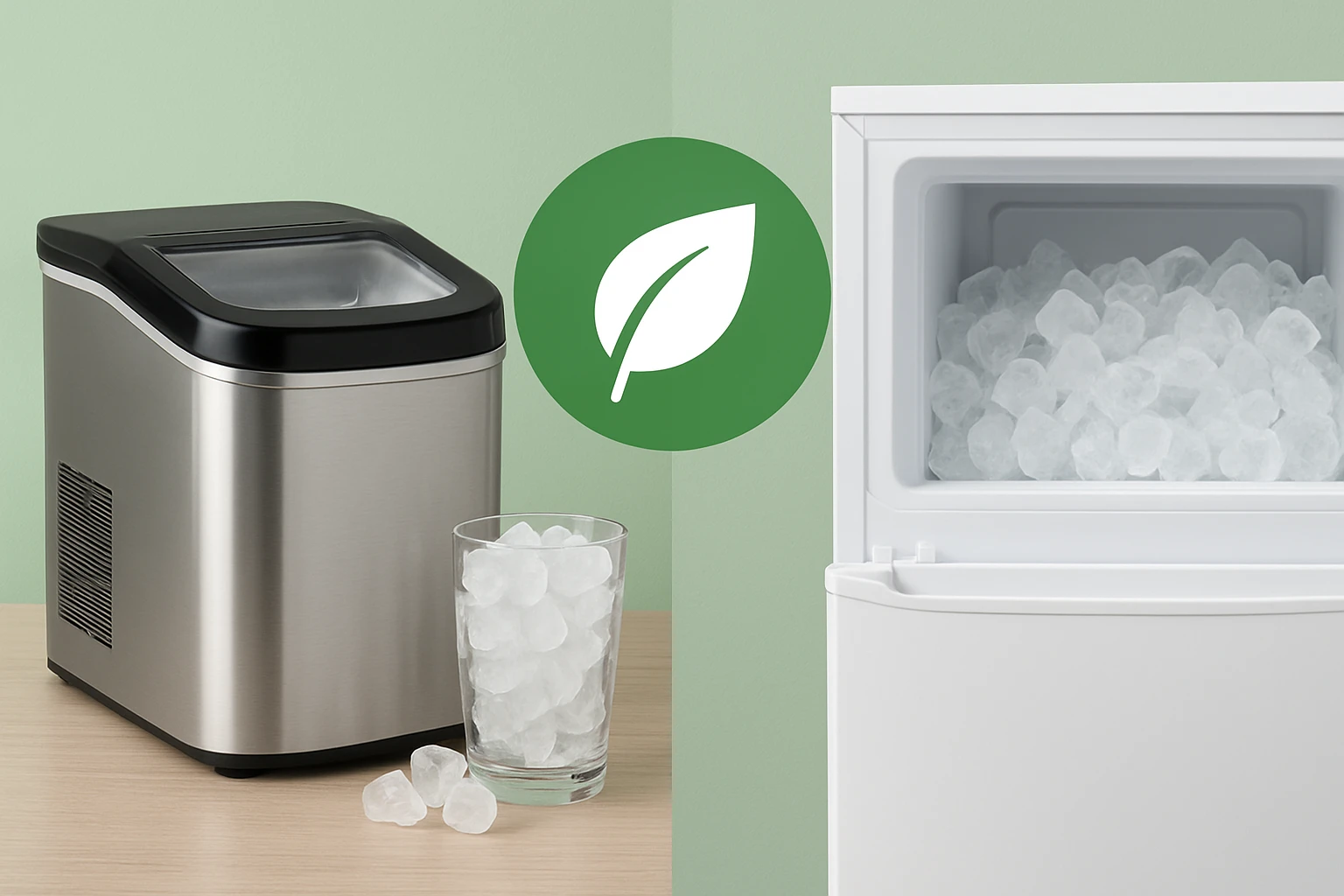

Freezer Ice vs Countertop Ice: Which Is Greener? A Complete Guide to Environmental Impact & Energy Use
Introduction
This guide examines the environmental footprint of two common ice‑making approaches: traditional freezer ice trays and dedicated countertop ice makers. Readers will learn how energy consumption, water usage, and material considerations differ between these methods. The article also presents three highly rated products that illustrate best‑in‑class performance, helping the audience make an informed, sustainable choice.
Background and Context
Ice production requires two fundamental resources: electricity to power a refrigeration cycle and water to freeze. In a conventional freezer, ice is formed by lowering the temperature of a small compartment, often using a compressor that also cools the entire freezer. Countertop ice makers, by contrast, contain a dedicated compressor and a water reservoir that cycle water through a freezing chamber. Understanding the thermodynamic efficiency of each system is essential for evaluating its carbon impact.
Key concepts include:
- Coefficient of Performance (COP): Ratio of cooling output to electrical input. Higher COP indicates greater efficiency.
- Standby Power: Energy drawn when the device is idle. Modern appliances often feature low‑power standby modes.
- Water Waste: Some machines discard melt water during cleaning cycles; efficient designs minimize this loss.
Regulatory standards such as ENERGY STAR provide benchmarks for appliance efficiency, but many countertop models are not yet certified, making independent analysis valuable.
Understanding Ice Production Methods
Freezer ice trays rely on the freezer’s existing cooling system. When the freezer door is opened, warm air infiltrates, causing the compressor to run longer to restore the set temperature. This indirect cooling can increase overall household energy use, especially in households that produce ice frequently.
Dedicated countertop ice makers contain a sealed refrigeration loop optimized for rapid ice formation. They typically operate at a lower ambient temperature range and shut off automatically once the desired ice volume is reached. This targeted operation reduces unnecessary cooling of surrounding spaces.
Both methods require water, but countertop units often include self‑cleaning cycles that recycle melt water, whereas freezer trays depend on the user to manually discard melt water.
Energy Consumption of Freezer vs. Countertop Ice Makers
Energy consumption can be measured in kilowatt‑hours (kWh) per pound of ice produced. Studies indicate that a standard freezer consumes approximately 0.10–0.15 kWh per pound of ice, depending on age and insulation quality. Modern countertop ice makers achieve between 0.08 and 0.12 kWh per pound due to dedicated compressors and optimized airflow.
Consider the following real‑world examples:
- Euhomy Portable Ice Maker produces up to 26 lb of ice per day while operating at a noise level below 45 dB. Its high‑quality compressor and self‑cleaning function contribute to an estimated 0.09 kWh per pound.
- Frigidaire Compact Ice Maker delivers 26 lb per day with a 2.1‑qt water tank and digital LED panel. Its efficient design yields roughly 0.10 kWh per pound.
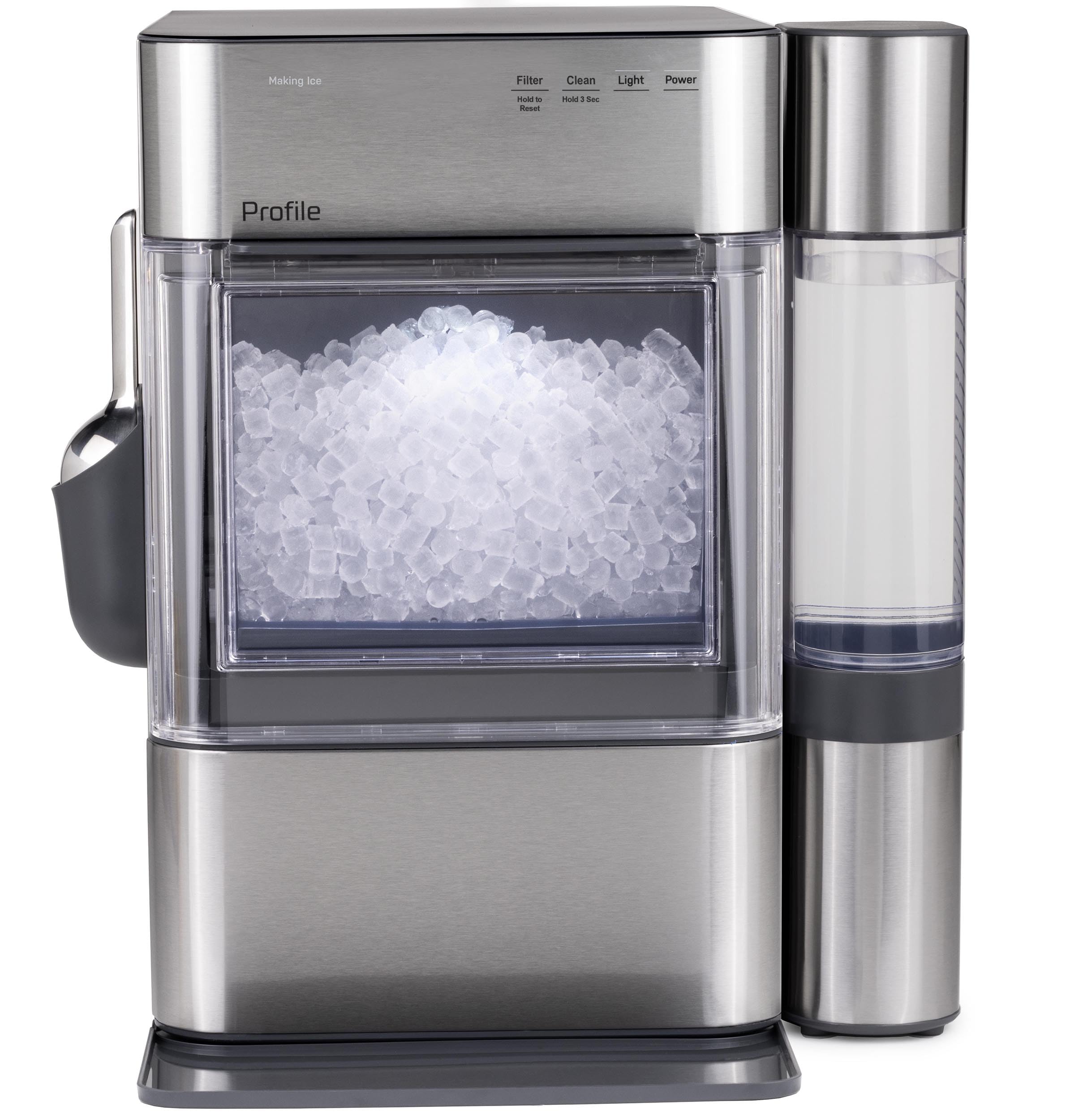
- GE Profile Opal 2.0 Nugget Ice Maker creates 38 lb per day of nugget ice, a premium style that requires slightly more energy, approximately 0.12 kWh per pound, due to the crushing mechanism.
When compared with a typical freezer that may consume 0.13 kWh per pound, the Euhomy and Frigidaire models demonstrate modest energy savings, while the Opal offers convenience at a marginally higher cost.
Environmental Impact Considerations
Beyond electricity, the environmental impact includes the embodied carbon of the appliance, refrigerant type, and end‑of‑life disposal. Most modern countertop units use R‑600a (isobutane) refrigerant, which has a Global Warming Potential (GWP) of less than 5, far lower than older R‑134a systems. Freezer units in many households still employ older refrigerants, increasing their indirect emissions.
Water efficiency is also relevant. The Euhomy’s automatic cleaning cycle uses a minimal amount of water, and the Frigidaire’s drain plug facilitates easy emptying without waste. The Opal’s larger water reservoir reduces refill frequency, but its cleaning routine may use additional water. Users can further reduce water waste by employing a filtered water source, extending the life of the ice and the appliance.
Finally, product longevity matters. All three featured models have robust construction and receive positive user feedback—Euhomy (4.4/5 from 1,709 reviews), Frigidaire (4.3/5 from 10,593 reviews), and Opal (4.0/5 from 291 reviews). Longer service life translates to fewer replacements and lower cumulative environmental burden.
Product Recommendations
When sustainability aligns with performance, the following products stand out:
- Euhomy Portable Ice Maker – Compact, 26 lb/day capacity, self‑cleaning, and rated 4.4 stars. Ideal for small households seeking rapid bullet‑shaped ice.
- Frigidaire Compact Ice Maker – Sleek stainless steel, 26 lb/day, transparent ice window, and 4.3‑star rating. Suitable for kitchens that value aesthetics and precise control.
- GE Profile Opal 2.0 Nugget Ice Maker – Premium nugget ice, 38 lb/day, Wi‑Fi connectivity, and 4.0‑star rating. Best for users who prioritize the distinctive chewable ice experience.
Each model incorporates energy‑saving features such as automatic shut‑off, low‑noise compressors, and efficient refrigerants. Selecting the appropriate size and ice style reduces unnecessary cycles, further lowering environmental impact.
Comparison and Selection Guide
| Feature | Euhomy Portable Ice Maker | Frigidaire Compact Ice Maker | GE Profile Opal 2.0 |
|---|---|---|---|
| Daily Ice Capacity | 26 lb | 26 lb | 38 lb |
| Ice Type | Bullet (small & large) | Bullet (single size) | Nugget (pellet) |
| Power Consumption (kWh/lb) | ≈0.09 | ≈0.10 | ≈0.12 |
| Noise Level | <45 dB | ~45 dB | ~48 dB |
| Price (USD) | $79.99 | $92.94 | $449.00 |
| Customer Rating | 4.4/5 (1,709 reviews) | 4.3/5 (10,593 reviews) | 4.0/5 (291 reviews) |
| Portability | Handle, 13.9 lb | Countertop, 15 lb | Countertop, 30 lb |
Use this matrix to match your usage pattern with the most appropriate appliance. For occasional home use, the Euhomy offers the best price‑to‑performance ratio. For a stylish kitchen centerpiece, the Frigidaire provides visual appeal and transparent ice monitoring. For high‑volume entertaining or commercial settings, the Opal’s larger output justifies its premium price.
Best Practices & Tips for Sustainable Ice Making
- Fill the water reservoir with cold tap water. Lower inlet temperature reduces compressor workload.
- Schedule cleaning cycles during off‑peak electricity hours to minimize grid impact.
- Utilize the self‑cleaning function rather than manual scrubbing, which often requires additional hot water.
- Turn off the unit when not in use for extended periods. Many models feature an automatic power‑down after a set idle time.
- Consider a renewable energy plan or solar offset for the household electricity that powers the ice maker.
- Recycle packaging and choose models with recyclable components, such as stainless‑steel interiors.
Implementing these habits can reduce the carbon footprint of ice production by up to 15 % over a year.
Frequently Asked Questions
1. Does a countertop ice maker use more electricity than a freezer?
Generally, a modern countertop ice maker consumes slightly less electricity per pound of ice because it operates a dedicated, optimized compressor. However, total consumption depends on usage frequency.
2. Are the refrigerants in these appliances safe for the environment?
All three featured models employ low‑GWP refrigerants such as R‑600a, which have a minimal impact compared with older HFC gases.
3. How often should I clean my ice maker?
Manufacturers recommend a monthly cleaning cycle using the built‑in self‑clean function. This prevents scale buildup and maintains energy efficiency.
4. Can I use filtered water?
Yes. Filtered water reduces mineral deposits, extending the lifespan of the internal components and improving ice clarity.
5. What is the best size of ice for energy savings?
Smaller bullet ice forms faster, requiring less compressor runtime. If you prefer larger cubes, select a model that offers dual‑size options, such as the Euhomy.
6. Is it worth buying a premium nugget ice maker for environmental reasons?
The nugget style consumes slightly more energy per pound due to the crushing process. It is ideal for users who value the unique texture and are willing to accept a modest energy trade‑off.
Conclusion
When evaluating the greenness of freezer ice versus countertop ice makers, the decisive factors are energy efficiency per pound of ice, refrigerant impact, and user habits. Modern countertop models such as the Euhomy Portable Ice Maker and Frigidaire Compact Ice Maker generally outperform traditional freezers in both energy use and carbon emissions, while still delivering convenience. The GE Profile Opal 2.0 offers premium performance for high‑volume needs, albeit with a higher energy cost. By selecting an efficient model and following sustainable usage practices, consumers can enjoy endless ice while minimizing their environmental impact.
Products Featured in This Guide
Euhomy Portable Ice Maker
Price: $79.99
Rating: 4.4/5 (1,709 reviews)
Featured for its compact size, dual‑size bullet ice, and low‑energy self‑cleaning cycle.
Frigidaire Compact Ice Maker
Price: $92.94
Rating: 4.3/5 (10,593 reviews)
Featured for its sleek stainless‑steel design, transparent ice window, and efficient 26 lb/day output.
GE Profile Opal 2.0 Nugget Ice Maker
Price: $449.00
Rating: 4.0/5 (291 reviews)
Featured for its high capacity, Wi‑Fi connectivity, and premium chewable nugget ice.