
Introduction
Families with young children often overlook the potential hazards associated with countertop appliances. A countertop ice maker can become a source of curiosity for toddlers, leading to accidental spills, burns, or injuries. This guide explains how to childproof a countertop ice maker using practical steps and reliable safety tools. Readers will learn how to create a safe environment while preserving the convenience of on‑demand ice.
What You’ll Need
- A Frigidaire Portable Ice Maker (or similar model) to demonstrate placement and usage.
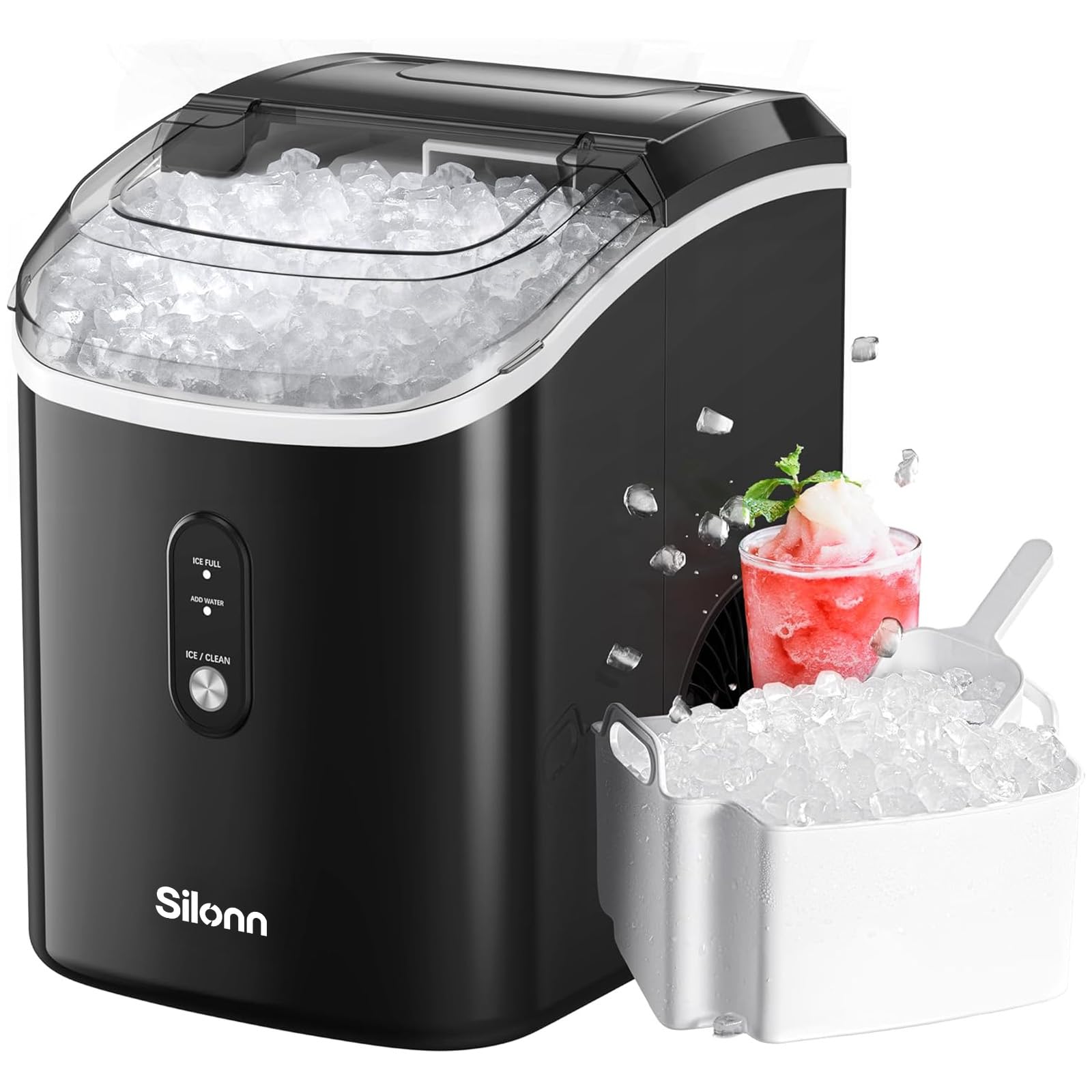
- A Silonn Countertop Nugget Ice Maker for comparison of size and water capacity.
- Two HFengQ Childproof Fridge Locks for securing the appliance door.
- One EUDEMON Oven Door Lock for additional lock reinforcement if the ice maker is placed near an oven.
- Non‑slip mat, cleaning supplies, and a level surface.
Step 1: Choose a Safe Location
Begin by selecting a countertop area that is out of reach of children yet remains convenient for adult use. A height of at least 48 inches from the floor reduces the likelihood of a child climbing onto the surface. Ensure the chosen spot is level; an uneven surface can cause the ice maker to wobble, increasing the risk of spills. Placing the appliance near a power outlet eliminates the need for extension cords, which can become tripping hazards.
Both the Frigidaire Portable Ice Maker and the Silonn Countertop Nugget Ice Maker feature a compact footprint that fits comfortably on most kitchen counters. The Frigidaire model measures approximately 14.5" × 13.5" × 19" and weighs 30 lb, providing a stable base when placed on a sturdy surface. The Silonn unit is slightly smaller at 11.3" × 8.66" × 12.68" and weighs 12 lb, making it easier to relocate if needed.
Step 2: Secure the Appliance with Childproof Locks
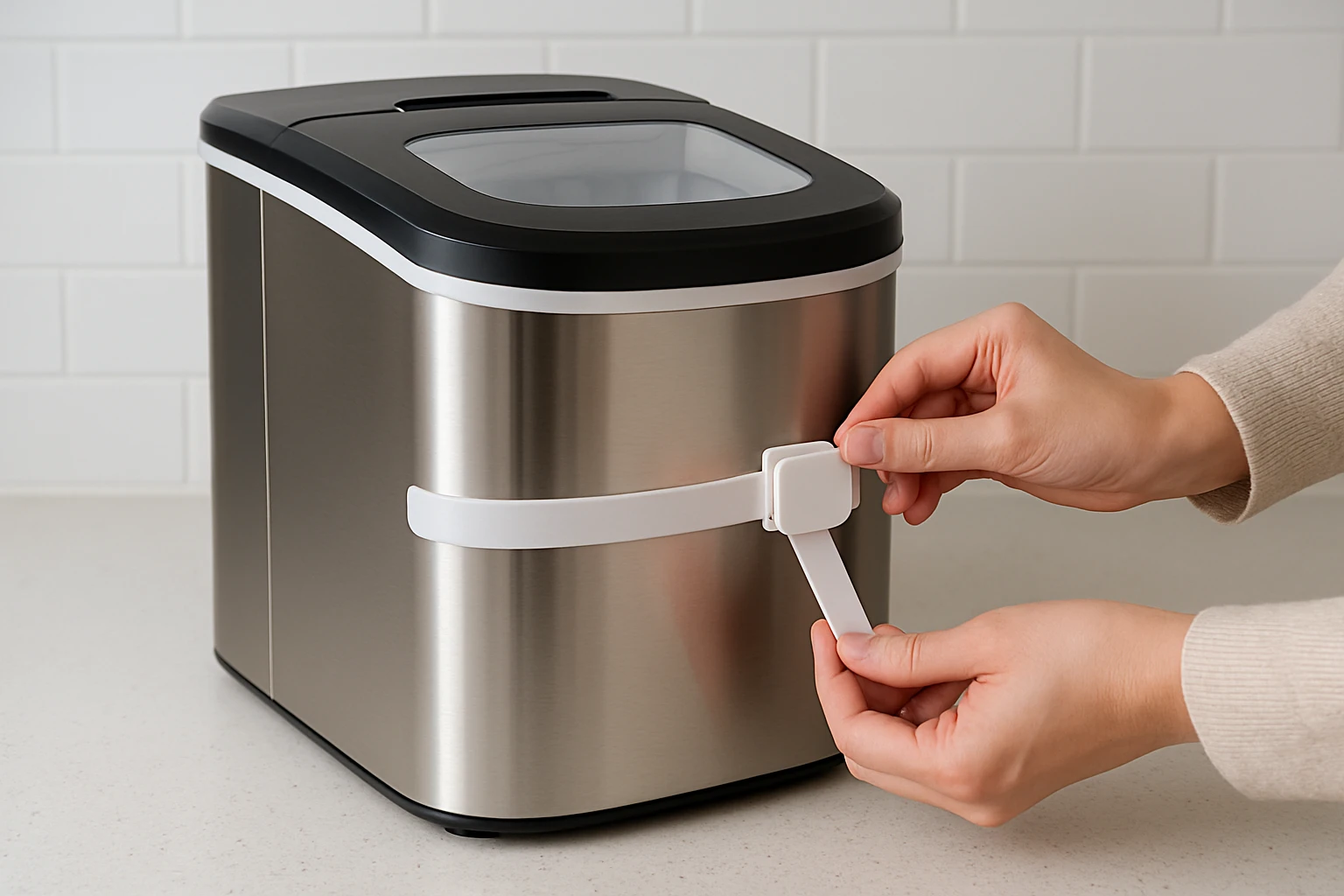
After positioning the ice maker, install childproof locks on the front panel to prevent unauthorized opening. The HFengQ Childproof Fridge Locks adhere directly to the appliance without the need for drilling, preserving the finish of stainless steel or black plastic. Each lock includes a self‑adhesive pad that can support up to 35 lb, more than sufficient for the weight of the lock itself.
Installation steps are straightforward: clean the surface, peel the protective film, press the pad firmly, and allow 12 hours for full adhesion. Once installed, the lock requires a two‑finger press to open, a motion that is difficult for toddlers but simple for adults. The locks are rated 4.5 stars by over 1,100 reviewers, indicating reliable performance.
Step 3: Add a Non‑Slip Mat for Stability
A non‑slip mat placed beneath the ice maker adds an extra layer of stability and reduces the chance of the unit sliding if a child pushes against it. Choose a mat that is heat‑resistant and easy to clean, as occasional water spills are inevitable during ice production. The mat also protects the countertop from scratches caused by the water reservoir’s 2.1‑quart capacity in the Frigidaire model or the 1.5‑quart reservoir in the Silonn model.
While this step does not require a specific product from the list, it reinforces the overall safety strategy by limiting movement. Ensure the mat covers the entire base of the appliance, leaving no gaps where a child could wedge a finger.
Step 4: Manage Water Supply and Drainage
The water tank of a portable ice maker must be refilled regularly; however, an unattended tank can become a spill hazard. Position the tank away from the edge of the counter and secure the drain plug after each cleaning cycle. The Frigidaire ice maker includes a drain plug for easy emptying, while the Silonn model features a removable cover for deep cleaning.
If the appliance is located near an oven, consider using the EUDEMON Oven Door Lock to block accidental access to the oven while the ice maker is in use. Although primarily designed for ovens, its heat‑resistant adhesive can be applied to the side of the ice maker to create an additional barrier, especially in high‑traffic kitchens.
Step 5: Educate Family Members
Even with physical safeguards, education remains a critical component of child safety. Explain to older children that the ice maker is a kitchen appliance that should only be operated by adults. Demonstrate how to unlock the device using the childproof locks and emphasize the importance of never tampering with the water reservoir.
Post a simple reminder sign near the appliance, using clear language and visual icons. Consistent reinforcement of safe behavior reduces the likelihood of accidental misuse.
Tips & Pro Tips
- Inspect the adhesive pads of the childproof locks every six months to ensure they remain secure.
- Place a small, child‑friendly sign that reads “Adult Use Only” on the front of the ice maker.
- Schedule regular cleaning cycles using the self‑cleaning function of the Silonn model to prevent mold growth.
- When refilling the water tank, use a measured cup to avoid overfilling, which can cause leaks.
- Consider a secondary lock, such as the EUDEMON Oven Door Lock, if the ice maker is positioned near other appliances that children might access.
Troubleshooting
Problem: Ice maker does not produce ice after installation of locks.
Solution: Verify that the lock mechanism does not obstruct the digital control panel or the transparent window. If the lock interferes, reposition it to the side of the appliance where it does not cover the LED display.
Problem: Water leaks from the reservoir.
Solution: Ensure the drain plug is fully seated after each cleaning cycle. Check that the tank is seated correctly on the base and that the non‑slip mat is level.
Conclusion
Childproofing a countertop ice maker requires thoughtful placement, reliable locking mechanisms, and ongoing education. By following the steps outlined in this guide, families can enjoy the convenience of on‑demand ice while minimizing the risk of accidents. The recommended products—Frigidaire Portable Ice Maker, Silonn Countertop Nugget Ice Maker, HFengQ Childproof Fridge Locks, and EUDEMON Oven Door Lock—provide practical solutions that integrate seamlessly into most kitchen environments. Implement these measures today to create a safer home for children and peace of mind for adults.
Products Mentioned in This Guide
Frequently Asked Questions
How can I secure the door of a countertop ice maker to keep toddlers out?
Install childproof fridge locks or an oven‑door lock on the appliance door to prevent unauthorized opening.
Where should I position a countertop ice maker for optimal child safety?
Place it on a stable, low‑height surface away from high‑traffic zones and out of reach of young children.
Do I need a water reservoir lock for a countertop ice maker?
Use a lockable water reservoir or keep the water source unplugged when not in use to avoid spills.
What type of safety mat or barrier is recommended around the ice maker?
A non‑slip, washable mat or a small play‑pen barrier can cushion falls and keep the appliance contained.
How often should I inspect the childproof locks on my ice maker?
Check the locks weekly for wear or loose screws and test them to ensure they still engage securely.