How to Clean and Maintain a Countertop Ice Maker: Step‑by‑Step Guide to Remove Scale, Prevent Odors, and Extend Lifespan
Introduction
One of the most valuable appliances in a modern kitchen is the countertop ice maker. It provides a steady supply of ice for drinks, parties, and even culinary projects. However, like any appliance that works with water, it is prone to mineral buildup, unpleasant odors, and reduced efficiency over time. This guide will teach the reader how to clean and maintain a countertop ice maker, why each step matters, and which tools can simplify the process. By following the instructions, the reader will protect the investment, enjoy consistently clear ice, and avoid costly repairs.
The information presented is based on real‑world user experiences and the specifications of popular models such as the Igloo Countertop Ice Maker and the Silonn Countertop Ice Maker. Both units share similar cleaning requirements, making the procedures applicable to most countertop models.
The guide is written for an intermediate audience; it assumes basic familiarity with kitchen appliances but provides clear explanations of technical terms such as "descaling" and "nickel‑safe".
What You’ll Need
- Soft microfiber cloths – for wiping exterior surfaces without scratching.
- Distilled water – reduces mineral deposits during rinsing cycles.
- Bellaluce Ice Maker Cleaner Tablets – food‑grade citric‑acid tablets that safely dissolve limescale and neutralise odours. Price $9.99, rating 4.4/5 from 588 reviews.
- Essential Values Ice Cleaner 2‑Pack – liquid descaler that penetrates calcium buildup and is nickel‑safe. Price $15.39, rating 4.5/5 from 18,042 reviews.
- Small funnel – helps pour cleaning solution into the water reservoir without spillage.
- Soft‑bristled brush (optional) – for removing debris from the ice basket.
All of the above items are available on Amazon and have been selected for their proven effectiveness and positive customer sentiment.
Step‑by‑Step Instructions
Step 1: Unplug and Prepare the Unit
The first safety precaution is to disconnect the ice maker from the electrical outlet. This eliminates any risk of electric shock while handling water and cleaning agents. Once unplugged, allow the unit to sit for five minutes so that internal components cool down. This pause also permits any residual ice to melt naturally, reducing the chance of damage when the water tank is emptied.
During this preparation phase, inspect the exterior for obvious dust or spills. A quick wipe with a dry microfiber cloth will prevent debris from entering the machine when it is opened later.
If the user owns an Igloo Countertop Ice Maker, note that the model features a self‑cleaning cycle that can be activated after the manual cleaning steps are complete. The same principle applies to the Silonn Countertop Ice Maker, which includes an indicator light for low water and a full‑basket sensor.
Step 2: Empty the Water Reservoir and Ice Basket
Locate the removable water tank, typically positioned at the rear or side of the appliance. Carefully lift the tank and pour any remaining water into a sink. Use a funnel to transfer the water into a container if the tank is heavy. Next, remove the ice basket and discard any ice cubes that remain. This step ensures that cleaning agents will not be diluted by old water and that the basket is free of trapped particles.
For models with a built‑in ice storage tray, such as the Igloo, the tray may retain a thin layer of meltwater. Tilt the unit slightly to allow this water to drain completely.
Step 3: Apply a Descaling Tablet or Liquid
Choose either the Bellaluce tablets or the Essential Values liquid based on personal preference. The tablets are convenient because they require no measuring; simply drop one tablet into the empty water reservoir, fill the tank with distilled water up to the indicated line, and close the lid. The citric‑acid formulation is nickel‑safe, meaning it will not corrode metal components such as the cooling coil.
If the user prefers a liquid solution, pour 30 ml of the Essential Values descaler into the reservoir, then add distilled water to the fill line. The liquid penetrates calcium deposits more quickly, which can be advantageous for heavily scaled units.
Both products are specifically designed for countertop ice makers and have received strong positive feedback for eliminating odors and restoring crystal‑clear ice.
Step 4: Run a Cleaning Cycle
Reconnect the unit to power and select the “self‑clean” or “manual clean” mode if available. If the appliance lacks a dedicated cleaning mode, simply start a normal ice‑making cycle. The machine will draw the cleaning solution through its internal pump, allowing the acid to dissolve mineral deposits on the evaporator and water lines.
Allow the cycle to run to completion, which typically takes 30–45 minutes. During this time, avoid opening the lid, as exposure to air can interrupt the chemical reaction.
When the cycle ends, the unit will usually signal that the basket is full. At this point, turn off the machine and prepare for the rinsing step.
Step 5: Rinse and Flush the System
Remove the water tank again and discard the used cleaning solution. Rinse the tank thoroughly with distilled water to remove any residual acid. Refill the tank with fresh distilled water, then run a second ice‑making cycle without any tablets or liquid. This rinse cycle flushes remaining cleaning agents from the internal pathways.
Repeat the rinse cycle once more if the user detects a faint citric scent in the ice. The double‑rinse method ensures that the next batch of ice will be flavour‑neutral.
After the final rinse, empty the ice basket, discard the water, and allow the unit to dry for ten minutes before proceeding to exterior cleaning.
Step 6: Clean the Exterior and Accessories
Using a soft microfiber cloth dampened with a mild dish‑soap solution, wipe the exterior housing of the ice maker. Pay special attention to the control panel, the water‑fill opening, and the lid. Avoid abrasive cleaners, as they can scratch the polished surface.
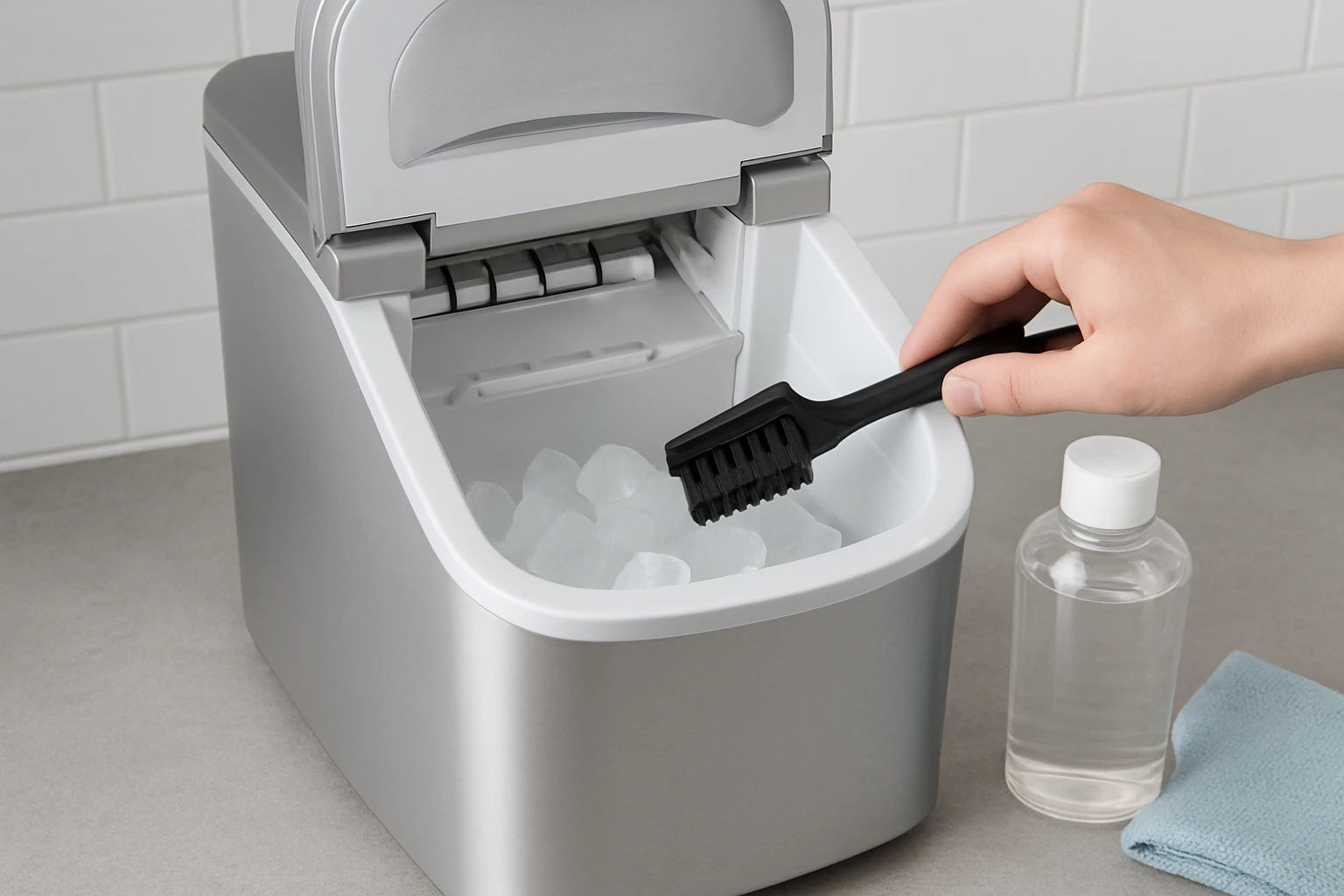
For the ice basket and any removable trays, a soft‑bristled brush can dislodge stubborn particles. Rinse these components with warm water and dry them completely before reassembly.
If the user owns the Silonn model, the transparent lid provides a visual cue for water level; cleaning the lid with a non‑abrasive glass cleaner will keep it crystal clear.
Tips & Pro Tips
- Use distilled water for every fill. Tap water often contains calcium and magnesium, which accelerate scaling.
- Schedule a deep‑cleaning routine every three months. Regular maintenance reduces the need for intensive descaling.
- Place the ice maker on a level surface. An uneven base can cause water to pool in the reservoir, promoting bacterial growth.
- Store the unit in a well‑ventilated area to minimise moisture buildup on the exterior.
- If the unit emits a faint odor after cleaning, run an additional rinse cycle with plain water and a splash of lemon juice to neutralise any lingering scent.
Troubleshooting
| Problem | Possible Cause | Solution |
|---|---|---|
| Ice production slows down | Scale buildup in the cooling coil | Perform a descaling cycle using Bellaluce tablets or Essential Values liquid. |
| Ice has a cloudy appearance | Mineral residue on the ice surface | Run a full rinse cycle and switch to distilled water. |
| Unpleasant odour from ice | Stagnant water or bacterial growth | Clean the reservoir, run a cleaning tablet cycle, and ensure the unit is dried after each use. |
| Unit does not turn on | Loose power connection or tripped safety switch | Check the plug, reset the circuit breaker, and verify that the water tank is properly seated. |
Conclusion
Regular cleaning and proper maintenance are essential for preserving the performance and longevity of a countertop ice maker. By following the six detailed steps, using the recommended Bellaluce tablets or Essential Values liquid, and adhering to the pro tips, the reader will enjoy clear, fresh ice for years to come. The guide demonstrates that a disciplined routine prevents scale, eliminates odours, and reduces the likelihood of costly repairs.
One final reminder: always unplug the appliance before performing any maintenance, and use distilled water whenever possible. With these practices in place, the countertop ice maker will remain a reliable companion for entertaining, cooking, and everyday refreshment.
Products Mentioned in This Guide
Frequently Asked Questions
How often should I clean my countertop ice maker?
Clean the unit at least once a month, or after every 20‑30 gallons of ice production, to prevent scale and odor buildup.
What is the most effective way to remove mineral scale?
Run a mixture of equal parts white vinegar and water through a cleaning cycle, then rinse thoroughly with fresh water.
How can I prevent unpleasant odors from developing?
Empty and dry the water reservoir after each use, and regularly clean the interior with a mild, food‑safe cleanser.
Which cleaning solutions are safe for my ice maker?
Use white vinegar, lemon juice, or a commercial ice‑maker cleaner labeled as food‑grade; avoid bleach or harsh chemicals.
What maintenance steps extend the lifespan of a countertop ice maker?
Regular cleaning, descaling, checking the water filter, and keeping the appliance level and free of debris ensure optimal performance and longevity.