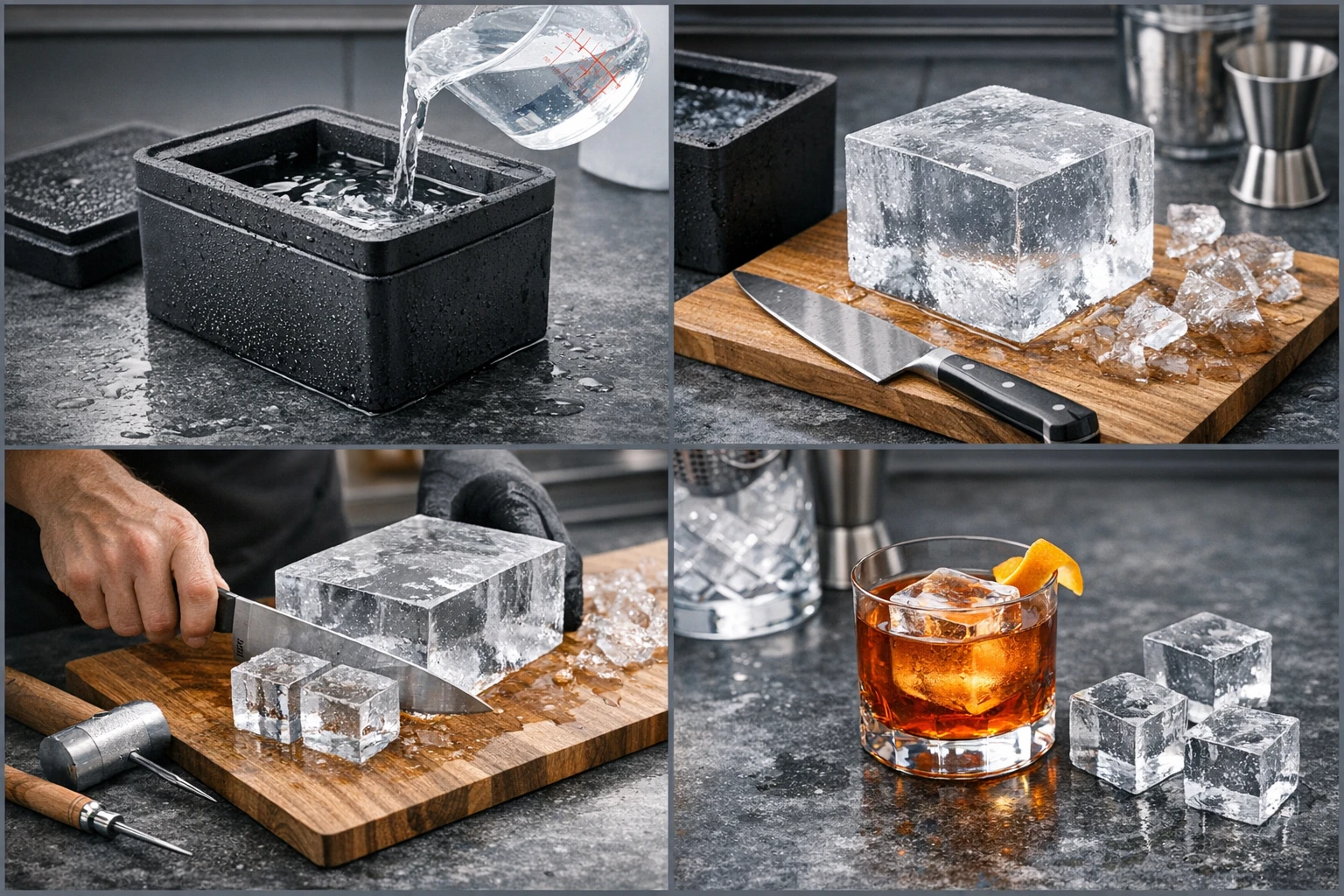
How to Make Clear Ice at Home for Cocktails: Easy DIY Method for Crystal‑Clear Results
Introduction
Clear ice elevates the visual appeal and taste of a cocktail by melting more slowly and diluting the drink less. This guide will teach the reader how to produce crystal‑clear ice at home using simple scientific principles and affordable tools. The reader will learn why clarity matters, which materials are essential, and how to avoid common pitfalls. By following the steps, one can achieve bar‑quality ice without investing in expensive commercial equipment.
The method described relies on directional freezing, a technique that forces air and impurities to migrate away from the ice cube as it solidifies. The result is a glass‑like block that can be cut or molded into perfect cubes, spheres, or novelty shapes. The guide is written for an intermediate audience that is comfortable with basic kitchen tasks but may be new to ice science.
What You’ll Need
The following items are recommended to obtain consistent, clear results. Each product is linked to its Amazon page for convenient purchase, although the process can be performed with generic equivalents.
- ClearlyFrozen Clear Ice Tray – high‑capacity silicone mold with insulation box, $39.99, 4.6★/5 (2,363 reviews)
- Berlinzo Clear Ice Cube Maker – conversation‑print tray, $39.80, 4.3★/5 (644 reviews)
- Miaowoof Ice Ball Maker – 2.5‑inch stainless‑steel insulated sphere mold, $9.99, 4.4★/5 (352 reviews)
- Dexas Clear Ice Cube Tray – four‑cube ice‑ology system, $51.58, 4.3★/5 (1,065 reviews)
- Filtered or distilled water, a freezer with a stable temperature, and a clean container for storage.
Step‑by‑Step Instructions
Step 1 – Select the Best Water
The clarity of ice is directly related to the purity of the water used. Tap water that contains minerals and dissolved gases will produce cloudy ice unless the freezing process removes them. It is advisable to use filtered, reverse‑osmosis, or boiled water that has been cooled to room temperature. Boiling drives out dissolved gases, while filtration removes suspended particles. Fill a clean pitcher with the chosen water and allow it to sit for a few minutes before proceeding.
Why this matters: Clear ice is achieved when air bubbles are forced to the bottom of the mold during directional freezing. Using already‑clean water reduces the amount of impurity that must be displaced, resulting in faster freeze times and more consistent clarity.
Step 2 – Prepare the Mold and Insulation
Place the chosen mold on a flat surface and ensure the insulation box (if supplied) is correctly positioned. The ClearlyFrozen Clear Ice Tray includes a foam insulation box that surrounds five sides of the silicone mold, encouraging top‑down freezing. For sphere ice, the Miaowoof Ice Ball Maker uses a stainless‑steel cup with an internal vacuum layer that performs the same function on a smaller scale.
Steps to assemble:
- Insert the silicone mold into the foam box, ensuring a snug fit.
- Check that the lid (if present) sits flush to prevent warm air from entering.
- For the Berlinzo or Dexas trays, simply place the silicone inserts into the provided silicone base; the design already incorporates directional freezing without an external box.
Why this matters: The insulation slows heat loss on the sides, forcing the water to freeze from the exposed top. This creates a clear front face while impurities settle at the bottom, where they can be discarded after the cycle.
Step 3 – Fill the Mold with Warm Water
Pour the filtered or boiled water into the mold until it reaches the indicated fill line. Warm water (around 40‑50 °F) freezes more slowly, allowing air to escape before solidification. For the Berlinzo Clear Ice Cube Maker, fill the reservoir with warm water and then add the silicone inserts, which have vent holes to release trapped air.
After filling, gently tap the mold on the countertop to dislodge any remaining bubbles. Some users find that a brief shake or a light tap on each side helps the water settle evenly.
Why this matters: Warm water reduces the temperature gradient, preventing rapid nucleation that traps bubbles inside the ice. The vent holes in the Berlinzo design further assist in expelling air, producing a pristine surface.
Step 4 – Freeze with Directional Control
Place the assembled mold in the freezer on a level shelf. The ideal freezer temperature is between 0 °F and 5 °F (‑18 °C to ‑15 °C). For large trays such as the ClearlyFrozen system, expect a freeze time of 24‑30 hours. The Berlinzo cubes may require up to 48 hours due to their larger size, while the Miaowoof sphere typically solidifies in 20‑22 hours.
Do not open the freezer during the cycle, as temperature fluctuations disrupt the directional freezing process. If the freezer has a frost‑free cycle, consider turning it off temporarily to maintain a stable environment.
Why this matters: Consistent, low‑temperature conditions allow the top‑down freezing front to progress uniformly, pushing impurities downward without re‑freezing them into the crystal lattice.
Step 5 – Release and Store the Ice
After the recommended freeze time, remove the mold from the freezer. Allow it to sit at room temperature for 2‑3 minutes; this brief warm‑up eases removal without melting the ice. For silicone molds, flex the sides gently to release the cubes. The ClearlyFrozen tray’s silicone is flexible enough to pop ten 2‑inch cubes with a light twist.
Store the clear ice in a sealed, food‑grade bag or a dedicated silicone zip‑lock bag (included with the ClearlyFrozen system). Avoid exposing the ice to ambient humidity, which can cause surface frost. For spheres, the Miaowoof kit includes a stainless‑steel holder that keeps the balls upright and protected.
Why this matters: Proper storage preserves the clarity and prevents the formation of a thin frost layer that can dull the visual impact of the ice when served.
Step 6 – Serve and Enjoy
Place the clear ice into the glass just before serving. Because the ice melts more slowly, the cocktail retains its intended flavor profile for a longer period. For conversation‑starter drinks, use the printed cubes from the Berlinzo kit to add a playful message to the beverage.
When using large cubes for whiskey or bourbon, consider a rocks glass that showcases the cube’s size. For mixed drinks, the sphere from the Miaowoof maker provides a dramatic visual while chilling the drink evenly.
Why this matters: The final presentation reinforces the premium nature of the cocktail, creating a memorable experience for guests and encouraging repeat enjoyment.
Tips & Pro Tips
- Use warm water for the initial fill, then add a thin layer of cold water on top to accelerate the top‑down freeze without creating bubbles.
- If the freezer is very full, the insulation box may not receive enough cold air; keep the mold near the back wall where airflow is strongest.
- For larger batches, duplicate the process with multiple molds to maximize efficiency.
- To achieve perfectly square edges, trim the cubes with a sharp kitchen knife after removal; the silicone molds already produce straight sides.
- When using the Berlinzo printed plates, replace them after each freeze to avoid imprint wear.
Troubleshooting
| Problem | Possible Cause | Solution |
|---|---|---|
| Cloudy ice | Rapid freezing or insufficient insulation | Increase freeze time, ensure insulation box is fully seated, and use warm water. |
| Ice sticks to mold | Silicone not fully flexed or water too cold | Allow mold to sit at room temperature briefly; gently twist sides before removal. |
| Uneven cube size | Air pockets or uneven water level | Tap mold after filling to release bubbles; level water to indicated line. |
Conclusion
The reader now possesses a reliable, science‑based method for producing crystal‑clear ice at home. By selecting pure water, using an insulated silicone mold, and allowing directional freezing to occur undisturbed, one can create professional‑grade ice without costly equipment. The recommended tools—ClearlyFrozen Clear Ice Tray, Berlinzo Clear Ice Cube Maker, Miaowoof Ice Ball Maker, and Dexas Clear Ice Cube Tray—each address specific cocktail needs, from large cubes to novelty printed squares. Mastery of these techniques will enhance the visual appeal and flavor integrity of any drink, encouraging guests to appreciate the subtle art of clear ice.
Products Mentioned in This Guide
Frequently Asked Questions
Why is clear ice preferred for cocktails?
Clear ice melts slower and dilutes drinks less, enhancing both appearance and flavor.
How does directional freezing create clear ice?
It forces air and impurities to migrate away from the freezing front, leaving a solid, bubble‑free block.
What kitchen tools are needed to make clear ice at home?
A small insulated cooler or silicone mold, a freezer, and a sharp knife or ice‑saw for trimming.
Can I use regular ice trays to make clear ice, and how?
Yes—fill a tray with boiled, cooled water and place it in a cooler inside the freezer to promote directional freezing.
How should I store clear ice to keep it crystal‑clear?
Wrap the blocks in a sealed plastic bag or keep them in an airtight container in the freezer to prevent freezer burn.