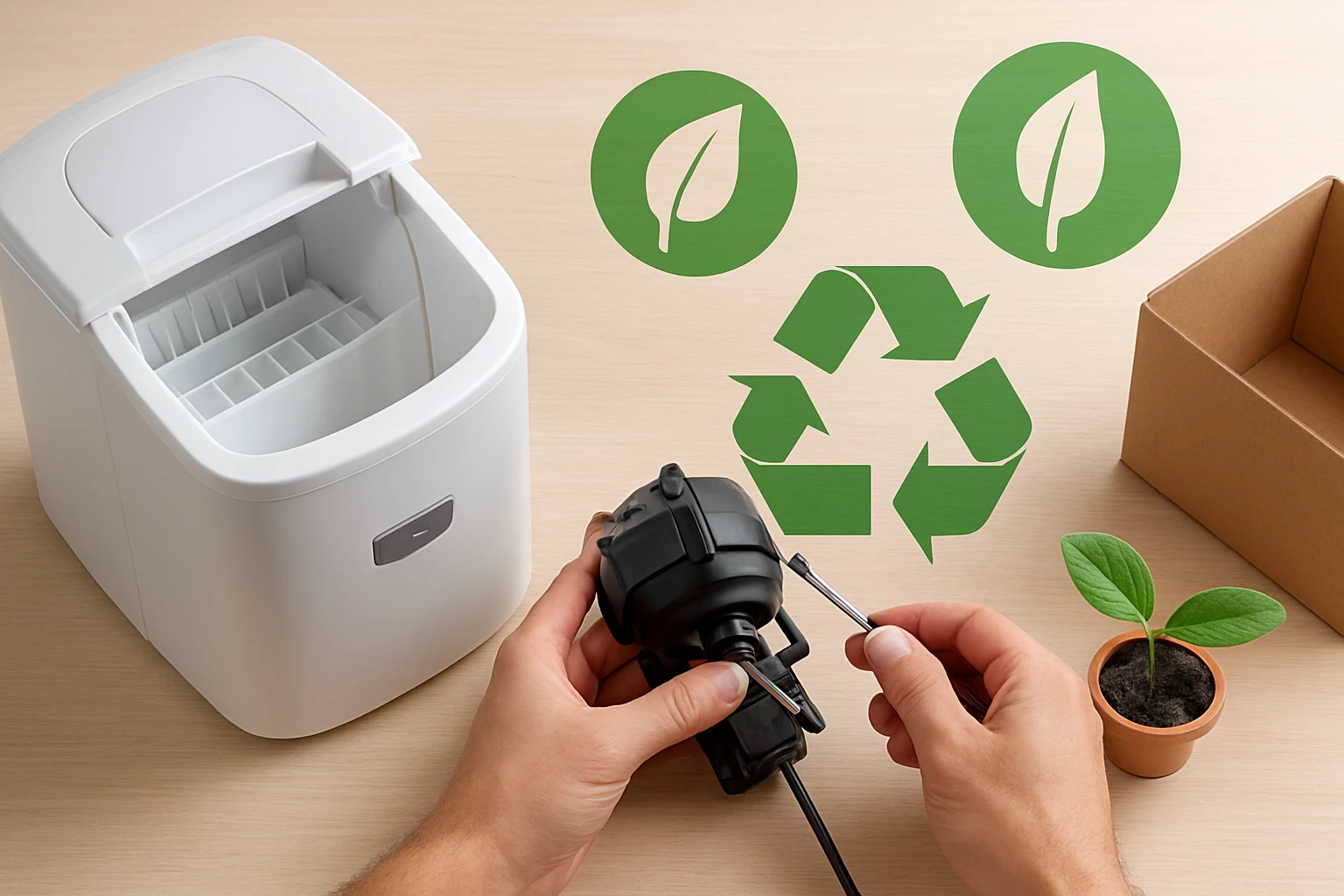

How to Recycle an Old Countertop Ice Maker: Step‑by‑Step Guide to Safe, Eco‑Friendly Disposal and Repurposing
Introduction
Many households replace countertop ice makers when a newer model offers faster production, quieter operation, or a more compact design. However, discarding the old unit without proper consideration can create unnecessary waste and missed opportunities for reuse. This guide explains precisely how one can dismantle, recycle, and even repurpose an outdated ice maker in a manner that safeguards personal safety and minimizes environmental impact. By following the outlined steps, readers will gain confidence in handling electronic appliances responsibly while learning how to extract value from components that might otherwise be discarded.
What You’ll Need
- Phillips and flat‑head screwdrivers
- Adjustable wrench
- Heavy‑duty trash bags
- Reusable zip‑lock containers for small parts
- Protective gloves and safety glasses
- Local e‑waste drop‑off location or recycling center contact information
- Optional: a new ice maker such as the Kismile Countertop Nugget Ice Maker if replacement is desired
Step‑by‑Step Instructions
1. Assess Condition and Safety Risks
Before beginning any disassembly, inspect the ice maker for visible damage, water leakage, or exposed wiring. If the unit shows signs of electrical malfunction, it is advisable to consult a certified technician rather than attempting DIY removal. This assessment prevents accidental electric shock and ensures that hazardous components are identified early. Document the model number and serial tag; this information can be useful when contacting recycling facilities that require precise identification of electronic devices.
2. Disconnect Power and Drain Remaining Water
Unplug the appliance from the wall outlet and rotate the power switch to the OFF position. Allow the machine to sit for five minutes to discharge any residual voltage. Next, locate the water reservoir—typically a removable 1.1 L tank in the Kismile design—and carefully pour any remaining water into a sink. For models without a detachable tank, tilt the unit gently while supporting the base to avoid spillage. Proper drainage prevents mold growth during storage and eliminates the risk of water‑related damage at the recycling facility.
3. Remove External Casing
Using a Phillips screwdriver, remove the screws that secure the outer plastic shell. Keep the screws in a labeled zip‑lock bag for future reference; some recycling programs accept fasteners separately. Once the casing is removed, set it aside on a protective surface. The transparent panel on the Kismile unit provides a clear view of the ice storage compartment, making it easier to verify that all ice has been cleared before proceeding.
4. Separate Recyclable Materials
Inside the housing, you will encounter three primary material categories: metal components (compressor, motor, and internal frame), plastic housings, and electronic circuit boards. Place metal parts in a separate container labeled “Metal – Recyclable.” Plastic pieces should be sorted by resin type if the recycling program distinguishes between PET, HDPE, and ABS; most countertop ice makers use ABS, which is widely accepted. Finally, isolate the circuit board and any attached wiring; these contain precious metals and must be sent to a certified e‑waste processor.
5. Locate a Certified E‑Waste Facility
Search online for a local e‑waste drop‑off point that accepts small appliances. Many municipalities provide free collection days, while some retailers (e.g., Best Buy) offer in‑store recycling for a nominal fee. Call ahead to confirm that the facility accepts compressors and electronic boards, as some locations only process household batteries. When transporting the components, use sturdy cardboard boxes and label each box with its contents to streamline the intake process.
6. Repurpose Viable Components
Before discarding every part, consider whether any component can serve a new purpose around the home. The water reservoir, for example, can be cleaned thoroughly and used as a portable cooler for picnics. The included ice scoop—often made of durable BPA‑free plastic—can become a serving utensil for salads or desserts. If a new ice maker is needed, the Kismile Countertop Nugget Ice Maker offers several advantages that justify the upgrade.
Why choose the Kismile model? It produces up to 35 lb of chewable nugget ice per day, a capacity suitable for small gatherings and daily household use. The machine’s self‑cleaning function activates with a five‑second press of the ON/OFF button, completing a full cleaning cycle in just 15 minutes. This feature reduces maintenance time and extends the appliance’s lifespan, which aligns with the guide’s emphasis on sustainability. Additionally, the unit operates at a modest 43 dB, ensuring a quiet environment for kitchens, offices, or dorm rooms. With a 4.3‑star rating from over five thousand reviews, the Kismile ice maker has demonstrated reliability among a broad user base.
7. Dispose of Non‑Recyclable Parts Properly
Any component that cannot be recycled—such as silicone gaskets that have degraded or plastic trim that is not accepted by local programs—should be placed in a sealed trash bag and disposed of according to municipal solid‑waste guidelines. Do not place electronic boards in regular trash, as they contain hazardous substances that can leach into soil and water sources.
Tips & Pro Tips
- Document each step. Taking photos while you disassemble the unit helps you reassemble any parts you wish to keep for repurposing.
- Label fasteners. Small screws are easily lost; storing them in zip‑lock bags prevents frustration later.
- Use a wet‑dry vacuum. After removing the water tank, a vacuum can extract residual moisture from hard‑to‑reach corners, reducing the risk of mold.
- Consider donation. If the ice maker still functions, local shelters, community centers, or schools may accept it as a useful kitchen appliance.
- Check for rebates. Some utility companies offer rebates for upgrading to energy‑efficient appliances like the Kismile model, further supporting eco‑friendly decisions.
Troubleshooting
| Problem | Possible Cause | Solution |
|---|---|---|
| Ice maker will not power on | Faulty power cord or tripped circuit | Test the outlet with another device; replace the cord if damaged. |
| Water does not fill tank | Clogged inlet valve | Detach the water line, clean the filter, and re‑attach. |
| Excessive noise during operation | Loose internal components | Re‑tighten screws after the unit has cooled. |
Conclusion
Recycling an old countertop ice maker does not have to be a daunting task. By following the systematic steps outlined above, one can safely disconnect, disassemble, and separate recyclable materials while also identifying creative ways to reuse functional parts. Selecting a modern, energy‑efficient replacement such as the Kismile Countertop Nugget Ice Maker further reinforces a commitment to sustainability. Ultimately, responsible disposal reduces landfill burden, conserves valuable resources, and encourages a circular mindset that benefits both the household and the planet.
Products Mentioned in This Guide
Kismile Countertop Nugget Ice Maker
Rating: 4.3/5 (5,108 reviews)
Features: 35 lb/day production, 1.1 L water tank, self‑cleaning with 5‑second button press, 43 dB quiet operation, compact countertop dimensions (12.8" × 11.22" × 8.86").
Price: Not specified
Frequently Asked Questions
How do I safely dismantle a countertop ice maker before recycling?
Unplug the unit, wear gloves and safety glasses, then use Phillips and flat‑head screwdrivers to remove the outer housing and separate internal components.
Which parts of an ice maker are recyclable and which require special handling?
The metal chassis, copper tubing, and plastic housing are recyclable, while the compressor and refrigerant contain hazardous materials that must be processed at a certified e‑waste facility.
Where can I drop off or recycle my old countertop ice maker?
Check local government or electronics retailer websites for e‑waste drop‑off locations, or contact a certified recycling center that accepts small appliances.
Can I repurpose components from an old ice maker?
Yes, you can reuse the water reservoir as a storage container, the fan motor for DIY cooling projects, or the stainless‑steel tray for serving chilled items.
What tools are needed to prepare an ice maker for e‑waste recycling?
A set of screwdrivers, an adjustable wrench, heavy‑duty trash bags, zip‑lock containers for small parts, and protective gloves and glasses are sufficient.