Introduction
Many households notice a faint metallic or mineral taste in the ice cubes produced by their freezers. This guide explains the underlying causes of mineral‑laden ice and provides a step‑by‑step approach to achieve cleaner, better‑tasting ice at home. Readers will learn about water source quality, ice maker maintenance, and how specific filtration products can improve ice flavor. By following the recommendations, one can enjoy ice that enhances rather than detracts from beverages.
Background/Context
Ice is simply frozen water, yet its taste can vary dramatically depending on dissolved minerals such as calcium, magnesium, and trace metals. These minerals originate from municipal water supplies, well water, or even the internal plumbing of a refrigerator. When water freezes, the crystalline structure excludes most dissolved solids, concentrating them in the remaining liquid pockets; this phenomenon can intensify mineral perception in the final ice cube.
Understanding the chemistry of water hardness and the role of filtration technologies is essential for addressing the problem. Hard water typically contains calcium carbonate, which can leave a chalky aftertaste. Conversely, contaminants like lead or chlorine may impart a metallic or chemical flavor. Effective mitigation requires both source‑water treatment and regular ice maker upkeep.
Consumers often overlook the impact of the ice maker’s own components, such as the water reservoir, tubing, and internal filters. Over time, biofilm, mineral buildup, and aging seals can compromise water purity. A systematic approach that combines water analysis, filtration, and maintenance yields the most reliable results.
Understanding Mineral Taste in Ice
The perception of mineral taste is influenced by three primary factors: water hardness, residual chlorine, and trace contaminants. Hardness is measured in grains per gallon (gpg) or parts per million (ppm) and is primarily caused by calcium and magnesium ions. Chlorine, added for disinfection, can survive the freezing process and leave an unpleasant odor. Trace metals such as lead or copper often stem from aging plumbing and can be hazardous if ingested over long periods.
When water freezes, the ice crystals form a lattice that rejects most solutes, leaving them in the unfrozen portion. As freezing continues, the concentration of minerals in the remaining liquid increases, and the final ice cube may retain a higher proportion of these substances than the original water. This concentration effect explains why ice can taste more mineral‑rich than the water it originated from.
Addressing the issue therefore requires reducing the overall mineral load before freezing. This can be accomplished through water softening, activated‑carbon filtration, or reverse‑osmosis systems. Each method offers distinct advantages and trade‑offs regarding cost, installation complexity, and maintenance frequency.
Water Source Quality
Before installing any filtration device, it is advisable to test the tap water for hardness, chlorine, and heavy metals. Home testing kits are widely available and provide a baseline measurement. If the water exhibits high hardness (above 150 ppm), a water softener may be necessary. For chlorine and organic contaminants, activated‑carbon filters are highly effective.
Many modern refrigerators include a built‑in water filter that conditions the water used for both dispensing and ice making. Replacing this filter regularly ensures optimal performance. The Frigidaire PureSource Ultra II Filter is a certified solution that reduces up to 99 % of contaminants, including lead, nitrates, and mercury. It features a carbon‑based media that removes chlorine taste, resulting in clearer, smoother ice.
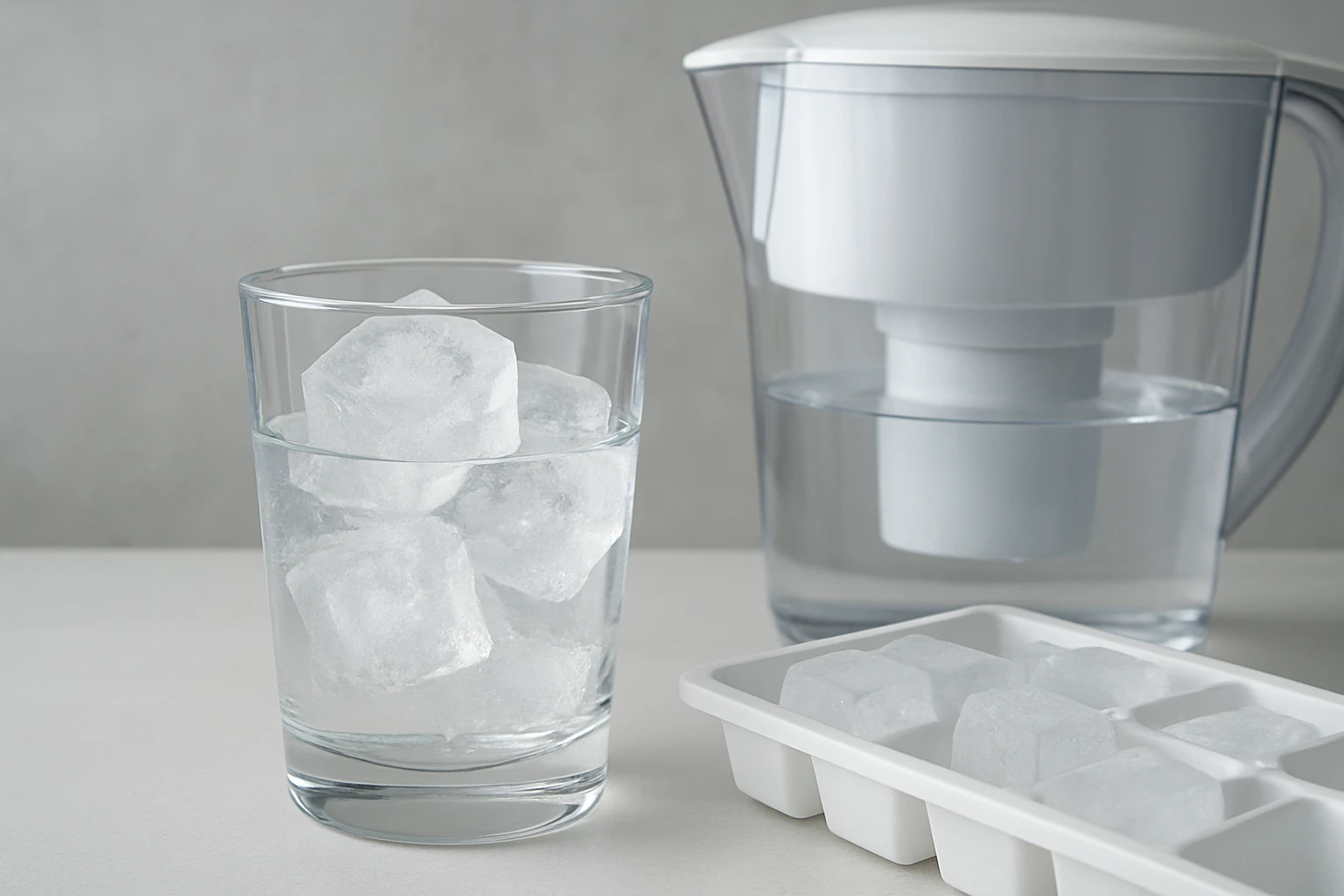
For households that rely on pitchers or countertop dispensers, the Aqua Crest Brita‑Compatible Filters provide a cost‑effective alternative. Certified to NSF/ANSI 42, these filters target chlorine and lead while maintaining a high flow rate, making them suitable for pre‑freezing water in reusable ice trays.
Another robust option is the PUR Plus Water Filter. This 3‑in‑1 filtration system reduces microplastics, chlorine, and heavy metals, and is engineered for up to 40 gallons of use before replacement. Its lock‑fit design simplifies installation and prevents unfiltered water from mixing with filtered water.
Ice Maker Maintenance
Even with high‑quality filtration, neglecting ice maker maintenance can reintroduce mineral taste. Regular cleaning of the ice bin, water reservoir, and internal components prevents biofilm formation and mineral scaling. A monthly cleaning cycle using a solution of one part white vinegar to three parts water helps dissolve calcium deposits.
After cleaning, it is essential to flush the water line to remove any residual cleaning solution. Most refrigerators have a reset button for the water filter indicator; pressing and holding this button for three seconds will clear the reminder light after a filter change.
For standalone ice makers, consult the manufacturer’s manual for specific descaling instructions. Using a descaling product that is safe for food‑grade equipment ensures that no harsh chemicals remain in the water pathway.
Finally, verify that the water temperature entering the ice maker is within the recommended range (typically 40‑50 °F). Water that is too cold can freeze prematurely, leading to incomplete filtration and a higher concentration of minerals in the ice.
Filtration Solutions for Better‑Tasting Ice
Choosing the appropriate filtration solution depends on the household’s water usage patterns and equipment. The following products are highlighted for their relevance to ice quality improvement.
- Frigidaire PureSource Ultra II Filter: Designed for refrigerator water lines, this filter reduces up to 99 % of contaminants, including lead, nitrates, and mercury. It is NSF and WQA certified, ensuring compliance with industry standards. Priced at $59.99 with a 4.8‑star rating from 35,335 reviews, it offers reliable performance for fridge‑based ice makers.
- Aqua Crest Brita‑Compatible Filters: A six‑pack solution for pitchers and dispensers, these filters are NSF/ANSI 42 certified for chlorine reduction and meet NSF372 requirements for lead‑free construction. At $16.14 for six filters and a 4.6‑star rating from 29,344 reviews, they provide an economical option for pre‑freezing water in reusable trays.
- PUR Plus Water Filter: This 3‑pack replacement delivers 3‑in‑1 filtration, targeting microplastics, chlorine, and heavy metals. Certified by NSF and WQA, it offers up to 40 gallons of use per filter and is priced at $18.39 with a 4.5‑star rating from 27,753 reviews.
- Frigidaire PurePour Water Filter: Intended for countertop dispensers, this filter maintains consistent water quality for ice trays placed on the kitchen counter. It is priced at $59.99 and holds a 4.7‑star rating from 12,624 reviews.
Integrating any of these filters into the water supply chain will reduce the mineral load before freezing, resulting in ice that tastes cleaner and more neutral.
Comparison/Selection Guide
| Product | Filtration Type | Capacity (gallons) | Price (USD) | Rating | Best For |
|---|---|---|---|---|---|
| Frigidaire PureSource Ultra II Filter | Carbon‑based, NSF/WQA certified | ~150 (manufacturer recommendation) | 59.99 | 4.8/5 (35,335 reviews) | Refrigerator ice makers and water dispensers |
| Aqua Crest Brita‑Compatible Filters | Activated carbon, NSF/ANSI 42 | ~40 per filter (6‑pack) | 16.14 | 4.6/5 (29,344 reviews) | Pitcher or dispenser water that will be frozen in trays |
| PUR Plus Water Filter | 3‑in‑1 (carbon, ion‑exchange, micro‑filtration) | 40 per filter | 18.39 | 4.5/5 (27,753 reviews) | Pitcher/dispenser users seeking lead and microplastic removal |
| Frigidaire PurePour Water Filter | Carbon‑based, NSF certified | ~150 (manufacturer recommendation) | 59.99 | 4.7/5 (12,624 reviews) | Countertop dispensers and portable ice‑making setups |
When selecting a filter, consider the source of the water used for ice, the desired replacement frequency, and the budget. Refrigerator‑integrated filters such as the PureSource Ultra II provide the most seamless experience, while pitcher‑based filters offer flexibility for households that prefer manual ice preparation.
Best Practices & Tips
- Test tap water annually for hardness, chlorine, and heavy metals to determine the most appropriate filtration method.
- Replace refrigerator water filters according to the manufacturer’s schedule, typically every six months or 150 gallons.
- Clean the ice maker’s water reservoir and bin monthly using a vinegar solution to prevent mineral scaling.
- For pitcher‑based ice, fill the pitcher with filtered water and allow it to chill before transferring to ice trays; this reduces the time water spends in contact with the filter, preserving flow rate.
- Store ice trays in a sealed container to avoid absorption of odors from the freezer, which can mask mineral taste improvements.
- Consider a point‑of‑use reverse‑osmosis system if water hardness exceeds 200 ppm, as this technology removes the majority of dissolved solids.
- Reset the water filter indicator light after each filter change to ensure accurate maintenance reminders.
Frequently Asked Questions
1. Why does ice sometimes taste metallic even after changing the filter?
The metallic taste may originate from plumbing fixtures that contain copper or galvanized steel. Installing a dedicated under‑sink filter can address this issue.
2. How often should I clean my ice maker?
Cleaning should be performed at least once every month, and more frequently if the water source is particularly hard.
3. Can I use a water softener to improve ice taste?
A water softener reduces calcium and magnesium, which are primary contributors to hardness. However, it does not remove chlorine or heavy metals, so pairing it with an activated‑carbon filter yields the best results.
4. Does the temperature of the water affect mineral concentration in ice?
Colder water freezes more quickly, allowing less time for minerals to concentrate. Using chilled, filtered water can slightly improve the perceived purity of the ice.
5. Are pitcher filters as effective as refrigerator filters?
Pitcher filters are effective for reducing chlorine and lead, but they typically have a lower capacity and may not address all minerals found in hard water. Refrigerator filters are designed for continuous use and often have higher flow rates.
6. Will a reverse‑osmosis system make ice taste better?
Reverse‑osmosis removes the majority of dissolved solids, producing exceptionally pure ice. The trade‑off includes higher water waste and the need for periodic membrane replacement.
7. How do I know when a filter needs replacement?
Most filters have a built‑in indicator light that activates after the recommended usage period. In the absence of an indicator, track the date of installation and replace the filter every six months or according to the manufacturer’s gallon limit.
Conclusion
Mineral‑tasting ice is a common but solvable problem. By understanding water chemistry, maintaining the ice maker, and selecting appropriate filtration products, one can consistently produce clear, neutral‑flavored ice. The recommended filters—Frigidaire PureSource Ultra II, Aqua Crest Brita‑Compatible, PUR Plus, and Frigidaire PurePour each address specific aspects of water quality and are suited to different household setups. Implementing the best‑practice checklist and performing regular maintenance will ensure that the ice produced at home enhances the enjoyment of any beverage.
Products Featured in This Guide
Frigidaire PureSource Ultra II Filter
Price: $59.99 | Rating: 4.8/5 (35,335 reviews)
Featured because it provides refrigerator‑integrated filtration that removes up to 99 % of contaminants, directly improving the taste of ice produced by built‑in ice makers.
Aqua Crest Brita‑Compatible Filters
Price: $16.14 (6‑pack) | Rating: 4.6/5 (29,344 reviews)
Featured because it offers an affordable, high‑flow solution for pitcher‑based water filtration, allowing users to pre‑filter water before freezing.
PUR Plus Water Filter
Price: $18.39 (3‑pack) | Rating: 4.5/5 (27,753 reviews)
Featured because its 3‑in‑1 filtration removes microplastics, chlorine, and heavy metals, delivering high‑quality water for both drinking and ice preparation.
Frigidaire PurePour Water Filter
Price: $59.99 | Rating: 4.7/5 (12,624 reviews)
Featured because it supplies consistent filtration for countertop dispensers, making it ideal for households that fill ice trays from a portable source.