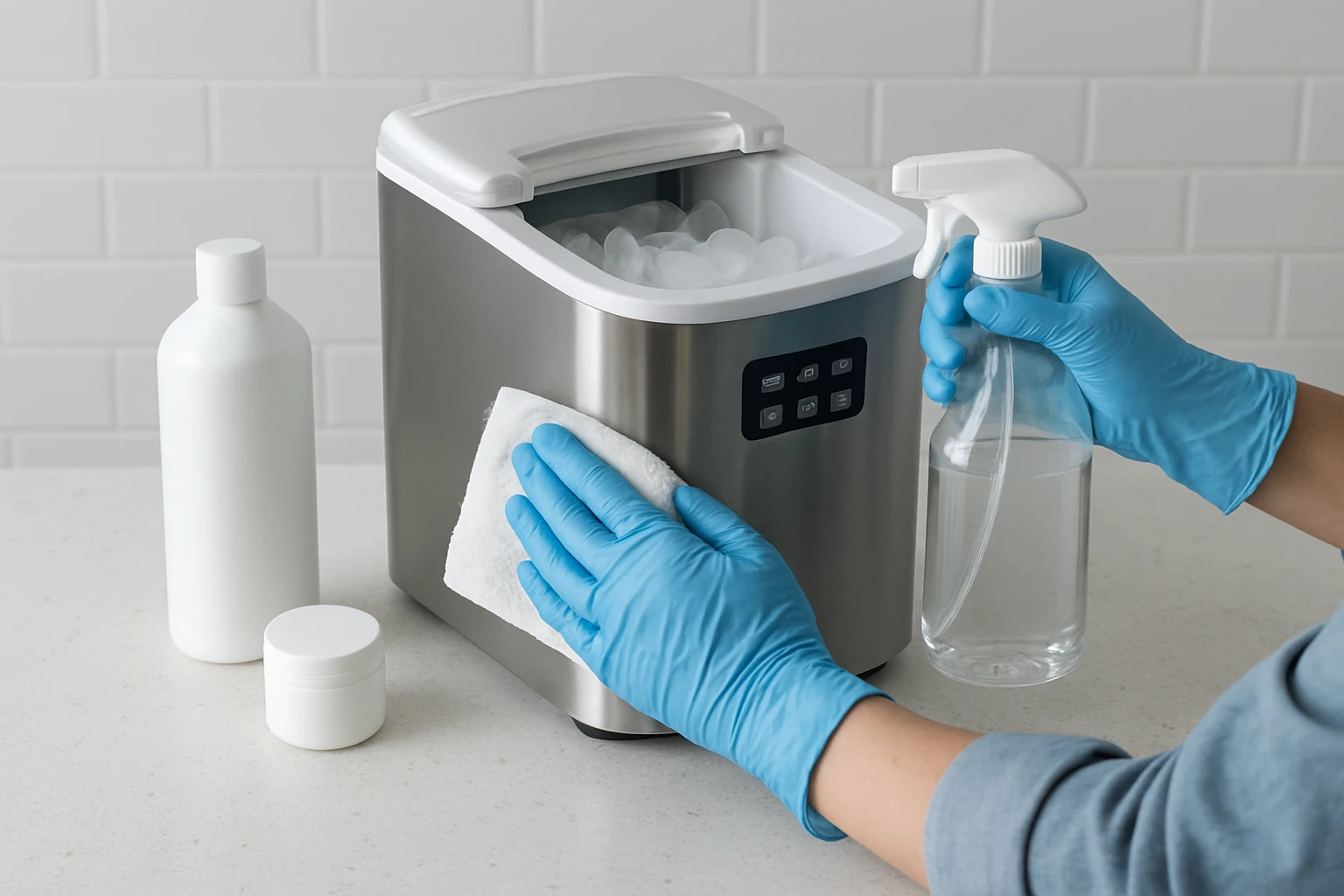
How to Sanitize a Countertop Ice Maker for Immunocompromised Individuals: Step-by-Step Safe Cleaning & Disinfection Guide
Introduction
Immunocompromised individuals rely on a pristine environment to reduce exposure to harmful microbes. A countertop ice maker can become a hidden reservoir for bacteria, mold, and mineral deposits if not maintained properly. This guide will teach the reader how to clean and disinfect the device safely, ensuring that every ice cube remains crystal clear and hygienic. By following these steps, one can protect vulnerable users while extending the lifespan of the appliance.
What You'll Need
- A clean, soft microfiber cloth
- Food‑grade citric‑acid based cleaner (e.g., ACTIVE Ice Machine Cleaner Tablets)
- Nickel‑safe descaler (e.g., Essential Values Ice Maker Cleaner)
- Distilled water for rinsing
- Rubber gloves and eye protection
- Soft‑bristle brush or old toothbrush
All of the recommended products are listed in the "Products Mentioned in This Guide" section for quick reference. The tools are chosen for their safety, effectiveness, and compatibility with most countertop ice makers, including the Silonn Countertop Ice Maker.
Step 1: Prepare the Ice Maker for Cleaning
Begin by unplugging the unit and removing the ice basket, water tank, and any detachable trays. This isolates the internal components and prevents accidental activation of the self‑cleaning cycle. Place the removed parts on a clean surface covered with a microfiber cloth to catch any residual water. For the Silonn Countertop Ice Maker, the 2.5 L ice basket and 1.8 L water tank can be handled without risk of damage due to their sturdy spring‑load design.
Step 2: Perform a Preliminary Rinse
Fill the water tank with distilled water and run a short cycle (approximately 3 minutes) to flush loose debris from the internal tubing. Distilled water is essential because it contains no minerals that could redeposit during the cleaning process. Once the cycle completes, discard the water and remove any remaining ice from the basket. This step reduces the load on the cleaning agents that will be introduced in the next stage.
Step 3: Apply a Food‑Grade Descaling Tablet
Place one ACTIVE Ice Machine Cleaner Tablet into the water tank. The tablet contains citric acid, a food‑grade compound that dissolves calcium carbonate and limescale without harming nickel, stainless steel, or aluminum components. Fill the tank with warm (not hot) distilled water to the recommended level and allow the tablet to dissolve completely, typically 10–15 minutes. The product is priced at $16.96, holds a rating of 4.5/5.0 from 7,136 reviews, and provides a one‑year supply of 24 tablets, making it a cost‑effective solution for regular maintenance.
Step 4: Run the Self‑Cleaning Cycle
Activate the LED touch control panel on the Silonn Countertop Ice Maker by pressing the self‑cleaning icon (blue indicator). The machine will circulate the citric‑acid solution through its internal pathways for 30 minutes, breaking down mineral buildup and biofilm. During this time, the large 2.5 L ice basket remains sealed, preventing any accidental spillage. After the cycle ends, the indicator will turn green, indicating that the basket is full and the cleaning process is complete.
Step 5: Rinse Thoroughly with Distilled Water
Empty the tank and refill it with fresh distilled water. Run two full ice‑making cycles, discarding the ice each time, to flush any residual cleaning solution from the system. This double‑rinse method is critical for immunocompromised users because even trace amounts of cleaning agents could cause irritation. Once the water runs clear and the ice is free of any off‑flavors, the machine is ready for reassembly.
Step 6: Deep Clean Removable Parts with a Nickel‑Safe Descaler
While the internal system is being rinsed, soak the ice basket, water tank, and any removable trays in a solution of Essential Values Ice Maker Cleaner. Mix 4 oz of the cleaner with 1 gallon of warm distilled water, as instructed on the label. This solution penetrates stubborn scale and eliminates odors without leaving a chemical aftertaste. The product costs $13.99, carries a 4.5/5.0 rating from 18,312 reviews, and each 16 fl oz bottle provides up to four uses, delivering excellent value for both home and commercial settings.
Step 7: Scrub and Rinse Removable Components
Using a soft‑bristle brush or an old toothbrush, gently scrub the interior surfaces of the basket and tank to dislodge any remaining debris. Rinse each component under a steady stream of distilled water until no suds remain. Pat dry with a clean microfiber cloth before placing the parts back into the machine. This meticulous approach ensures that no microbial colonies can hide in crevices, a crucial consideration for users with weakened immune systems.
Step 8: Perform a Final Sanitation Check
Inspect the LED indicators on the Silonn Countertop Ice Maker. The white light should indicate that the unit is ready to produce ice, the green light confirms a full basket, and the red low‑water warning should be off. If any indicator remains active, repeat the rinsing step until the system reports a normal status. This final verification step provides confidence that the appliance is safe for immediate use.
Tips & Pro Tips
- Schedule a deep cleaning routine every 3–6 months using the descaler and tablet combo; regular maintenance prevents biofilm formation.
- Store cleaning tablets in a cool, dry place to maintain potency; moisture can cause premature activation.
- Use a dedicated cleaning brush for ice makers only; cross‑contamination with other kitchen tools can reintroduce pathogens.
- When possible, operate the ice maker in a well‑ventilated area to reduce the risk of airborne contaminants settling on the ice.
- Consider using a portable air purifier near the appliance if the kitchen environment has high humidity or dust levels.
Troubleshooting
Problem: Ice has a cloudy appearance after cleaning.
Solution: Run an additional rinse cycle with fresh distilled water and ensure the descaling solution was fully flushed. Cloudiness often indicates residual mineral particles.
Problem: The machine does not start after cleaning.
Solution: Verify that the water tank is properly seated and that the LED touch panel is not locked. Reset the unit by unplugging for 60 seconds, then plug back in.
Problem: Unpleasant odor persists.
Solution: Use a second dose of Nu‑Calgon Ice Machine Cleaner, which is nickel‑safe and designed to eliminate stubborn odors. Follow the manufacturer’s instructions for a 30‑minute soak, then rinse thoroughly.
Conclusion
Sanitizing a countertop ice maker for immunocompromised individuals requires a systematic approach that combines thorough rinsing, food‑grade descaling, and careful inspection of all components. By employing the recommended products—such as the Silonn Countertop Ice Maker, ACTIVE Ice Machine Cleaner Tablets, and Essential Values Ice Maker Cleaner—one can achieve a hygienic ice supply without compromising device performance. Regular maintenance not only safeguards health but also preserves the appliance’s efficiency, ensuring that every cup of water remains refreshingly pure.
Products Mentioned in This Guide
Frequently Asked Questions
How often should a countertop ice maker be sanitized for immunocompromised users?
Sanitize it at least once a month, or after any contamination event, to keep bacterial growth minimal.
What type of cleaner is safe for both the ice maker and users with weakened immune systems?
Use a food‑grade citric‑acid based cleaner and a nickel‑safe descaler, both approved for potable‑water appliances.
Why is distilled water recommended for rinsing the ice maker?
Distilled water leaves no mineral residues, preventing new buildup and reducing microbial growth.
Can I use regular household bleach to disinfect the ice maker?
No; bleach can corrode metal parts and leave harmful residues, so stick to food‑grade cleaners.
What protective gear should I wear while cleaning the ice maker?
Wear rubber gloves and eye protection to avoid skin irritation and accidental splashes.