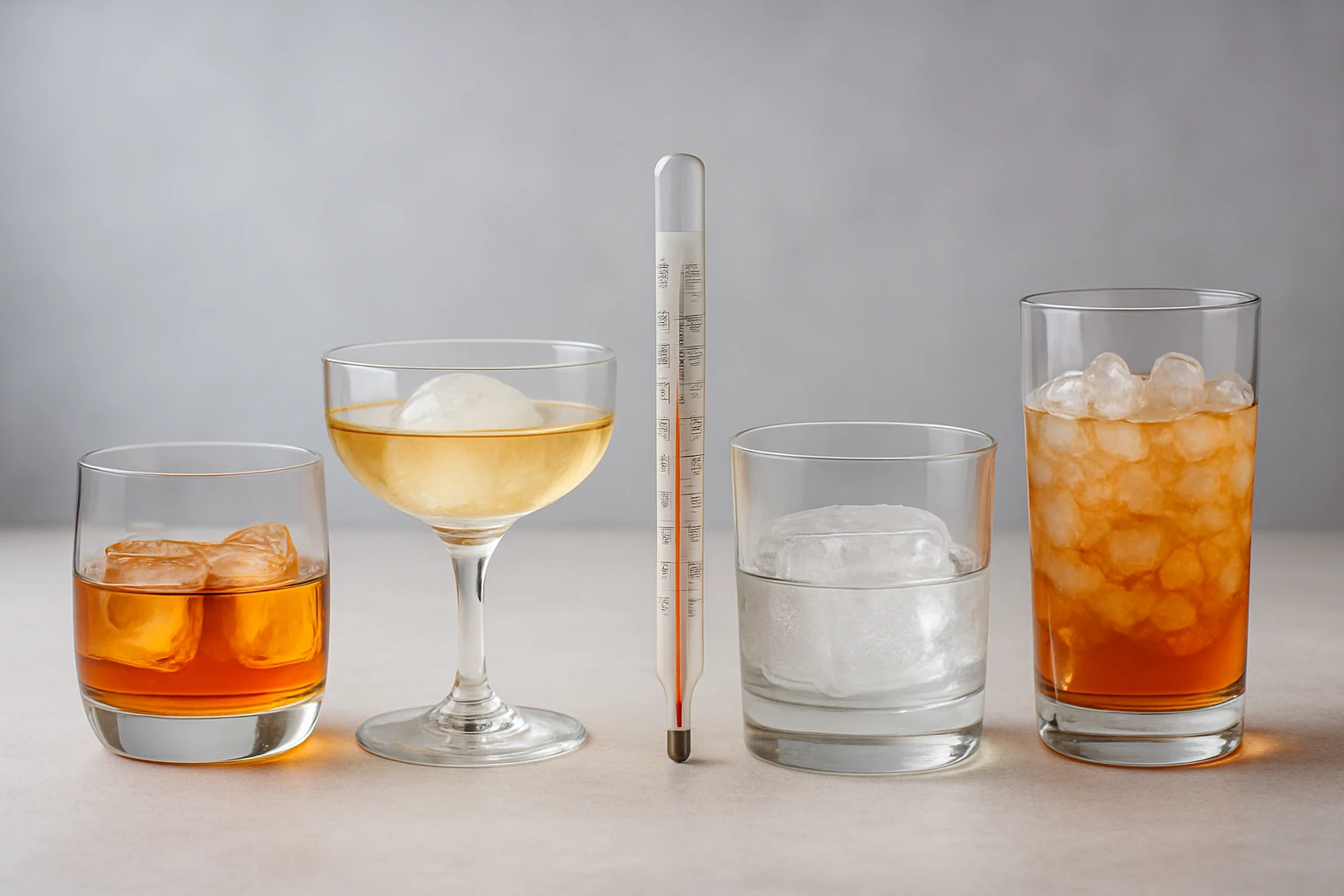
How to Serve Spirits: Ideal Serving Temperatures and Best Ice Types for Whiskey, Gin, Vodka, and Rum
Introduction
The reader will learn how to present whiskey, gin, vodka, and rum in a manner that enhances aroma, flavor, and overall enjoyment. Understanding the science of temperature control and ice selection permits a bartender or home enthusiast to deliver a consistently high quality experience. The guide combines practical steps with product recommendations that act as reliable tools for each stage of service. Mastery of these techniques will elevate any gathering from ordinary to memorable.
What You’ll Need
- Riedel Rocks Glass – premium, drink‑specific glassware designed for optimal ice accommodation.
- OXO Ice Cube Tray – a two‑pack tray with a sliding lid that produces uniform, easy‑release cubes.
- Digital thermometer (optional but recommended for precise temperature measurement).
- Bar spoon or stirrer.
- Clean, dry cloth for wiping glassware.
Step‑by‑Step Instructions
Step 1: Choose the Appropriate Glassware
Selecting the correct vessel influences how the spirit delivers its aromatic compounds to the nose. For whiskey, bourbon, and other aged spirits, a rocks glass provides a broad rim and sufficient volume for ice and dilution. The Riedel Rocks Glass is engineered to hold both standard and larger ice cubes, reducing liquid displacement and preventing the perception of being under‑served. It is dishwasher safe, rated 4.8 out of 5 stars from 952 reviews, and costs $49.00. Its design, created with spirits specialist Zane Harris, ensures that the spirit’s temperature remains stable while the ice melts at a controlled rate.
For gin and vodka, a highball or a slightly larger rocks glass may be preferred to accommodate additional mixers or larger ice. The same Riedel glass can be employed because its volume accommodates a wide range of cocktail styles without compromising clarity.
Rum, particularly dark or spiced varieties, benefits from a glass that allows the spirit’s complex spices to breathe. Again, the Riedel Rocks Glass provides an optimal surface area while maintaining a comfortable grip.
Ensure that the glass is free of fingerprints and residual detergent, as these can interfere with the spirit’s aroma.
Step 2: Chill the Glass (When Appropriate)
Some bartenders prefer to pre‑chill the glass for high‑proof spirits such as cask‑strength whiskey. Place the glass in a refrigerator for 10‑15 minutes or fill it with ice water for a brief period, then discard the water before adding the spirit. Chilling reduces the initial temperature shock and slows the rate of dilution.
If the drink will be served over ice, pre‑chilling is optional because the ice will quickly lower the temperature. However, for neat pours that are intended to be savored slowly, a chilled vessel enhances mouthfeel.
Do not over‑chill to the point where the glass becomes frosted, as this may obscure visual appreciation of the spirit.
After chilling, wipe the exterior with a clean cloth to remove condensation.
Step 3: Select the Ideal Ice Type
Ice influences dilution rate, temperature drop, and mouthfeel. Larger cubes melt more slowly, preserving the spirit’s character while providing a gentle cooling effect. Smaller cubes or crushed ice melt rapidly, delivering a quicker dilution that may be desirable for high‑proof cocktails.
For whiskey, a single large cube or a sphere is ideal. The OXO Ice Cube Tray produces uniform, rounded cubes that release easily from the tray, reducing the risk of cracking the glass. It features a sliding lid that allows the user to dispense only the required number of cubes, preserving the remainder from freezer odors. The tray is rated 4.5 out of 5 stars from 9,394 reviews and costs $12.99.
For gin cocktails such as a gin‑and‑tonic, medium‑sized cubes provide a balance between cooling and dilution. For vodka martinis, clear, large cubes maintain the drink’s clarity while preventing over‑dilution.
Rum punches and tropical drinks often benefit from crushed ice, which chills the beverage rapidly and creates a refreshing slush texture. In such cases, a separate crushing method may be employed.
When using the OXO tray, fill each compartment only to the indicated line to allow for expansion; this prevents the lid from sticking and ensures easy removal.
Step 4: Measure and Adjust Temperature
Professional service begins with measuring the spirit’s temperature. A digital thermometer provides an accurate reading within a fraction of a degree. Whiskey is typically served between 15 °C and 18 °C (59 °F–64 °F). Gin and vodka are often enjoyed slightly colder, around 12 °C to 14 °C (54 °F–57 °F). Rum varies; light rums are best at 12 °C–14 °C, while dark rums may be served at 15 °C–18 °C.
If the spirit is above the desired range, add a single ice cube and stir gently for 5‑10 seconds with a bar spoon. The Riedel Rocks Glass allows the ice to sit comfortably without crowding the interior, ensuring an even temperature drop.
Do not over‑stir, as excessive agitation can introduce unwanted aeration and alter the spirit’s aromatic profile.
Record the temperature after stirring; the target range should be achieved without excessive dilution.
Step 5: Serve and Present
Place the prepared spirit in the chosen glass, ensuring that any ice remains centered to avoid uneven dilution. For whiskey, a single large cube should rest against the side of the glass, allowing the spirit to glide over the ice as it melts.
For gin and tonic, add a garnish such as a citrus twist or herb sprig after the ice has settled. The garnish should be placed on the rim rather than submerged, preserving its aromatic contribution.
Vodka cocktails that are served neat may be presented with a simple lemon peel or a small olive, depending on the style. The Riedel glass’s clear, thin walls showcase the spirit’s color and clarity.
Rum drinks that incorporate mixers should be poured over the ice, allowing the ice to moderate the sweetness and prevent the drink from becoming cloying.
Encourage the guest to observe the aroma before sipping; this ritual enhances appreciation of the spirit’s nuanced flavors.
Tips & Pro Tips
- Use filtered water when filling ice trays; impurities can affect the taste of the melted ice.
- Store the OXO Ice Cube Tray upright to prevent water from seeping into the lid mechanism.
- Allow the Riedel Rocks Glass to air dry after washing; moisture can cause water spots that distract from visual presentation.
- When serving multiple spirits, label each glass subtly with a small sticker or engraved marker to avoid confusion.
- For high‑proof whiskey, consider a brief “nose‑warming” by gently swirling the spirit before adding ice.
Troubleshooting
| Problem | Possible Cause | Solution |
|---|---|---|
| Ice sticks to the tray lid | Over‑filling or water expansion | Fill each compartment only to the line; allow a small air gap. |
| Spirit tastes diluted too quickly | Ice cubes are too small or too many | Use a single large cube from the OXO tray; stir for a shorter period. |
| Glass feels too cold to hold | Excessive pre‑chilling | Warm the glass slightly with your hand before serving. |
Conclusion
The reader now possesses a systematic approach to serving whiskey, gin, vodka, and rum at their ideal temperatures with appropriate ice types. By selecting the Riedel Rocks Glass, employing the OXO Ice Cube Tray, and following the temperature‑control steps, one can consistently deliver a refined drinking experience. Mastery of these details distinguishes a knowledgeable host from a casual server, and the principles outlined can be applied to future spirit explorations.
Products Mentioned in This Guide
Frequently Asked Questions
What is the ideal serving temperature for whiskey?
Whiskey is best enjoyed between 15‑18°C (59‑64°F) to allow its aromas and flavors to open without becoming overly warm.
How should gin be served to preserve its botanicals?
Serve gin slightly cooler, around 12‑14°C (54‑57°F), often over a single large ice cube to chill without diluting the delicate botanicals.
What type of ice is best for vodka cocktails?
Clear, large cubes or spheres melt slowly, keeping vodka chilled while minimizing dilution and preserving its clean taste.
Does using a rocks glass improve the drinking experience for spirits?
Yes, a rocks glass provides a sturdy base and proper ice accommodation, enhancing aroma concentration and sip comfort.
How can I measure the correct temperature for serving spirits at home?
Use a digital kitchen thermometer to check the liquid’s temperature before serving, adjusting by a few degrees as needed.