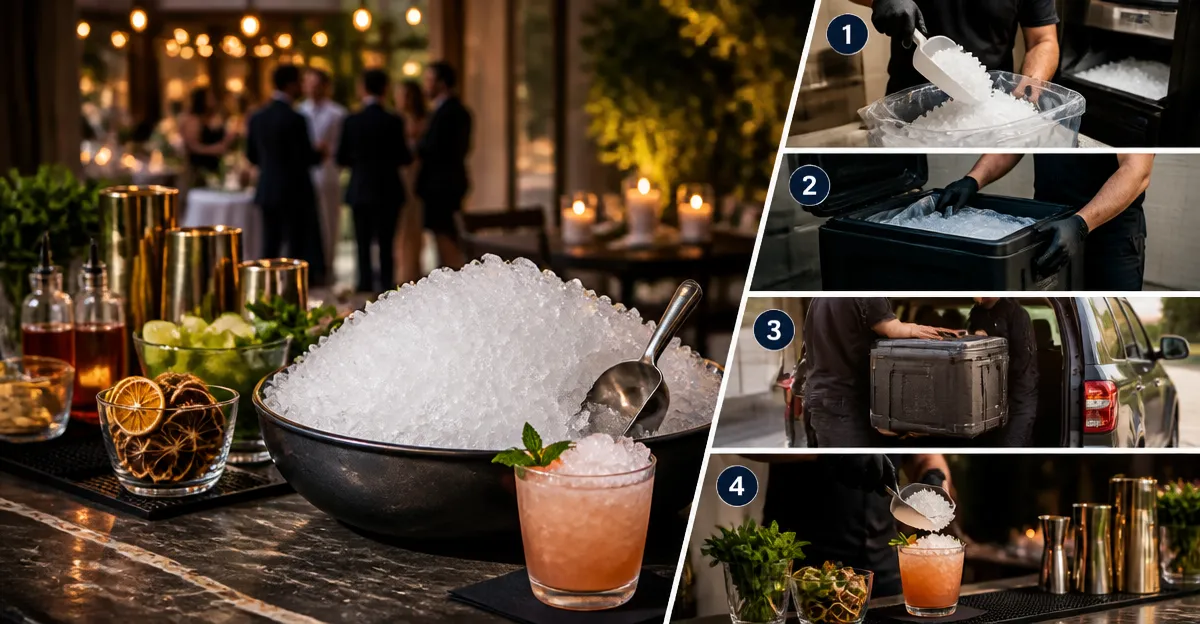
How to Stage a Micro‑Ice Delivery for Private Cocktail Events: Step‑by‑Step Guide to Wowing Guests
Introduction
This guide explains how to create a micro‑ice delivery system that enhances private cocktail events. Readers will learn how to calculate ice requirements, select appropriate storage containers, transport ice safely, and present chilled beverages with elegance. The information is valuable because proper ice management influences drink temperature, presentation, and overall guest satisfaction.
The instructions are designed for event planners, catering professionals, and home entertainers who desire a reliable, repeatable process. By following the steps, one can reduce waste, minimise last‑minute stress, and showcase a polished service that distinguishes the event.
What You'll Need
- Reusable drawstring ice bags (5 lb and 10 lb capacities)
- Heavy‑duty insulated delivery bag for larger containers
- Reusable dry‑ice sheet packs for extended cooling
- Standard bar tools, cocktail glasses, and garnish trays
- Coolers, insulated trays, and ice‑proof work surfaces
All recommended products are listed in the final section with pricing and rating details.
Step 1: Determine Ice Quantity and Distribution
Accurate ice estimation prevents shortages and eliminates unnecessary excess that can melt and dilute drinks. Begin by listing each cocktail station, the number of guests, and the expected serving time. Allocate approximately 0.5 lb of ice per guest for a two‑hour event, adjusting upward for outdoor heat or high‑proof spirits that require extra chilling.
For a gathering of 30 guests, the calculation yields 15 lb of ice. Divide this amount among storage units to balance weight and accessibility. Use a combination of 5 lb and 10 lb bags to achieve flexibility; the smaller bags fit into portable coolers while the larger bags reduce the number of handling cycles.
Why the selected bags are useful: the FireKylin 5 lb Ice Bags provide a convenient size for individual cooler compartments, and their drawstring closure creates an instant handle for quick transfer. The FireKylin 10 lb Ice Bags supply bulk capacity for larger coolers, reducing the total number of bags that must be stacked.
Both products are food‑grade, leak‑resistant, and rated 4.4/5 and 4.3/5 respectively, ensuring reliability during transport.
Step 2: Prepare Ice Storage and Extend Cooling Time
After calculating the required ice, fill the selected bags with freshly produced ice from a commercial ice maker or freezer. Seal each bag using the drawstring mechanism; the closure prevents dust ingress and creates a sturdy handle for lifting.
To extend cooling duration, incorporate Rainbow Dry Ice Packs. These reusable sheets absorb water, freeze solid, and can be cut to fit any container. Place one or two frozen sheets at the bottom of each cooler, then layer the sealed ice bags on top. The dry‑ice packs maintain a lower ambient temperature, allowing ice to last up to three days under optimal conditions.
The dry‑ice packs are rated 4.4/5 with 1,387 reviews, confirming their effectiveness for both food transport and outdoor events. Follow the manufacturer’s soaking and freezing instructions to achieve maximum hardness before use.
Finally, store the prepared bags in a dedicated freezer area until the event begins. This pre‑planning step eliminates the need for on‑site ice production, which can cause delays.
Step 3: Assemble the Insulated Cocktail Stations
Each cocktail station requires an insulated container that can hold both ice and prepared drinks. The Bodaon Insulated Food Delivery Bag offers a large, waterproof interior with a 23" × 15" × 14" capacity, making it suitable for transporting multiple bottles, mixers, and garnish trays.
Place a layer of frozen Rainbow Dry Ice Packs at the base of the bag, followed by a few sealed FireKylin 5 lb Ice Bags to create a cold reservoir. The insulated bag’s waterproof aluminum lining prevents moisture from escaping and protects electronic bar tools.
Arrange cocktail glasses on a tiered tray inside the bag, ensuring each glass rests on a small ice pad to maintain temperature without diluting the drink. The bag’s two‑way zipper allows quick access while preserving the internal climate.
Price and rating details: the insulated bag costs $19.99 and holds a 4.5/5 rating from 11,824 reviews, indicating high customer satisfaction for durability and thermal performance.
Step 4: Transport Ice and Serve Cocktails Efficiently
When moving the assembled stations to the event venue, use the drawstring handles of the ice bags as built‑in carrying loops. The ENNIYU 8 lb Ice Bags provide an 8‑lb capacity that balances weight and volume, making them ideal for rapid replenishment of bar coolers during service.
Load the insulated delivery bags onto a wheeled cart or sturdy tray to minimise manual strain. Position the larger FireKylin 10 lb Ice Bags at the rear of the cart, where they can be accessed without disturbing the cocktail presentation.
During service, monitor ice levels and replace depleted bags with pre‑filled reserves stored in a nearby freezer. The reusable nature of all recommended bags reduces waste and aligns with sustainable event practices.
The ENNIYU bags are rated 4.4/5 from 260 reviews and priced at $11.99, offering a cost‑effective solution for high‑volume ice handling.
Step 5: Clean Up and Prepare for Future Events
After the event, empty any remaining ice into a sink and allow the bags to dry completely before storage. The LDPE material of the FireKylin and ENNIYU bags resists odors, enabling reuse without extensive washing.
Fold the Bodaon insulated bag and store it in a dry location; its lightweight design occupies minimal space when not in use. Re‑freeze any unused dry‑ice packs according to the manufacturer’s instructions for the next occasion.
Document the quantities of ice used and any issues encountered. This record will refine future calculations and improve logistical efficiency.
Tips & Pro Tips
- Label each ice bag with its intended cooler to avoid cross‑contamination.
- Use a silicone ice scraper to shape ice cubes for aesthetic garnish presentation.
- Place a thin towel between the insulated bag and the bar counter to prevent condensation damage.
- Consider adding a small amount of crushed ice to the base of each cocktail glass for instant chilling.
- Rotate ice bags every 30 minutes during high‑traffic periods to maintain consistent temperature.
Troubleshooting
| Problem | Possible Cause | Solution |
|---|---|---|
| Ice bags leaking | Seal not fully tightened | Re‑seal using the drawstring and press the knot firmly. |
| Ice melts too quickly | Insufficient dry‑ice pack coverage | Add an extra frozen sheet beneath the ice bags. |
| Condensation on bar surface | Bag not fully sealed | Ensure the insulated bag zipper is completely closed. |
Conclusion
This guide has outlined a systematic approach to staging a micro‑ice delivery for private cocktail events. By calculating ice needs, preparing reusable drawstring bags, employing insulated transport solutions, and following best‑practice tips, one can deliver consistently chilled beverages that impress guests. The recommended products enhance efficiency, reduce waste, and provide reliable performance, yet the process remains feasible with alternative tools if desired.
Readers are encouraged to apply these methods to upcoming gatherings and to refine the workflow based on event‑specific feedback.
Products Mentioned in This Guide
Frequently Asked Questions
How do I calculate the amount of ice needed for a private cocktail event?
Estimate 1‑2 lb of ice per guest, then adjust for drink types and event length, rounding up to the nearest 5‑lb bag size.
What are the best containers for storing and transporting ice on‑site?
Use reusable drawstring ice bags (5 lb or 10 lb) inside a heavy‑duty insulated delivery bag or cooler for optimal retention.
Can dry‑ice sheet packs be used with regular ice for longer cooling?
Yes, layer dry‑ice sheet packs beneath regular ice to extend cooling time without direct contact with beverages.
How should I present chilled cocktails to look professional?
Serve drinks on insulated trays, use ice‑proof work surfaces, and garnish on pre‑chilled glasses for a polished appearance.
What steps reduce ice waste and last‑minute stress during events?
Prepare a repeatable ice‑delivery checklist, pre‑measure bag sizes, and store excess ice in insulated containers for quick access.