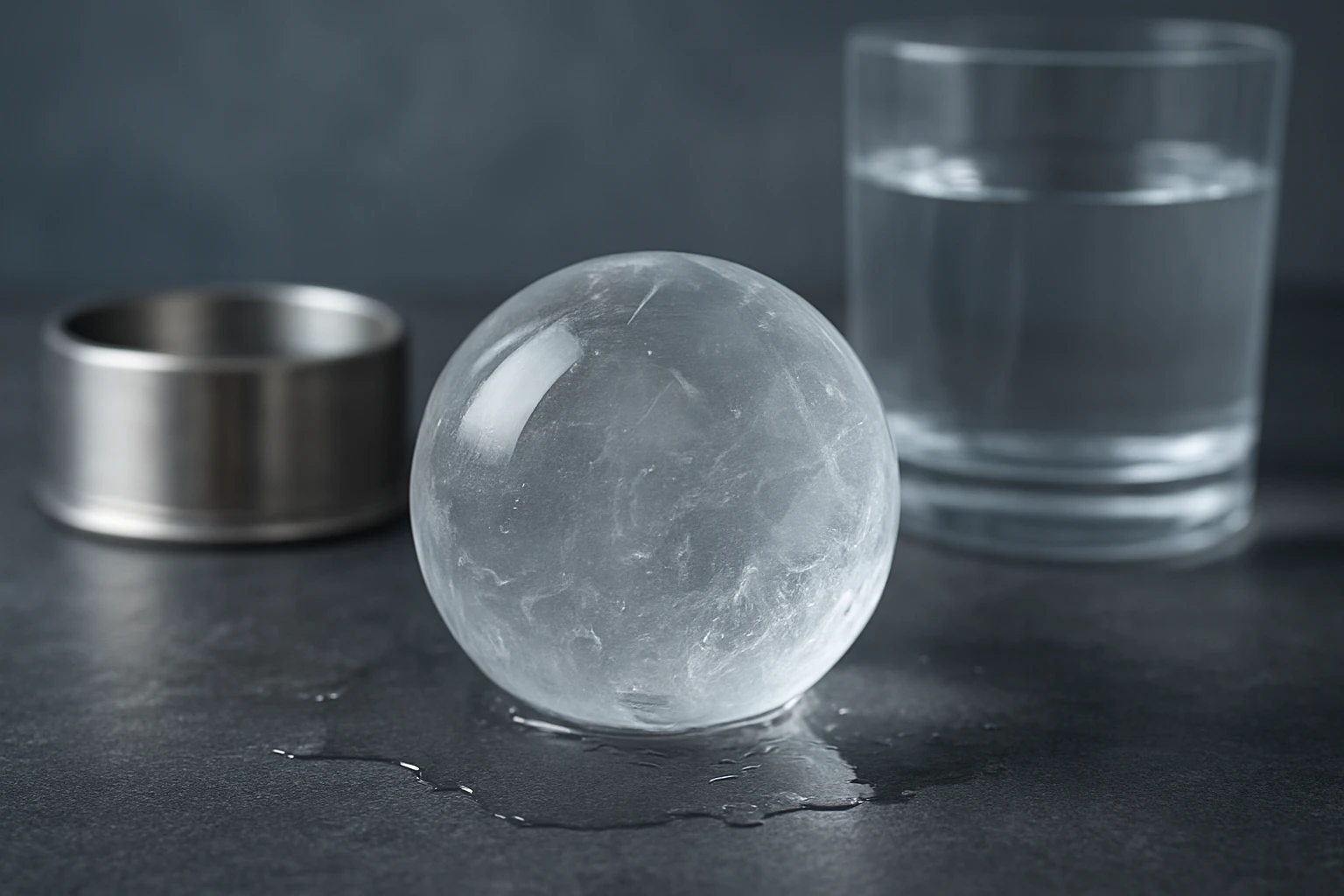

How Water Temperature Affects Ice Clarity: A Complete Guide
Introduction
This guide explains how water temperature influences ice clarity and provides actionable steps for creating crystal‑clear ice at home. Readers will learn the physics of freezing, the role of impurities, and how to select tools that simplify the process. By the end of the article, one will be able to produce bar‑quality ice spheres that enhance whiskey, cocktails, and mocktails.
Background and Context
Ice clarity is determined by the way water solidifies. When water freezes slowly and directionally, dissolved gases and minerals are expelled toward the bottom of the mold, leaving a transparent block. Rapid freezing traps impurities, resulting in cloudy ice. The temperature of the water before freezing also matters; colder water contains fewer dissolved gases, while warm water can hold more, affecting bubble formation.
Two scientific principles are essential:
- Directional Freezing: Cooling from one side forces impurities to move away from the visible surface.
- Thermal Conductivity: Materials with high conductivity (metal, silicone) transfer heat evenly, reducing temperature gradients that cause cloudiness.
Understanding these concepts enables the home enthusiast to replicate professional bar techniques without costly equipment.
Key Concepts and Strategies
1. Water Temperature Selection
Starting with water that is either near boiling or chilled influences clarity differently. Boiling water expels dissolved gases, but it must be cooled to room temperature before freezing to avoid thermal shock that creates cracks. Conversely, using cold tap water reduces the time needed to reach freezing point, but it retains more gases, leading to a higher likelihood of bubbles.
Best practice: bring water to a rolling boil, let it sit for 5‑10 minutes, then refrigerate until it reaches approximately 4 °C (39 °F). This two‑step method balances gas removal with a manageable freezing temperature.
2. Directional Freezing Techniques
Traditional ice trays freeze from all sides simultaneously, trapping impurities throughout the cube. Directional freezing molds, such as the CUBARO Clear Ice Ball Maker, insulate the sides and direct cold air upward. The rigid hard‑shell construction protects the directional system, ensuring consistent crystal‑clear spheres.
Key features of a high‑quality directional mold include:
- Hard‑shell insulation that minimizes side‑heat loss.
- A reservoir that holds water above the freezing surface.
- A storage bag to keep finished spheres free from freezer odors.
3. Water Purity and Filtration
Mineral content is a major source of cloudiness. Using filtered or distilled water reduces calcium, magnesium, and other minerals that scatter light. If a filtration system is unavailable, one can perform a simple “double‑boil” method: boil water, let it sit, then boil again before cooling.
4. Freezer Temperature Management
Most household freezers operate at –18 °C (0 °F). For optimal clarity, set the freezer to its coldest setting and avoid frequent door openings. A stable environment allows the ice to freeze slowly, encouraging impurity migration.
Product Recommendation
The CUBARO Clear Ice Ball Maker integrates the principles discussed above. It offers eight 2‑inch crystal‑clear spheres per batch, each melting slower than standard cubes, preserving flavor in whiskey, bourbon, and mixed drinks.
Product Highlights:
- Rigid hard‑shell construction for directional freezing.
- Bonus freezer bag (value $15) for safe storage.
- Four‑step process: fill, place, freeze 24‑30 hours, release.
- Price: $53.29; Rating: 4.4/5.0 from 171 reviews.
- Dimensions: 6" × 10" × 6" – requires adequate freezer space.
These specifications align with the guide’s emphasis on controlled temperature, impurity removal, and slow melt characteristics.
Comparison and Selection Guide
When choosing a clear‑ice system, consider the following criteria:
| Criterion | Essential Features | Why It Matters |
|---|---|---|
| Freezing Method | Directional vs. conventional | Directional molds produce clearer ice by pushing impurities away from the visible surface. |
| Capacity | Number of spheres per batch | Larger batches reduce overall preparation time for frequent hosts. |
| Material | Hard‑shell insulated plastic or silicone | Insulation maintains a stable temperature gradient. |
| Ease of Use | Four‑step process, easy release | Simple procedures encourage consistent results. |
| Price | Budget vs. premium | Balance cost with durability and performance. |
Among available options, the CUBARO Clear Ice Ball Maker scores highly across all categories, making it a reliable choice for both novices and seasoned mixologists.
Best Practices & Tips
- Pre‑Boil and Cool Water: Boil water, let it sit, then refrigerate before freezing.
- Use Filtered Water: Remove minerals that cause cloudiness.
- Maintain Freezer Consistency: Keep the freezer door closed and set it to the coldest setting.
- Employ Directional Molds: Place the mold on the freezer’s coldest shelf for uniform freezing.
- Store Properly: Transfer finished spheres to the included freezer bag to avoid freezer burn and odor absorption.
- Handle Gently: Release ice spheres with warm water on the mold’s exterior to prevent cracking.
- Experiment with Size: Larger spheres melt slower, ideal for sipping spirits; smaller spheres work for fast‑diluting cocktails.
Frequently Asked Questions
1. Does using hot water always produce clearer ice?
Hot water removes dissolved gases, but it must be cooled before freezing to avoid thermal shock. The combination of boiling and subsequent refrigeration yields the clearest results.
2. Can I use tap water if I do not have a filter?
Yes, but perform a double‑boil method to reduce mineral content. The result will be less clear than filtered water but still acceptable for most home applications.
3. How long should the ice freeze?
For the CUBARO Clear Ice Ball Maker, allow 24‑30 hours. Longer freezing times improve clarity, especially in a freezer set to its lowest temperature.
4. Why do some ice cubes appear cloudy even with a directional mold?
Cloudiness can result from water that was not boiled, impurities in the water, or a freezer that is too warm, causing rapid freezing and trapping bubbles.
5. Is it safe to reuse the freezer bag included with the ice maker?
Yes, the bag is designed for repeated use. Clean it with mild soap and dry thoroughly before the next batch.
6. Can I make flavored clear ice?
Infusing water with herbs, fruit, or spices before boiling and freezing will produce flavored clear ice, provided the solids are strained out before the water freezes.
7. Does the size of the ice sphere affect drink dilution?
Larger spheres melt slower, reducing dilution in spirit‑forward cocktails. Smaller spheres melt faster, which is desirable for mixed drinks that require quicker chilling.
Conclusion
Water temperature, purity, and freezing methodology are the three pillars of crystal‑clear ice production. By boiling and cooling water, employing directional molds such as the CUBARO Clear Ice Ball Maker, and maintaining a stable freezer environment, one can consistently create ice that enhances flavor and presentation. The techniques outlined in this guide empower readers to elevate their home bar without reliance on professional equipment.
Products Featured in This Guide
CUBARO Clear Ice Ball Maker
Price: $53.29
Rating: 4.4/5.0 (171 reviews)
Why featured: Provides a hard‑shell directional freezing system that produces eight 2‑inch crystal‑clear ice spheres, includes a bonus freezer bag, and exemplifies the best practices discussed for temperature‑controlled ice clarity.