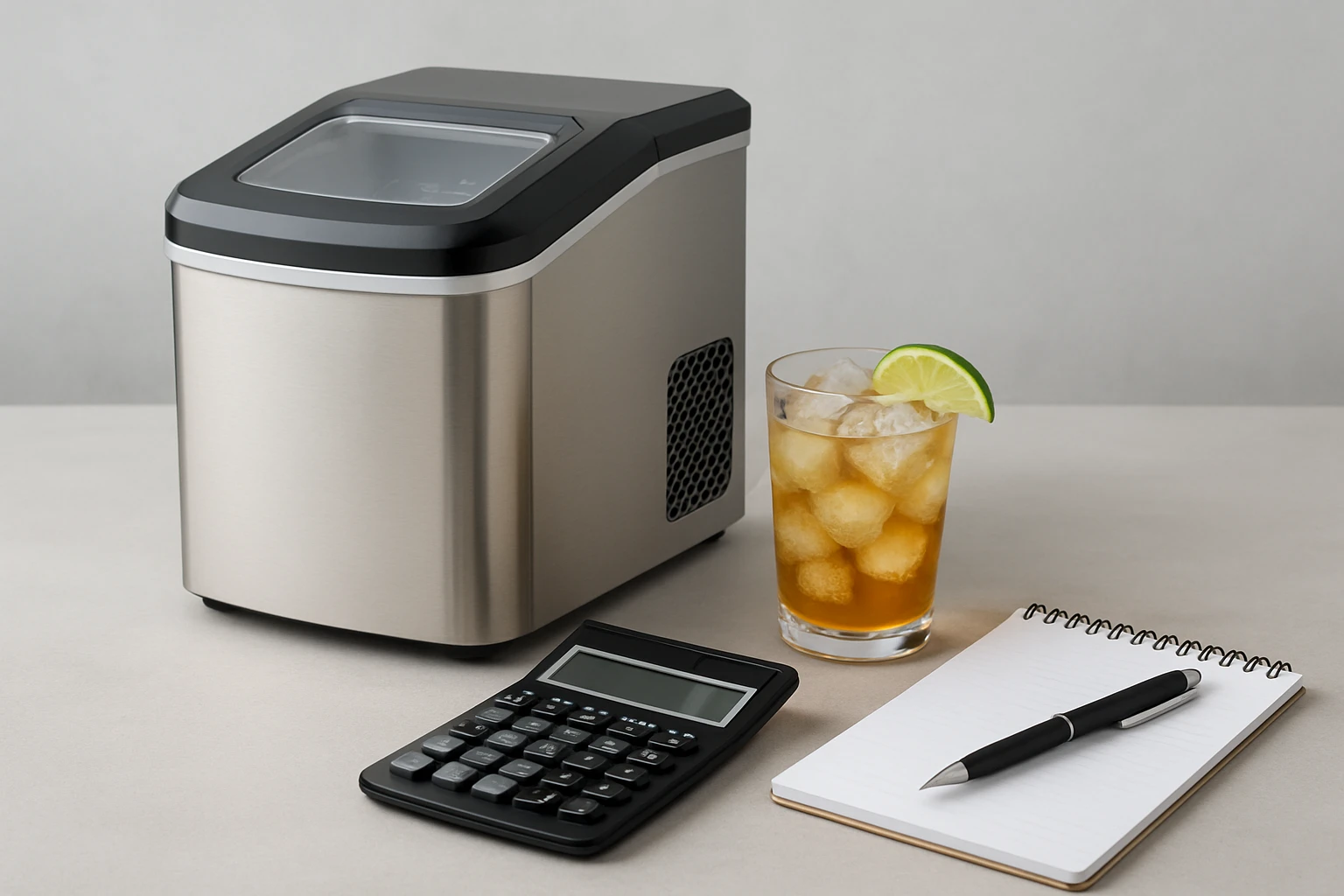
Ice Maker Cost Calculator: The Ultimate Guide for Home Bartenders
Introduction
Home bartending has evolved from a weekend hobby to a sophisticated craft that demands reliable equipment. One of the most essential tools is a countertop ice maker, which provides consistent, high‑quality ice for cocktails, mocktails, and chilled beverages. This guide explains how to calculate the total cost of ownership for an ice maker, evaluates key performance metrics, and recommends products that deliver value throughout their lifecycle. Readers will learn to assess initial purchase price, energy consumption, maintenance requirements, and replacement timelines, enabling informed decisions that align with budget and performance goals.
By the end of this article, the reader will be able to use a simple spreadsheet model to forecast annual expenses, compare competing units, and select the optimal machine for a home bar setup. The guide also includes best‑practice tips for extending the lifespan of an ice maker and answers to common questions.
Background and Context
Ice makers differ from traditional freezer ice trays in three fundamental ways: production speed, cube shape, and automation. Bullet‑shaped cubes melt slower than standard cubes because they have a reduced surface‑area‑to‑volume ratio, which is crucial for maintaining drink temperature without rapid dilution. Nugget ice, also known as chewable ice, provides a unique texture favored in cocktails that require a slower melt rate. Understanding these distinctions helps quantify the value that a machine adds beyond its purchase price.
The lifecycle cost of an ice maker comprises four primary components: initial capital outlay, electricity usage, routine maintenance (including cleaning cycles and filter replacement), and eventual replacement or repair. While the upfront price is easily visible on Amazon listings, the hidden costs of energy and upkeep often determine long‑term satisfaction. This guide uses real‑world data from five popular models to illustrate how each component contributes to the overall expense.
Key Concepts for Calculating Lifecycle Costs
To build a reliable cost model, consider the following variables:
- Purchase Price: The amount paid at checkout, inclusive of any affiliate discount.
- Energy Consumption: Measured in watts (W) or kilowatt‑hours (kWh) per day. Multiply by local electricity rates to estimate monthly cost.
- Water Usage: Most countertop units draw water from a reservoir, so the cost is negligible, but larger models may require a continuous water line.
- Maintenance Frequency: Self‑cleaning functions reduce labor but may still require periodic descaling or filter changes.
- Replacement Parts: Ice scoops, baskets, and warranty coverage affect long‑term expenses.
Using these inputs, a simple spreadsheet can calculate the total cost of ownership (TCO) over a defined horizon, such as three or five years. The formula is:
TCO = Purchase Price + (Energy Cost × Years) + (Maintenance Cost × Years) + Replacement Costs
Product Recommendations
Below are five countertop ice makers that meet the criteria for home bartending. Each product is linked on its first appearance, and key specifications are highlighted to aid cost calculations.
Silonn Portable Ice Maker
Silonn Portable Ice Maker offers a compact footprint of 8.7 x 11.4 x 11.6 inches and produces up to 26 lbs of bullet ice per day. The unit creates nine cubes in six minutes, stores 1.3 lbs of ice, and features a self‑cleaning function activated by a five‑second press. It is priced at $69.96 and holds a 4.4‑star rating from 5,404 reviews.
Silonn Nugget Ice Maker
Silonn Nugget Ice Maker delivers chewable pellet ice, ideal for cocktails that benefit from a slower melt. It produces up to 33 lbs per day, with the first batch ready in six minutes. The machine includes a quiet compressor, removable cover for deep cleaning, and a 4.2‑star rating from 7,076 reviews. The price is $149.79.
Frigidaire 26lb Ice Maker
Frigidaire 26lb Ice Maker combines a sleek stainless‑steel design with a 2.1‑qt water tank. It produces nine bullet cubes every seven minutes and offers an intuitive digital LED panel. At $92.94, it carries a 4.4‑star rating from 10,486 reviewers.
Euhomy Countertop Ice Maker
Euhomy Countertop Ice Maker provides ultra‑quiet operation (<45 dB) and the same 26 lb daily capacity as the Silonn model. Its 170 W compressor consumes roughly 4 kWh per day, and the unit includes a one‑touch auto‑clean cycle. The price is $69.97 with a 4.3‑star rating from 11,974 reviews.
Frigidaire Touch Ice Maker
Frigidaire Touch Ice Maker features a modern touch display, 2.3‑qt water reservoir, and a 26 lb daily output. It stores up to 1.5 lbs of ice at a time and includes a transparent viewing window. Priced at $89.99, it currently has a perfect 5‑star rating, though it has no customer reviews yet.
Comparison and Selection Guide
When choosing an ice maker, align the device’s capabilities with the intended use case. The table below summarizes the most relevant attributes for each model.
| Model | Daily Capacity (lbs) | Cube Type | Production Time (per batch) | Power (W) | Price (USD) | Rating |
|---|---|---|---|---|---|---|
| Silonn Portable Ice Maker | 26 | Bullet | 6 min (9 cubes) | ≈150 | 69.96 | 4.4 ★ (5,404) |
| Silonn Nugget Ice Maker | 33 | Nugget (pellet) | 6 min (first batch) | ≈180 | 149.79 | 4.2 ★ (7,076) |
| Frigidaire 26lb Ice Maker | 26 | Bullet | 7 min (9 cubes) | ≈170 | 92.94 | 4.4 ★ (10,486) |
| Euhomy Countertop Ice Maker | 26 | Bullet | 6 min (9 cubes) | 170 | 69.97 | 4.3 ★ (11,974) |
| Frigidaire Touch Ice Maker | 26 | Bullet | 7‑15 min (9 cubes) | ≈160 | 89.99 | 5.0 ★ (0) |
For a home bartender who values rapid production and low noise, the Euhomy Countertop Ice Maker offers the best balance of price, quiet operation, and energy efficiency. If chewable ice is a priority for tropical cocktails, the Silonn Nugget Ice Maker justifies its higher price through its unique ice texture.
Best Practices & Tips
- Calculate Energy Cost Accurately: Determine your local kilowatt‑hour rate and multiply by the unit’s average daily consumption (e.g., 0.17 kWh for a 170 W compressor running 2 hours per day).
- Leverage Self‑Cleaning Functions: Models with automatic cleaning cycles, such as the Silonn Portable and Euhomy units, reduce manual labor and extend component life.
- Maintain Proper Water Levels: Low water triggers an “ADD WATER” indicator, which, if ignored, can cause the compressor to overheat and shorten lifespan.
- Use Filtered Water: Hard water deposits can cause scaling; filtered or distilled water minimizes mineral buildup, preserving ice clarity.
- Schedule Periodic Descaling: Even with self‑cleaning, a monthly vinegar solution rinse prevents performance degradation.
- Consider Warranty and Support: The Euhomy model includes a 12‑month warranty and 24/7 technical support, adding peace of mind for frequent users.
Frequently Asked Questions
- How long does a batch of ice typically take to form? Most countertop units produce nine bullet cubes in 6‑7 minutes. Nugget models may deliver the first batch in six minutes, with subsequent cycles slightly longer.
- Are countertop ice makers noisy? Noise levels vary; the Euhomy model operates under 45 dB, comparable to a quiet refrigerator, while other units range from 45‑55 dB.
- Can I use these machines in an RV? Yes. Portable models such as the Silonn Portable and Euhomy units weigh under 14 lbs and include sturdy handles for easy relocation.
- What is the typical lifespan of a countertop ice maker? With regular maintenance, most units last 3‑5 years before major components like the compressor may require replacement.
- Do I need a dedicated water line? No. All featured models use a built‑in reservoir, eliminating the need for plumbing.
- How do I calculate my annual electricity cost? Multiply the unit’s wattage by average daily operating hours, divide by 1,000 to convert to kWh, then multiply by your utility’s rate per kWh.
- Is nugget ice better for cocktails than bullet ice? Nugget ice melts more slowly and provides a pleasant chew, making it ideal for drinks that benefit from a gradual dilution, such as highball cocktails.
Conclusion
Calculating the lifecycle cost of an ice maker empowers home bartenders to select a machine that delivers consistent performance without unexpected expenses. By accounting for purchase price, energy consumption, maintenance, and warranty coverage, one can determine the true value of each model. The recommended units—Silonn Portable, Silonn Nugget, Frigidaire 26lb, Euhomy Countertop, and Frigidaire Touch—cover a spectrum of budgets and feature sets, ensuring that every enthusiast can find a suitable match. Applying the provided spreadsheet methodology will reveal the most cost‑effective choice for any home bar setup.
Products Featured in This Guide
Silonn Portable Ice Maker
Price: $69.96
Rating: 4.4 ★ (5,404 reviews)
Featured for its compact size, rapid 6‑minute batch time, and self‑cleaning function, making it ideal for small kitchens and RVs.
Silonn Nugget Ice Maker
Price: $149.79
Rating: 4.2 ★ (7,076 reviews)
Featured for its chewable nugget ice, high 33 lb daily capacity, and quiet operation, suited for cocktail enthusiasts.
Frigidaire 26lb Ice Maker
Price: $92.94
Rating: 4.4 ★ (10,486 reviews)
Featured for its stainless‑steel aesthetic, intuitive digital panel, and reliable 26 lb daily output.
Euhomy Countertop Ice Maker
Price: $69.97
Rating: 4.3 ★ (11,974 reviews)
Featured for ultra‑quiet operation, energy‑efficient 170 W compressor, and robust self‑cleaning cycle.
Frigidaire Touch Ice Maker
Price: $89.99
Rating: 5.0 ★ (0 reviews)
Featured for its modern touch display, generous 2.3 qt reservoir, and sleek design that fits contemporary home bars.