
Ideal TDS for Countertop Ice Makers: Complete Guide to Testing, Adjusting & Getting Clear, Clean Ice
Introduction
Countertop ice makers have become essential appliances for homes, offices, and small businesses that require a steady supply of ice. The quality of that ice depends heavily on the total dissolved solids (TDS) present in the water used. This guide explains the optimal TDS range for countertop ice makers, how to measure TDS accurately, and which products can help you achieve crystal‑clear ice. Readers will learn the science behind TDS, practical testing techniques, adjustment strategies, and best‑practice maintenance tips.
By the end of this article, one will be able to evaluate water quality, select appropriate filtration solutions, and maintain an ice maker that consistently produces clear, clean ice. The information is grounded in real‑world product data, ensuring that recommendations are both reliable and affordable.
Background and Context
Total dissolved solids represent the combined concentration of minerals, salts, and organic matter dissolved in water. While a small amount of TDS contributes to taste, excessive levels can cause cloudiness, scale buildup, and reduced appliance lifespan. For countertop ice makers, a TDS range of 50–150 ppm is generally considered ideal because it balances clarity with mineral content that protects the machine’s internal components.
Water sources differ dramatically: municipal supplies often sit between 200–500 ppm, whereas well water can exceed 1,000 ppm. Understanding the source’s baseline TDS enables users to determine whether filtration, softening, or reverse‑osmosis is required. The following sections break down the science, testing tools, and corrective measures in detail.
Understanding TDS and Its Impact on Ice Quality
When water freezes, impurities are expelled from the crystal lattice, forming a concentrated brine that can become trapped as bubbles. High TDS levels increase the likelihood of these bubbles, resulting in cloudy ice. Moreover, minerals such as calcium and magnesium precipitate as scale on heating elements, reducing efficiency and shortening the machine’s service life.
Conversely, water that is too pure—below 20 ppm—may lack the slight mineral content that provides a pleasant mouthfeel and can lead to corrosion in metal components. Therefore, targeting a moderate TDS range ensures both visual clarity and mechanical longevity.
How to Test TDS Accurately
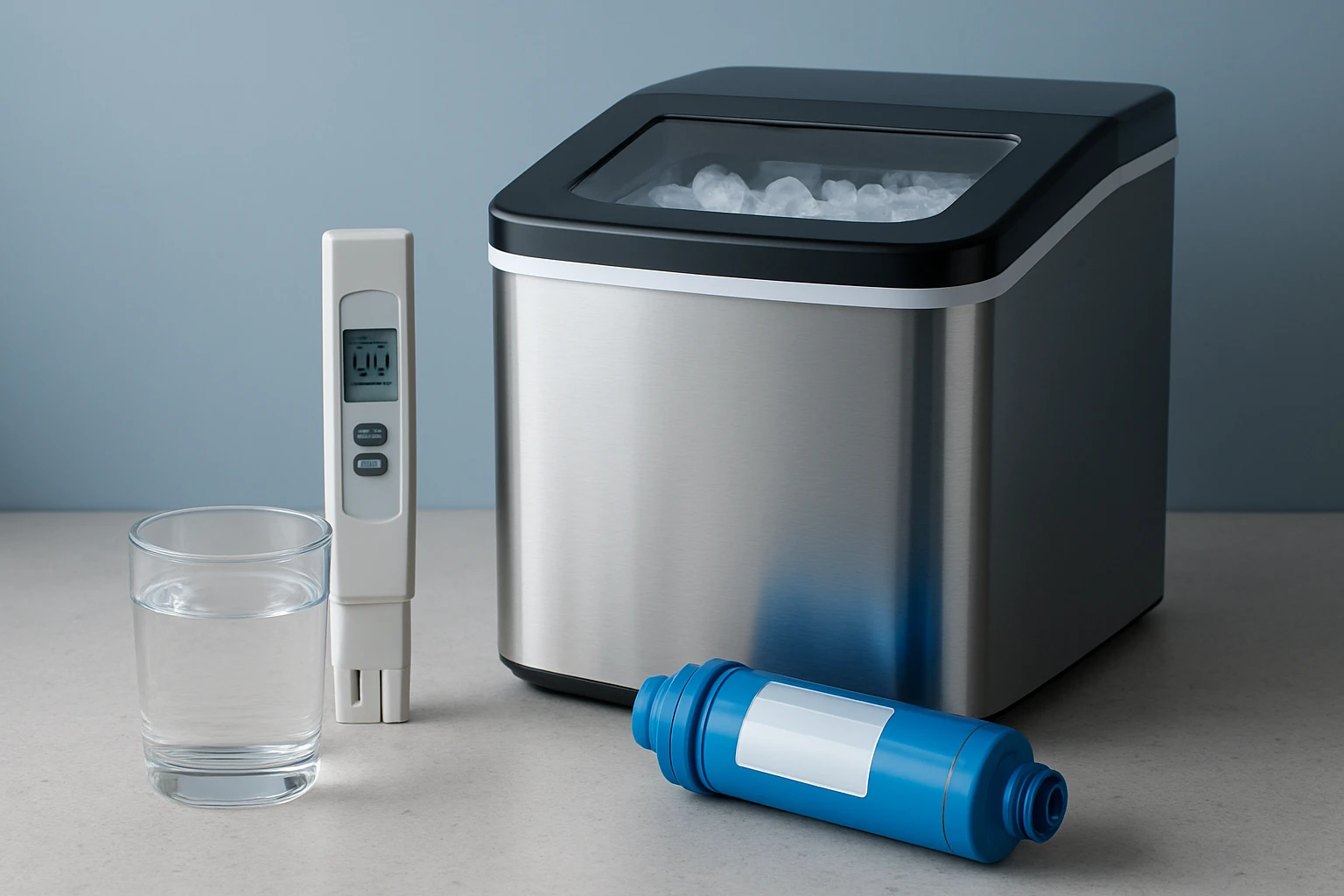
Testing TDS is straightforward with a handheld meter. The HM Digital TDS‑EZ Tester offers a measurement range of 0–9,990 ppm, 1 ppm resolution at lower levels, and a 3 % accuracy rating. Its large LCD display, auto‑off feature, and hold function make it suitable for both novice and experienced users.
To obtain a reliable reading, follow these steps:
- Rinse the probe with distilled water and gently dry it with a lint‑free cloth.
- Place the probe in a glass of water at room temperature, avoiding air bubbles.
- Press the power button and allow the meter to stabilize (approximately 2–3 seconds).
- Record the displayed ppm value; use the hold function to freeze the reading for documentation.
For best results, calibrate the meter periodically using the included 342 ppm NaCl solution. Calibration ensures the meter remains within its 3 % accuracy specification, which is critical when fine‑tuning water quality for ice production.
Adjusting Water Quality to Reach Ideal TDS
If the measured TDS falls outside the 50–150 ppm window, one can employ filtration or blending techniques. For high‑TDS water, a multi‑stage filtration system removes both sediment and dissolved minerals. The iSpring 3‑Stage Water Filter is a comprehensive solution that combines a polypropylene sediment filter, a coconut‑shell carbon block, and an iron‑manganese reducing cartridge.
Key specifications of the iSpring filter include:
- Capacity of 100,000 gal (approximately one year for a family of four).
- Removal of iron (up to 3.0 ppm) and manganese (up to 1.0 ppm), as well as chlorine, rust, and herbicides.
- Flow rate up to 15 GPM, ensuring minimal pressure loss for countertop appliances.
- NSF/ANSI certified performance, providing confidence in contaminant reduction.
Installation is simple: replace the existing cartridge in a standard 20" × 4.5" housing, then run water through the system for a few minutes to purge air. After installation, re‑measure TDS with the HM Digital meter; the expected reduction is often 30–70 % depending on the original water composition.
For water that is too low in TDS, a small amount of mineral blend can be added. Commercially available “water remineralization cartridges” introduce calcium and magnesium at controlled rates, raising TDS to the optimal range without compromising clarity.
Comparison and Selection Guide
The table below compares the two featured products based on criteria relevant to ice‑maker owners:
| Feature | iSpring 3‑Stage Filter | HM Digital TDS‑EZ Tester |
|---|---|---|
| Primary Function | Reduces sediment, chlorine, iron, manganese, and many organic contaminants. | Measures total dissolved solids from 0–9,990 ppm. |
| Price (USD) | $125.99 | $15.90 |
| Customer Rating | 4.7/5 (3,837 reviews) | 4.4/5 (7,609 reviews) |
| Installation / Use | Fits standard 20" × 4.5" housings; DIY replacement. | Handheld; no installation required. |
| Maintenance Interval | Approximately 100,000 gal (≈1 year for typical household). | Battery life ~1,000 hours; replace LR44 cells as needed. |
When selecting a product, consider the current water condition. If the primary goal is to lower high TDS, the iSpring filter offers comprehensive contaminant removal and long‑term cost efficiency. If the goal is precise measurement and ongoing monitoring, the HM Digital tester provides reliable data at a modest price.
Best Practices & Tips for Consistently Clear Ice
Beyond testing and filtration, several operational habits extend the life of a countertop ice maker and preserve ice clarity:
- Use filtered water consistently. Even after installing a whole‑house filter, run the ice maker with fresh filtered water for each batch to avoid residual scale.
- Clean the ice bin regularly. Residual mineral deposits can re‑enter the water cycle, raising TDS over time.
- Perform a monthly TDS check. Record readings in a log; trends can indicate when a filter cartridge needs replacement.
- Allow the machine to purge air. After filter changes, run a full cycle of water through the system before making ice to eliminate trapped air bubbles.
- Store the ice maker in a cool environment. Elevated temperatures accelerate scale formation and can affect the freezing cycle.
Implementing these practices ensures that the ice maker operates at peak efficiency, delivering ice that is both aesthetically pleasing and safe for consumption.
Frequently Asked Questions
- What is the ideal TDS range for countertop ice makers?
- The recommended range is 50–150 ppm. This level provides clear ice while preserving a mild mineral taste.
- Can I use distilled water in my ice maker?
- Distilled water has near‑zero TDS, which can lead to corrosion over time. Adding a small mineral blend restores a protective mineral balance.
- How often should I replace the iSpring filter?
- Replace after approximately 100,000 gallons of use, or once a year for an average household, whichever occurs first.
- Do I need to calibrate the HM Digital TDS‑EZ Tester?
- Calibration is recommended every 3–6 months using the supplied 342 ppm NaCl solution to maintain accuracy.
- Will a high TDS level affect the taste of ice?
- Yes; excessive minerals can impart a metallic or salty flavor, while very low TDS may result in flat‑tasting ice.
- Is a reverse‑osmosis system necessary?
- RO systems remove virtually all dissolved solids, producing ultra‑pure water. They are useful for extremely hard water but can be costly; a multi‑stage filter often provides sufficient reduction for ice makers.
Conclusion
Achieving crystal‑clear ice from a countertop ice maker hinges on maintaining an optimal TDS level of 50–150 ppm. Accurate measurement using a reliable meter such as the HM Digital TDS‑EZ Tester empowers users to monitor water quality, while the iSpring 3‑Stage Water Filter offers an effective method to lower high TDS and remove harmful contaminants.
By combining regular testing, appropriate filtration, and diligent maintenance, one can ensure that every ice cube is clear, clean, and ready for any beverage or culinary application. The practices outlined in this guide provide a roadmap for both new owners and seasoned users seeking to enhance their ice‑making experience.
Products Featured in This Guide
iSpring 3‑Stage Water Filter
Price: $125.99 | Rating: 4.7/5 (3,837 reviews)
Featured because it reduces iron, manganese, chlorine, and sediment, delivering water within the ideal 50–150 ppm TDS range for countertop ice makers.
HM Digital TDS‑EZ Tester
Price: $15.90 | Rating: 4.4/5 (7,609 reviews)
Featured because it provides precise, easy‑to‑read TDS measurements, enabling users to verify water quality before and after filtration.
