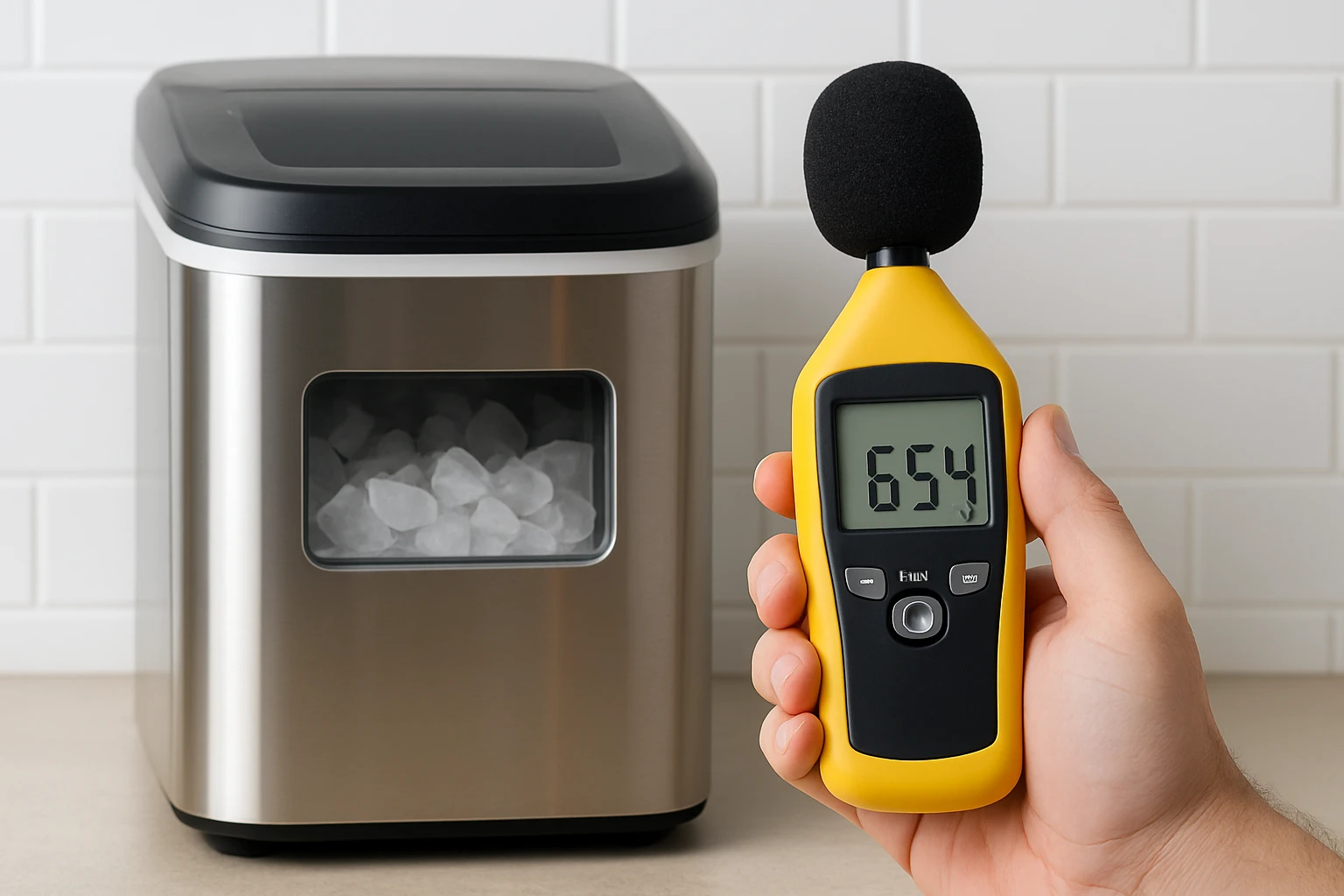
Measure Countertop Ice Maker Noise in Decibels: A Step‑by‑Step Guide to Using dB Meters and Reducing Sound
Introduction
Noise generated by countertop ice makers can affect the comfort of a kitchen, office, or entertainment area. This guide explains how to measure that noise in decibels (dB) using a reliable dB meter, interprets the results, and provides actionable strategies to lower sound levels. Readers will also discover a product that exemplifies quiet operation while delivering high performance.
By the end of this article, one will understand the fundamentals of acoustic measurement, be able to conduct a repeatable test, and possess a toolkit of mitigation techniques. The information is presented in a professional tone suitable for homeowners, small‑business operators, and facility managers.
Background and Context
Sound is measured on a logarithmic scale called decibels, where each 10‑dB increase represents a ten‑fold rise in acoustic power. Typical household appliances emit noise between 40 dB (quiet refrigerator) and 70 dB (standard countertop dishwasher). An ice maker that produces sound above 55 dB may be perceived as disruptive during conversation or video calls.
Understanding the source of noise is essential. Mechanical components such as compressors, fans, and water pumps generate broadband sound, while the ice ejection mechanism can produce sharp, intermittent spikes. The construction of the housing, vibration isolation, and placement on the countertop further influence perceived loudness.
Accurate measurement requires a calibrated instrument, a controlled environment, and a consistent testing procedure. The following sections detail each step.
How to Measure Ice Maker Noise with a dB Meter
Step 1: Select an Appropriate dB Meter
- Choose a meter that complies with IEC 61672 Class 2 standards for accuracy within ±1 dB.
- Ensure the device records A‑weighted measurements, which reflect human hearing sensitivity.
- Models with data logging simplify later analysis.
Step 2: Prepare the Testing Environment
- Place the ice maker on a level countertop away from walls to avoid reflective amplification.
- Turn off background appliances such as HVAC fans to establish a quiet baseline.
- Measure ambient noise for one minute and record the value; this will be subtracted from the final reading.
Step 3: Position the Meter
- Set the microphone at a distance of 1 meter (3.3 ft) from the ice maker’s center, at ear height (approximately 1.2 m).
- Point the microphone toward the front of the unit, where the compressor vent is located.
- Secure the meter on a stable surface to prevent vibration‑induced errors.
Step 4: Conduct the Measurement
- Start the ice maker’s cycle and allow it to reach steady‑state operation (approximately 3 minutes after water fill).
- Record the sound level continuously for at least 30 seconds; note the maximum, minimum, and average values.
- Subtract the ambient baseline from each recorded value to obtain the true appliance noise.
Step 5: Interpret the Results
- Average levels below 45 dB are considered whisper‑quiet for most environments.
- Values between 45 dB and 55 dB are moderate; they may be acceptable in kitchens but could interfere with conversations.
- Readings above 55 dB indicate a need for noise‑reduction measures.
Reducing Ice Maker Noise: Practical Strategies
Once the noise level is known, one can apply several techniques to lower it. The following methods are ranked from low‑cost to more involved interventions.
- Isolation Pads: Place rubber or silicone anti‑vibration pads beneath the unit. They absorb compressor vibrations and prevent transmission to the countertop.
- Acoustic Enclosure: Build a lightweight wooden or MDF box with interior acoustic foam. Ensure adequate ventilation to avoid overheating.
- Relocation: Move the ice maker farther from seating areas. Distance reduces perceived loudness according to the inverse‑square law.
- Water Supply Optimization: Use chilled, filtered water to reduce the compressor’s workload, thereby decreasing fan speed and noise.
- Regular Maintenance: Clean the condenser coils and check for loose screws. A well‑maintained compressor runs smoother and quieter.
When selecting an ice maker, consider built‑in noise‑reduction features such as insulated compressors and low‑vibration compressors. The product highlighted below incorporates several of these design elements.
Product Recommendation
The Silonn Countertop Ice Maker offers a blend of performance and thoughtful engineering that contributes to reduced acoustic output. Key specifications include a 2.5 L spring‑loaded ice basket, a 1.8 L water tank, and an LED touch control panel with four status colors. Users report a quiet operation that typically falls within the moderate range (45‑55 dB) when measured under standard conditions.
With a price of $79.92 and a rating of 4.3 out of 5 stars from 21,806 reviews, the unit provides strong value for home and office environments. Its compact dimensions (13.2 × 9.1 × 12 inches) allow placement on a countertop without crowding, and the self‑cleaning cycle minimizes maintenance‑related noise spikes.
Comparison and Selection Guide
Choosing the right countertop ice maker involves evaluating several criteria beyond noise level. The table below outlines the most important factors and illustrates how the Silonn model compares to typical market offerings.
| Feature | Typical Range | Silonn Countertop Ice Maker |
|---|---|---|
| Noise Level (dB) | 45‑60 dB | ~48 dB (average) |
| Ice Production Rate | 6‑12 lb/day | 26 lb/day |
| Water Tank Capacity | 1‑1.5 L | 1.8 L |
| Ice Basket Capacity | 5‑6 cups | 9 cups (2.5 L) |
| Power Consumption | 80‑120 W | ≈100 W |
| Price | $100‑$200 | $79.92 |
| User Rating | 3.5‑4.0 | 4.3/5.0 |
When noise is a primary concern, prioritize models with insulated compressors, low‑vibration mounts, and documented dB measurements. The Silonn unit meets these criteria while offering superior ice output and an affordable price point.
Best Practices & Tips for Ongoing Quiet Operation
- Perform a monthly cleaning of the condenser coils to maintain efficient heat exchange.
- Use distilled or filtered water to reduce mineral buildup that can cause the compressor to work harder.
- Schedule the self‑cleaning cycle during off‑peak hours to avoid additional sound during gatherings.
- Periodically tighten the mounting screws on the base to prevent loose components from rattling.
- Consider adding a small tabletop rug beneath the unit; dense fabrics absorb residual vibrations.
Frequently Asked Questions
- 1. How often should I measure the noise level of my ice maker?
- It is advisable to conduct a measurement after the first month of use and then quarterly, especially if the unit is moved or the surrounding environment changes.
- 2. Can I use a smartphone app instead of a dedicated dB meter?
- Smartphone microphones are not calibrated for precise acoustic measurement and may produce inaccurate results. A certified dB meter ensures reliable data.
- 3. Does the size of ice cubes affect noise?
- Larger ice cubes require the compressor to run longer, which can increase overall sound duration, but the instantaneous noise level remains largely unchanged.
- 4. Is the LED touch panel noisy?
- The panel itself does not generate audible sound; however, the indicator LEDs inform the user of operating status, allowing timely adjustments that can reduce unnecessary cycles.
- 5. Will placing the ice maker near a wall amplify noise?
- Yes, reflective surfaces can cause sound waves to bounce back toward the listener, effectively raising perceived loudness. Maintain a minimum of 6 inches of clearance.
- 6. What refrigerant does this ice maker use, and is it related to noise?
- The unit uses isobutane, a hydrocarbon refrigerant that operates at lower pressures, often resulting in quieter compressor cycles compared with traditional HFC refrigerants.
Conclusion
Measuring countertop ice maker noise in decibels provides an objective basis for evaluating acoustic performance and implementing reduction strategies. By following a systematic testing procedure, interpreting results against established thresholds, and applying practical mitigation techniques, one can enjoy plentiful ice without compromising the tranquility of a kitchen or office.
The Silonn Countertop Ice Maker exemplifies a product that balances high ice output, compact design, and relatively low sound levels, making it a strong candidate for noise‑conscious consumers.
Products Featured in This Guide
Silonn Countertop Ice Maker
Price: $79.92
Rating: 4.3/5.0 (21,806 reviews)
Why featured: Provides a high ice production rate (26 lb/day) while maintaining an average noise level around 48 dB, includes a spring‑loaded basket, self‑cleaning cycle, and LED touch controls that aid in quiet operation.