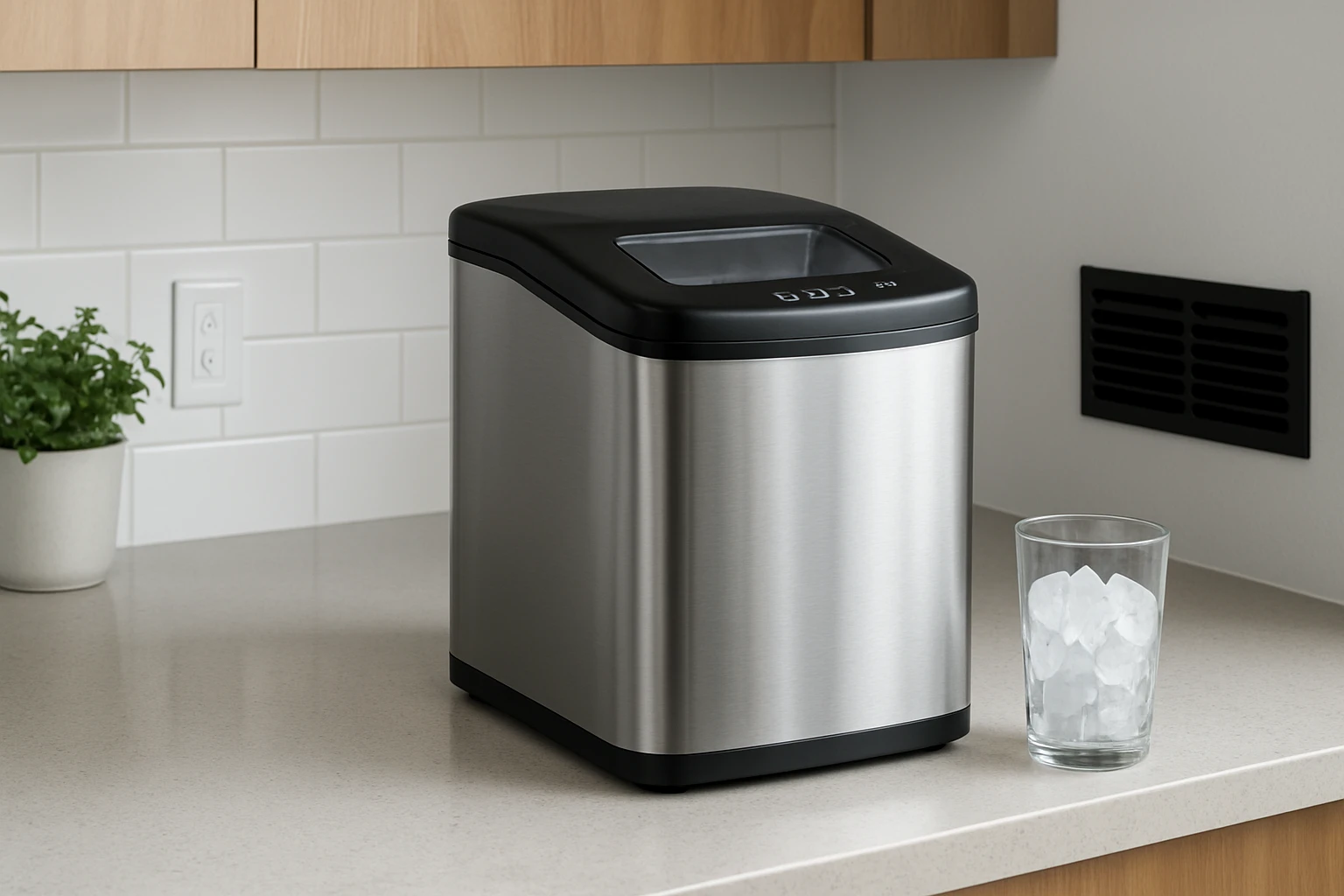
The Complete Guide to Countertop Ice Maker Placement and Ventilation: Expert Tips to Maximize Performance & Prevent Overheating
Introduction
Countertop ice makers have become essential appliances for modern kitchens, home bars, and even outdoor gatherings. This guide explains how to position these machines for optimal airflow, safety, and efficiency. Readers will learn the physics behind heat dissipation, practical placement strategies, and how to select a model that aligns with their spatial constraints. By the end, one will be equipped to prevent overheating while enjoying a steady supply of fresh ice.
Background/Context
All countertop ice makers operate on a refrigeration cycle that extracts heat from water and expels it through a condenser. The expelled heat must be vented to the surrounding air; otherwise, internal temperatures rise and performance degrades. Most portable units, such as the EUHOMY Portable Ice Maker, use a compact compressor that generates noticeable warmth during operation. Understanding this cycle is crucial for determining clearances, airflow paths, and power requirements.
Understanding Ice Maker Mechanics
The refrigeration cycle begins with water entering a chilled evaporator where it freezes into bullet‑shaped cubes. A compressor then compresses refrigerant gas, raising its temperature before it passes through a condenser coil. The condenser releases heat into the ambient environment; adequate ventilation allows this heat to dissipate quickly. When ventilation is insufficient, the compressor works harder, leading to louder operation and potential premature failure.
Key specifications that influence ventilation needs include compressor power (often measured in watts), daily ice production capacity, and water‑tank size. For example, the EUHOMY model features a 170 W compressor capable of producing up to 26.5 lb of ice per day, while the Silonn Portable Ice Maker uses a similarly powerful compressor to achieve the same daily output.
Temperature sensors and auto‑clean cycles are common safety features. They monitor internal conditions and shut the unit down if overheating is detected. Nevertheless, proper placement remains the most reliable method to avoid triggering these safeguards.
Optimal Placement Considerations
When selecting a location, prioritize a flat, stable surface that can support the unit’s weight. The EUHOMY Portable Ice Maker weighs 13.38 lb, and the Silonn model weighs 13.7 lb, making them easy to move but still requiring a sturdy countertop.
- Maintain a minimum clearance of 6 inches on all sides to allow unrestricted airflow.
- Avoid placing the machine directly against walls, cabinets, or appliances that emit heat, such as ovens or dishwashers.
- Position the unit near a power outlet but ensure the cord does not create a tripping hazard.
For multi‑unit households, consider a dedicated utility cart with wheels. This arrangement provides flexibility for seasonal use—moving the ice maker outdoors for a summer barbecue or into a RV for a road trip.
Ventilation Requirements
Effective ventilation hinges on two principles: heat extraction and air circulation. The condenser coils are typically located on the rear or sides of the appliance. The Frigidaire Bullet Ice Maker, for instance, features a rear‑mounted condenser that benefits from open space behind the unit.
To enhance airflow, one may use a low‑profile fan or simply ensure the surrounding area is not enclosed by curtains or clutter. In kitchens with limited counter space, a small metal shelf placed a few inches above the floor can provide the necessary gap for hot air to rise.
Do not cover the unit with decorative items or kitchen towels, as this can trap heat and cause the compressor to overheat. Regularly dust the condenser fins; accumulated dust acts as insulation and reduces heat transfer efficiency.
Power and Safety Guidelines
All countertop ice makers require a standard 120 V AC outlet. Verify that the circuit can handle the appliance’s amperage, especially when operating multiple devices simultaneously. The Frigidaire Compact Ice Maker draws approximately 150 W, well within typical household circuits.
Use a surge protector to guard against voltage spikes, which can damage sensitive electronic controls. Additionally, keep the water reservoir filled with clean, preferably filtered water to prevent mineral buildup that can impede cooling performance.
Never operate the machine in a damp environment without proper grounding, as moisture can increase the risk of electrical shock. Follow the manufacturer’s instructions for cleaning and maintenance; most models, including the Silonn Portable Ice Maker, feature a one‑touch self‑cleaning function that simplifies upkeep.
Product Recommendations
Below are four highly rated countertop ice makers that exemplify the principles discussed. Each product includes specific features that aid placement and ventilation.
EUHOMY Portable Ice Maker
This silver‑finished unit produces nine bullet‑shaped cubes in six minutes and can generate up to 26.5 lb of ice per day. Its compact dimensions (9.25 × 11.54 × 11.61 in) and built‑in carry handle make relocation effortless. A built‑in infrared sensor alerts users when the ice basket is full, and a one‑touch auto‑cleaning cycle reduces maintenance time. At $89.99, it holds a 4.5‑star rating from 1,689 reviews, indicating strong customer satisfaction.
Frigidaire Bullet Ice Maker
The Black Stainless model delivers 26 lb of ice daily and features a sleek stainless‑steel exterior that blends with modern kitchens. Its transparent window and digital LED panel provide real‑time status updates. With a 2.1‑qt water tank and a 1.5‑lb ice basket, it balances capacity with a small footprint (approximately 12 × 8 × 12 in). Priced at $86.39 and rated 4.3 stars by over 10,000 reviewers, it offers reliable performance for families.
Frigidaire Compact Ice Maker
This budget‑friendly option produces two size options of bullet ice in under six minutes, with a 2.3‑qt water reservoir. Its compact footprint (12.3 × 8.7 × 12.5 in) makes it ideal for apartments or office break rooms. The unit includes an automatic shut‑off when the ice basket reaches 1.5 lb, conserving energy. At $59.99 and a 4.3‑star rating from 3,709 reviewers, it delivers value without sacrificing quality.
Silonn Portable Ice Maker
Silonn’s silver model matches the EUHOMY’s ice‑making speed (six minutes per batch) and also produces up to 26 lb per day. Its dimensions (8.7 × 11.4 × 11.6 in) are the smallest among the four, making it perfect for limited countertop space. The unit includes a self‑cleaning function activated by a five‑second press, and an indicator light for water‑low and ice‑full alerts. Priced at $69.96 with a 4.4‑star rating from 5,927 reviews, it offers a compelling blend of size and features.
Comparison/Selection Guide
Choosing the right ice maker depends on three primary factors: production capacity, countertop space, and user‑friendly features. The table below summarizes key specifications.
| Feature | EUHOMY Portable | Frigidaire Bullet | Frigidaire Compact | Silonn Portable |
|---|---|---|---|---|
| Daily Ice Capacity | 26.5 lb | 26 lb | 26 lb | 26 lb |
| Water Tank Size | 1.2 L | 2.1 qt | 2.3 qt | 1.2 L |
| Ice Basket Capacity | 1.3 lb | 1.5 lb | 1.5 lb | 1.3 lb |
| Dimensions (in) | 9.25 × 11.54 × 11.61 | ≈12 × 8 × 12 | 12.3 × 8.7 × 12.5 | 8.7 × 11.4 × 11.6 |
| Price | $89.99 | $86.39 | $59.99 | $69.96 |
| Rating | 4.5/5 (1,689) | 4.3/5 (10,412) | 4.3/5 (3,709) | 4.4/5 (5,927) |
If space is at a premium, the Silonn Portable Ice Maker offers the smallest footprint while maintaining high production. For users who value a premium aesthetic and a larger water reservoir, the Frigidaire Bullet Ice Maker is the optimal choice. Budget‑conscious shoppers may gravitate toward the Frigidaire Compact model, which still delivers fast ice production.
Best Practices & Tips
- Allow at least six inches of clearance on every side; this simple step improves heat dissipation dramatically.
- Place the unit on a heat‑resistant surface; wooden countertops can warp if exposed to prolonged warmth.
- Schedule regular cleaning of the condenser using a soft brush or vacuum to prevent dust buildup.
- Use filtered or distilled water to reduce mineral scaling, which can impede cooling efficiency.
- Monitor the “ICE FULL” indicator and empty the basket promptly to avoid excess weight on the motor.
- During hot summer months, consider positioning the ice maker near an open window or a low‑speed fan to enhance ambient airflow.
FAQ
1. How often should I clean the condenser?
Cleaning the condenser once a month is sufficient for most households; increased dust levels may require bi‑weekly cleaning.
2. Can I connect a countertop ice maker to a water line?
Most portable models, including the four featured, are designed for manual water filling. Connecting to a permanent water line is not recommended without a specialized adapter.
3. Will the ice maker damage my countertop?
All units are lightweight and include rubber feet to prevent scratches. However, placing the appliance on a protective mat adds an extra layer of safety.
4. What noise level is normal?
Typical operating noise ranges from 40 dB to 45 dB, comparable to a quiet conversation. The EUHOMY and Silonn models report “ultra‑quieter” operation under 45 dB.
5. How long does a batch of ice take to melt?
Bullet‑shaped ice retains its shape longer than traditional cubed ice; under normal room temperature, a full basket may last 2‑3 hours before noticeable melting.
6. Is it safe to run the ice maker continuously?
Continuous operation is safe provided the unit has adequate ventilation and the water reservoir is refilled regularly. Auto‑shutoff features prevent overheating.
Conclusion
Proper placement and ventilation are the cornerstones of reliable countertop ice maker performance. By respecting clearance guidelines, ensuring clean airflow, and selecting a model that matches one’s spatial and capacity needs, users can enjoy uninterrupted ice without the risk of overheating. The products highlighted—EUHOMY Portable Ice Maker, Frigidaire Bullet Ice Maker, Frigidaire Compact Ice Maker, and Silonn Portable Ice Maker—each embody these principles in distinct ways, offering options for every budget and kitchen layout.
Products Featured in This Guide
EUHOMY Portable Ice Maker
Price: $89.99 | Rating: 4.5/5 (1,689 reviews)
Featured for its rapid 6‑minute ice cycle, compact dimensions, and one‑touch auto‑cleaning function, making it ideal for small kitchens and mobile use.
Frigidaire Bullet Ice Maker
Price: $86.39 | Rating: 4.3/5 (10,412 reviews)
Featured for its sleek stainless‑steel finish, large 2.1 qt water tank, and transparent window that simplifies monitoring and maintenance.
Frigidaire Compact Ice Maker
Price: $59.99 | Rating: 4.3/5 (3,709 reviews)
Featured for its affordable price, dual‑size bullet ice options, and compact footprint suitable for apartments and office spaces.
Silonn Portable Ice Maker
Price: $69.96 | Rating: 4.4/5 (5,927 reviews)
Featured for its ultra‑compact size, self‑cleaning function, and reliable 6‑minute ice production, making it perfect for limited countertop spaces.
Frequently Asked Questions
What is the ideal distance to place a countertop ice maker from walls or cabinets?
Leave at least 2‑3 inches of clearance on all sides to allow heat to dissipate and prevent airflow blockage.
How should I position a countertop ice maker to ensure proper ventilation?
Place it on a flat, stable surface near a wall or window with open space behind and above the unit so warm air can rise and escape.
Can I use a countertop ice maker outdoors?
Yes, if the ambient temperature is above 50°F (10°C) and the unit is kept dry, but protect it from direct sunlight and rain.
What are the signs that my ice maker is overheating?
Reduced ice production, a hot exterior surface, and the compressor running continuously indicate overheating.
Does the size of the water reservoir affect placement requirements?
Larger reservoirs add weight, so ensure the countertop can support the unit and keep the water source nearby to avoid spills.