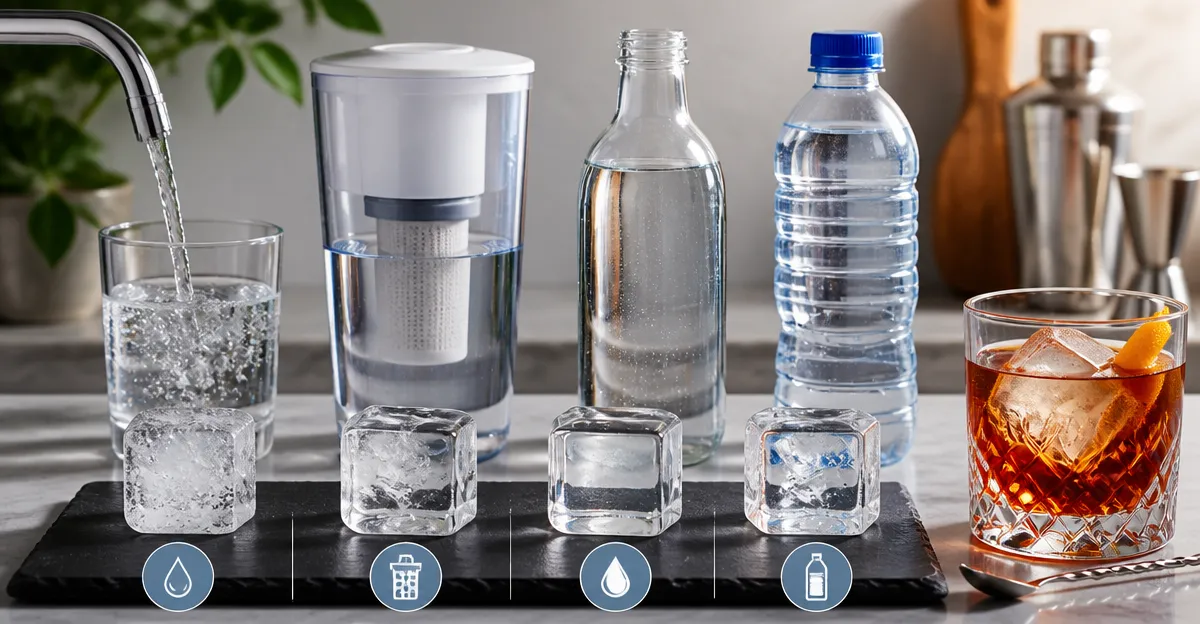
How to Compare Water Sources for Cocktail Ice: Choose the Best Tap, Filtered, Distilled, or Bottled Water for Clear, Flavorful Cubes
Introduction
One of the most subtle yet impactful elements of a well‑crafted cocktail is the quality of the ice. Clear, flavor‑neutral cubes melt slowly, allowing the drink to stay balanced without dilution. In this guide, the reader will learn how to evaluate tap, filtered, distilled, and bottled water, understand the science behind ice clarity, and apply practical steps to produce professional‑grade ice at home. Mastering these techniques will elevate home bartending and impress guests with consistently crisp beverages.
What You’ll Need
- Access to the water sources you wish to compare (tap, filtered, distilled, bottled).
- Clear silicone or stainless‑steel ice molds (size depends on cocktail style).
- Digital water‑testing kit or simple pH strips.
- Clean, food‑grade containers for boiling or filtering water.
- Optional reference books for systematic comparison: Miller's American Quilts and Samplers.
Step 1: Assess Your Water Source
The first step is to identify the characteristics of each water source available in your kitchen. Tap water is convenient but may contain chlorine, minerals, or sediment that cause cloudiness. Filtered water, typically produced by activated‑carbon pitchers, reduces chlorine and some minerals, improving taste and clarity. Distilled water is free of dissolved solids, offering the highest potential for crystal ice, while bottled spring water provides a consistent mineral profile that can enhance subtle flavor notes. Document the source, temperature, and any visible particulates before proceeding.
To keep the evaluation organized, create a simple table noting price per gallon, rating, and any known treatment methods. For example, a 5‑gallon jug of distilled water may cost more upfront but yields superior clarity, whereas a filtered pitcher costs less and offers convenience. This systematic approach mirrors the comparative methodology found in Miller's American Quilts, which teaches readers how to compare values across categories.
Step 2: Test Water Quality
Testing water quality provides objective data that guides the selection process. Use a digital TDS (total dissolved solids) meter or inexpensive pH strips to measure mineral content and acidity. Tap water often reads between 150‑300 ppm TDS, filtered water may drop to 50‑100 ppm, distilled water approaches 0 ppm, and bottled spring water typically sits around 30‑80 ppm. Record each reading alongside the source name.
Beyond numeric values, perform a simple visual test: fill a clear glass with each water source, freeze it in a standard ice cube tray, and examine the resulting cubes for cloudiness. Clouds indicate trapped air or minerals, which can be mitigated by boiling or filtering. This hands‑on comparison is akin to the systematic approach described in Samplers, where one learns to evaluate multiple samples side by side.
Step 3: Choose the Appropriate Ice Mold
The shape and material of the ice mold influence clarity and melt rate. Silicone molds are flexible and release cubes easily, but they may retain faint odors if not cleaned thoroughly. Stainless‑steel molds conduct temperature evenly, reducing the formation of bubbles during freezing. For high‑end cocktails, consider large, single‑large cubes that melt slower and dilute less quickly.
Select a mold that matches the water source you have decided to use. If you are working with distilled water, a stainless‑steel mold maximizes the benefit of low mineral content. If you prefer a budget‑friendly approach, a silicone mold works well with filtered water, provided you rinse it between uses.
Step 4: Prepare the Water for Freezing
Preparation steps differ based on the water source. For tap water, a brief boil for three minutes drives off chlorine and reduces dissolved gases that cause cloudiness. Allow the boiled water to cool to room temperature before pouring it into the mold. For filtered water, a single pass through the filter is sufficient; however, a second filtration can further reduce particles.
Distilled water requires no boiling, but a gentle pour helps avoid introducing air bubbles. Bottled spring water should be used directly from the sealed container, ensuring it has not been exposed to heat that could alter its mineral balance. When preparing any water, fill the mold only to the recommended level to avoid overflow and uneven freezing.
Step 5: Freeze the Ice Properly
Place the filled molds on the coldest shelf of the freezer, ideally at a temperature of –18 °C (0 °F) or lower. Avoid frequent door openings, as temperature fluctuations cause uneven crystal formation. For the clearest cubes, consider a directional freezing method: place the mold in an insulated cooler inside the freezer, allowing ice to form from the top down while trapping impurities at the bottom, which can be discarded.
After 6‑8 hours, check the cubes for firmness. If they are still soft, allow additional time. Once fully frozen, remove the molds and gently release the cubes. If any cloudiness remains, you can rinse the cubes briefly with cold distilled water to remove surface particles.
Step 6: Store Ice for Maximum Freshness
Proper storage preserves clarity and prevents off‑flavors. Transfer the cubes to a sealed, food‑grade plastic bag, removing as much air as possible before sealing. Store the bag in the freezer compartment away from strong‑smelling foods. For cocktail bars that require large quantities, a dedicated ice bin lined with a silicone mat can keep cubes organized and protected.
When ready to use, avoid exposing the cubes to room temperature for extended periods; instead, add them directly to the shaker or mixing glass. This practice ensures the ice melts slowly, maintaining the intended dilution ratio and flavor balance of the cocktail.
Tips & Pro Tips
- Use a clear water source for the most visually appealing ice; the eye can influence perceived taste.
- Boiling tap water not only removes chlorine but also reduces dissolved gases that create bubbles.
- For a subtle mineral boost, experiment with lightly carbonated spring water, but freeze it in a sealed container to prevent fizz loss.
- Consider a two‑stage filtration system if you frequently use tap water; it can lower TDS to levels comparable with bottled water.
- When using directional freezing, discard the first 10‑15 % of ice that forms, as it contains the highest concentration of impurities.
Troubleshooting
Problem: Ice cubes appear cloudy after freezing.
Solution: Verify that the water was boiled (if tap) or filtered adequately. Use directional freezing to push impurities to one side, and discard the cloudy portion.
Problem: Cubes have a faint off‑taste.
Solution: Ensure storage bags are airtight and keep the freezer free of strong‑smelling foods. Replace the bag regularly.
Problem: Ice sticks to the mold.
Solution: Rinse the mold with a thin layer of distilled water before filling, or use a silicone mold with a non‑stick coating.
Conclusion
By systematically assessing tap, filtered, distilled, and bottled water, testing quality, and following precise preparation steps, one can produce clear, flavor‑neutral ice cubes that enhance any cocktail. The guide demonstrates how to use inexpensive tools, such as a digital TDS meter and proper molds, while offering optional reference books for structured comparison. Implement these practices, and the reader will consistently serve drinks that look as good as they taste.
Products Mentioned in This Guide
Frequently Asked Questions
Which water source produces the clearest cocktail ice?
Distilled water is usually the clearest because it contains no minerals or impurities that cause cloudiness.
How does filtered water compare to tap water for ice clarity?
Filtered water removes many sediments and chlorine, resulting in clearer cubes than standard tap water, though not as clear as distilled.
Will bottled spring water affect the flavor of my cocktails?
Yes, bottled spring water can impart subtle mineral flavors that may enhance or alter the drink’s taste.
What simple test can I use to evaluate water quality before freezing?
Use pH strips or a digital water‑testing kit to check acidity and mineral content; lower mineral levels generally yield clearer ice.
Do I need special molds to achieve professional‑grade ice?
Clear silicone or stainless‑steel molds help control freezing direction and produce larger, slower‑melting cubes for cocktail use.