Introduction
Understanding how ice interacts with cocktail bitters is essential for achieving a harmonious flavor profile. This guide will teach the reader how to select the appropriate ice form, prepare it correctly, and integrate it with bitters to enhance aroma and mouthfeel. By the end of the article, one will be able to craft cocktails that showcase the subtle nuances of both ice and bitters without compromising balance. The information presented is valuable for home bartenders who seek professional results without investing in expensive equipment.
What You'll Need
- Optish Ice Cube Trays – 99 round ice cubes per pack, stackable design, food‑grade PP material.
- Mooues Whiskey Ice Mold – 2‑inch clear silicone spheres, BPA‑free, produces crystal‑clear ice.
- High‑quality cocktail bitters of your choice (e.g., aromatic, orange, chocolate).
- Standard bar tools: jigger, mixing glass, bar spoon, strainer.
- Fresh ingredients for the cocktail base (spirits, juices, syrups).
Step 1: Evaluate the Cocktail Style and Choose the Ice Form
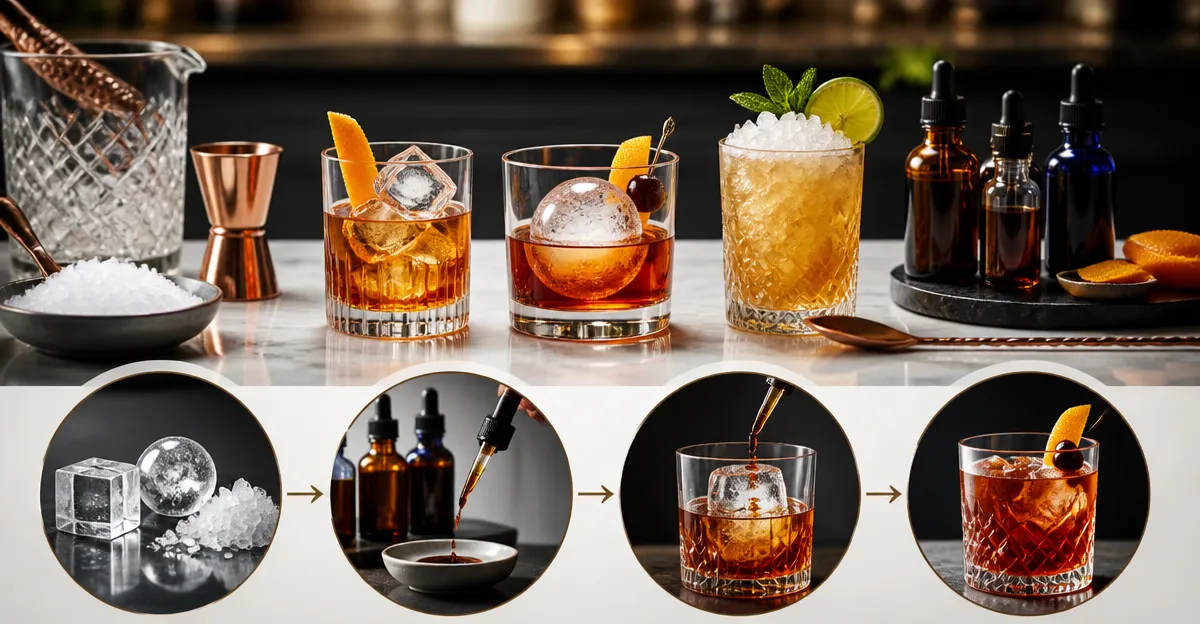
The first decision revolves around the intended drinking experience. Light, aromatic cocktails such as a Gin & Tonic benefit from small cubes that chill quickly while preserving delicate botanicals. Rich, spirit‑forward drinks like an Old Fashioned thrive with large spheres that melt slowly, allowing bitters to meld gradually. For tropical, fruit‑forward drinks, crushed ice creates a slushy texture that dilutes at a predictable rate, balancing sweet and bitter components. Selecting the appropriate ice type sets the foundation for flavor integration.
Step 2: Prepare the Ice Using the Appropriate Tool
Once the ice form has been selected, the next step is to produce it with a reliable tray or mold. For small or medium‑sized cubes, the Optish Ice Cube Trays are ideal because they are stackable, saving freezer space, and their flexible food‑grade plastic ensures effortless release. Fill each compartment with water, allowing excess to drain through the built‑in hole, then freeze for 4–8 hours. For premium spheres, the Mooues Whiskey Ice Mold employs directional freezing to push impurities downward, producing crystal‑clear 2‑inch balls that melt three times slower than standard cubes. Fill the silicone mold, tap gently to level the water, and freeze for 24–30 hours for optimal clarity.
Step 3: Combine Ice, Bitters, and Cocktail Base
With the ice ready, assemble the cocktail in a mixing glass or shaker, depending on the style. Add the measured spirit, complementary mixers, and a precise dash of bitters—typically 2–4 drops for a standard cocktail. Introduce the prepared ice: cubes for fast chilling, spheres for gradual dilution, or crushed ice for a frothy texture. Stir or shake gently; the ice surface area dictates the rate of temperature change and dilution, which directly influences how the bitters unfold on the palate. Observe the visual cue: clear spheres retain their shape longer, allowing the bitters to release slowly, whereas crushed ice creates a uniform chill that integrates the bitter notes instantly.
Step 4: Serve, Garnish, and Observe
Presentation reinforces the sensory experience. Place the ice in a chilled glass, ensuring that spheres sit at the bottom for a striking visual effect, while cubes can be arranged to showcase uniformity. Add a garnish that complements the chosen bitters—citrus peel for aromatic bitters, a cherry for chocolate‑infused bitters, or a sprig of rosemary for herbal varieties. Allow the drink to rest for 15–20 seconds; this pause lets the bitters interact with the melting ice, achieving a balanced mouthfeel before the first sip. Encourage the reader to note how the ice type altered the perception of bitterness and overall harmony.
Tips & Pro Tips
- Use filtered water for ice to avoid mineral‑induced cloudiness and off‑flavors.
- For crystal‑clear spheres, pre‑boil water, let it cool, then fill the Mooues mold to reduce trapped air.
- When using cubes, keep the tray covered to prevent odor absorption from the freezer.
- Experiment with bitters intensity: start with a single dash and increase gradually until the desired balance is achieved.
- Store crushed ice in a sealed container to maintain texture and prevent freezer burn.
Troubleshooting
Ice is cloudy. This usually indicates dissolved gases or impurities; using boiled or distilled water and allowing it to cool before freezing resolves the issue.
Ice sticks to the tray. Ensure the tray is completely dry before filling; a thin film of oil can cause adhesion. Silicone molds like the Mooues are less prone to this problem due to their non‑stick properties.
Bitters overwhelm the drink. Reduce the number of dashes or dilute the cocktail slightly with a splash of water; the ice will then moderate the bitterness as it melts.
Conclusion
Pairing ice with cocktail bitters is a nuanced process that hinges on selecting the correct ice form, preparing it with reliable tools, and integrating it thoughtfully into the drink. By following the steps outlined above, one can achieve a perfectly balanced cocktail where the chill, dilution, and bitter aromatics complement each other harmoniously. The recommended Optish Ice Cube Trays and Mooues Whiskey Ice Mold provide affordable, high‑quality solutions for both casual and serious bartenders. Experiment with different bitters and ice types to discover personal preferences and elevate every cocktail experience.
Products Mentioned in This Guide
Frequently Asked Questions
What type of ice works best with cocktail bitters?
Clear, dense ice such as 2‑inch spheres or large cubes melts slowly, preserving the bitters' aroma longer.
How does ice affect the flavor of bitters in a drink?
Ice chills and dilutes the cocktail gradually, allowing the bitters' subtle notes to unfold without being overpowered.
Should I freeze bitters before adding them to a cocktail?
No; keep bitters at room temperature and add them before or during mixing so they integrate evenly with the ice‑chilled drink.
How can I prevent cloudiness in ice that masks bitters?
Use filtered water and a silicone mold or tray, then store the ice in a sealed bag to keep it crystal‑clear.
Can I reuse ice from a previous cocktail when adding bitters?
Reuse is not recommended because melted water dilutes the drink and can mute the bitters' flavor.