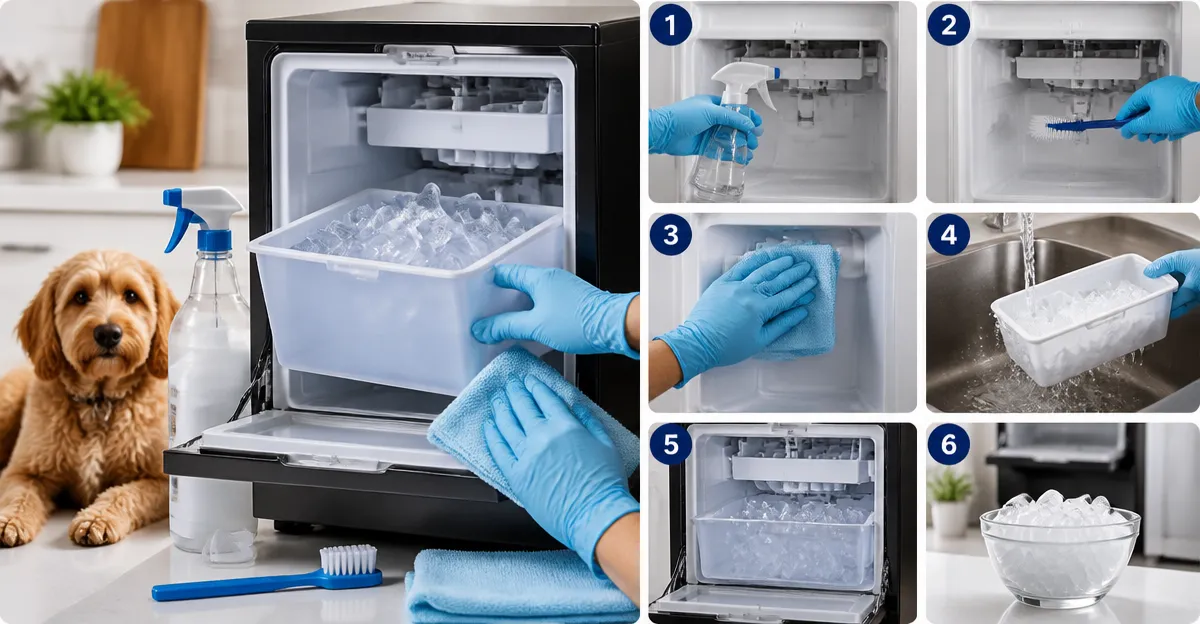
How to Sanitize Your Ice Maker After Pet Contamination: Step-by-Step Cleaning & Disinfection
Introduction
Pets can inadvertently introduce bacteria, hair, and unpleasant odors into household appliances. When an ice maker becomes contaminated, the resulting ice may pose health risks and spoil the taste of beverages. This guide explains how to restore an ice maker to a safe, crystal‑clear state using proven cleaning techniques and reliable Amazon products. Readers will learn the rationale behind each step, how to select the most effective cleaning agents, and how to maintain the machine to prevent future incidents.
The process combines mechanical removal of debris, chemical descaling to dissolve mineral buildup, and a final food‑grade disinfection. By following the instructions, one can protect family health, extend the lifespan of the appliance, and enjoy ice that tastes as pure as water from a mountain spring.
What You’ll Need
- Soft microfiber cloths
- Food‑grade sanitizer (e.g., diluted bleach solution or commercial sanitizer)
- Measuring cup or graduated cylinder
- Large container for water disposal
- Access to clean, cold tap water
- ACTIVE Ice Machine Cleaner Tablets
- Affresh Ice Machine Cleaner
- ACTIVE Ice Maker Cleaner Solution
All of the listed products are available on Amazon and have been selected for their nickel‑safe formulas, high customer satisfaction, and compatibility with a broad range of ice makers.
Step 1: Remove Ice and Discard Contaminated Water
The first priority is to eliminate any ice that may have been exposed to pet saliva, fur, or waste. Turn off the machine, unplug it, and carefully scoop out all ice using a clean bowl. Transfer the ice to a disposable container and discard it. Next, drain the water reservoir completely by opening the drain valve or removing the water tray, depending on the model.
Why this matters: Residual water can harbor pathogens, and removing it prevents the spread of contaminants during subsequent cleaning stages. This step also prepares the system for a thorough chemical soak.
Product recommendation: For models with a built‑in drain line, the ACTIVE Ice Machine Cleaner Tablets can be placed directly into the empty reservoir after it is refilled with water, ensuring immediate contact with any remaining biofilm.
Step 2: Pre‑Rinse the Reservoir and Internal Pathways
Fill the reservoir with clean, cold tap water up to the maximum fill line. Run a short ice‑making cycle (or the “flush” mode if the unit has one) to push water through the internal tubing, pump, and evaporator plate. Collect the expelled water in a bucket and discard it.
This rinse removes loose debris, pet hair, and surface grime, creating a cleaner environment for the descaling agents to work effectively.
Product recommendation: The Affresh Ice Machine Cleaner is formulated to dissolve mineral deposits while remaining gentle on nickel and stainless steel components. Its 3‑use bottle, priced at $13.98 with a 4.7‑star rating (5,387 reviews), provides a cost‑effective pre‑rinse solution when mixed according to the label.
Step 3: Apply a Descaling Tablet or Solution
Measure the appropriate amount of cleaning agent based on the product instructions. For tablet‑based cleaners, drop one ACTIVE Ice Machine Cleaner Tablet into the empty reservoir. For liquid solutions, pour 4 oz of ACTIVE Ice Maker Cleaner Solution into one gallon of water, then fill the reservoir with this mixture.
Why this works: The citric‑acid‑based formula safely dissolves calcium carbonate and limescale without corroding nickel, stainless steel, or aluminum‑plated parts. The descaling action restores the clear‑ice formation by removing the microscopic film that traps odors and discoloration.
Both products are nickel‑safe, have high customer approval (4.5‑star rating for ACTIVE tablets, 5,477 reviews; 4.5‑star rating for ACTIVE solution, 2,265 reviews), and are designed for a full year of maintenance, making them economical choices for regular upkeep.
Step 4: Run the Cleaning Cycle
Close the reservoir lid, re‑plug the unit, and activate the cleaning or “deep‑clean” cycle if the manufacturer provides one. If no dedicated cycle exists, simply start an ice‑making program and allow the machine to run until the water is fully processed through the system. This typically takes 30–45 minutes.
During this phase, the descaling agent circulates through the pump, tubing, and evaporator, breaking down stubborn scale and eliminating organic residues introduced by pets.
After the cycle completes, turn the machine off and let it sit for an additional 10 minutes to ensure the solution has fully penetrated all internal surfaces.
Step 5: Thorough Rinse and Flush
Drain the cleaning solution completely. Refill the reservoir with fresh, cold water and run at least two full cycles, discarding the water each time. This double‑flush removes any remaining cleaning agent, dissolved minerals, and loosened debris.
It is essential to perform a final rinse because residual citric acid can impart a sour taste to ice if not fully removed. Follow the “Rule of Three” recommended by many manufacturers: discard the first three batches of ice after cleaning, then taste the fourth batch to confirm clarity and neutrality.
Product note: The Affresh Ice Machine Cleaner bottle provides enough solution for three cleaning cycles, ensuring that the rinse phase can be completed without purchasing additional product.
Step 6: Disinfect the Interior
Prepare a food‑grade sanitizer by mixing one tablespoon of unscented household bleach with one gallon of water (approximately 0.5% sodium hypochlorite). Fill the reservoir with this solution and run a short “flush” cycle lasting 5‑10 minutes. Immediately drain the sanitizer and perform a final water rinse as described in Step 5.
Disinfection eliminates any remaining bacteria, viruses, or fungi that may have been introduced by pet contact. The bleach concentration is low enough to be safe for metal components yet potent enough to achieve a 99.9% reduction in microbial load.
Alternative: If one prefers a commercial sanitizer, the same ACTIVE Ice Maker Cleaner Solution can be used in a diluted form (2 oz per gallon) for a milder disinfecting effect, though bleach remains the gold standard for high‑risk contamination.
Tips & Pro Tips
- Schedule a deep clean every three to six months, or immediately after any pet incident.
- Use a dedicated brush with soft bristles to scrub the water reservoir lid and drip tray before the chemical soak.
- When using tablets, ensure they are fully dissolved before starting the cleaning cycle to avoid clogging the pump.
- Store cleaning agents in a cool, dry place away from direct sunlight to preserve potency.
- Document the cleaning date in a kitchen log; regular maintenance records help identify patterns of contamination.
Troubleshooting
| Problem | Possible Cause | Solution |
|---|---|---|
| Ice remains cloudy after cleaning | Residual scale or insufficient rinse | Run an additional descaling cycle with a fresh tablet and perform two more water flushes. |
| Unpleasant odor persists | Hidden biofilm in the pump | Apply a second round of sanitizer (bleach solution) and let it sit for 15 minutes before rinsing. |
| Machine fails to produce ice | Clogged water inlet or pump blockage | Inspect and clean the inlet filter; if blockage remains, repeat the tablet cleaning step. |
Conclusion
Sanitizing an ice maker after pet contamination requires a systematic approach: removal of contaminated ice, mechanical rinsing, chemical descaling, thorough flushing, and final disinfection. By employing nickel‑safe products such as ACTIVE Ice Machine Cleaner Tablets, Affresh Ice Machine Cleaner, and ACTIVE Ice Maker Cleaner Solution, one can achieve a safe, clear‑ice output without damaging the appliance. Consistent maintenance not only protects health but also extends the equipment’s service life, ensuring that every glass of ice‑cold water remains pure and refreshing.
Products Mentioned in This Guide
Frequently Asked Questions
How can I tell if my ice maker has been contaminated by a pet?
Look for pet hair, unusual odors, discoloration, or a sudden change in ice taste or texture.
What is the safest homemade sanitizer for an ice maker?
A diluted bleach solution (1 tablespoon bleach per gallon of water) is food‑grade safe when rinsed thoroughly.
How often should I deep‑clean my ice maker to prevent future pet contamination?
Perform a deep clean every 3–4 months, or immediately after any pet‑related spill.
Can I use commercial descaling products on my ice maker?
Yes, choose a non‑acidic, food‑grade descaler and follow the manufacturer’s dilution instructions.
What steps should I follow after cleaning to ensure the ice maker is fully sanitized?
Run at least two full ice cycles, discarding the first batch, and wipe the interior with a clean, damp cloth before refilling.