Introduction
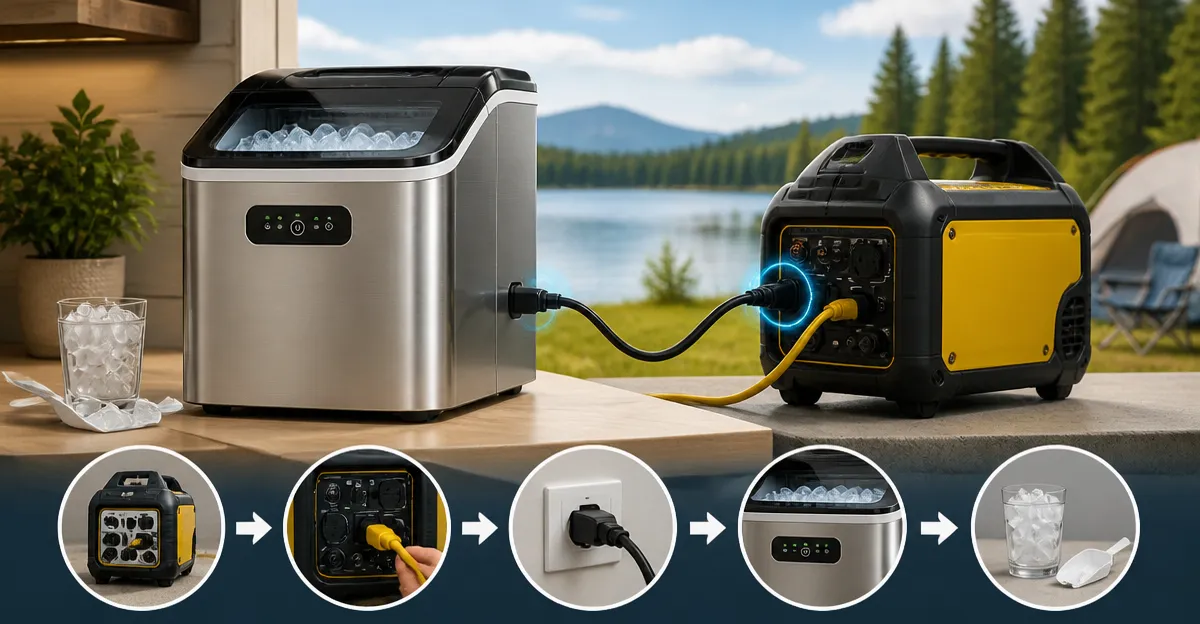
This guide explains how to operate a countertop ice maker using a portable generator. Readers will understand generator capacity, wiring requirements, safety precautions, and best‑practice maintenance. By following the steps, one can enjoy fresh nugget or bullet ice at outdoor events, RV trips, or during power outages without risking equipment damage.
The information combines real‑world product data with practical electrical theory, ensuring that the advice is both accurate and actionable for an intermediate audience.
What You’ll Need
- Portable generator with sufficient wattage (minimum 600 W continuous for most countertop models)
- Heavy‑duty extension cord (12‑gauge, 15 ft or shorter)
- Surge‑protected power strip (optional for multiple devices)
- One of the recommended ice makers (see product list)
- Water source (distilled or filtered for best taste)
- Basic tools: screwdriver, voltage meter, and level
Step 1: Assess Generator Capacity
Begin by confirming the generator’s continuous wattage rating. The EUHOMY Nugget Ice Maker draws approximately 150 W during production and spikes to 300 W when the compressor starts. Adding a 10 % safety margin, a generator rated at 600 W continuous will comfortably handle this unit and leave headroom for lighting or a small refrigerator.
For a Frigidaire Portable Ice Maker, the power draw is similar, with a maximum of 200 W during the ice‑making cycle. The same 600 W generator is adequate.
If the intended use involves a commercial‑grade model such as the EUHOMY Commercial Ice Maker, which can require up to 1,200 W, a larger inverter generator (minimum 1,500 W continuous) is required.
Step 2: Choose the Correct Extension Cord
A high‑quality 12‑gauge cord minimizes voltage drop, especially when the generator is placed outdoors and the ice maker is on a countertop inside a tent or RV. The cord should be rated for at least 1,500 W to accommodate potential surge currents.
When using the EUHOMY Countertop Ice Maker, the 1.2 qt water tank and self‑cleaning cycle add a brief extra load; a 12‑gauge cord ensures stable power delivery.
Step 3: Position the Ice Maker and Generator Safely
Place the ice maker on a stable, level surface near a water source. The Silonn Portable Ice Maker includes a built‑in carry handle, making it easy to move the unit without disturbing the generator’s exhaust path.
Keep the generator at least three feet away from the ice maker and any open windows to avoid carbon monoxide exposure. Position the generator on a non‑flammable surface, such as a concrete pad, and ensure proper ventilation.
Step 4: Connect and Power Up
1. Verify that the generator is running at a stable 120 V output using a voltage meter.
2. Plug the extension cord into the generator’s grounded outlet.
3. Connect the ice maker’s power cord to the extension cord.
4. Fill the water reservoir with distilled or filtered water, as recommended by the manufacturer.
For the EUHOMY Nugget Ice Maker, the one‑touch “ADD WATER” alert will illuminate once the tank reaches the proper level. Press the start button; the unit will begin producing chewable nugget ice within six minutes.
If operating multiple units, use a surge‑protected power strip to prevent overloads, but do not exceed the generator’s rated capacity.
Step 5: Operate and Monitor Ice Production
During the first hour, monitor the generator’s fuel level and the ice maker’s “ICE FULL” indicator. The Frigidaire Portable Ice Maker produces bullet‑shaped cubes every seven minutes; the transparent window allows you to see when the 1.5 lb basket is full.
For larger events, the EUHOMY Commercial Ice Maker can generate up to 100 lb of ice per day, with an automatic overflow prevention system that protects the generator from excessive draw.
Maintain a water temperature below 20 °C to improve ice clarity and reduce compressor load. Regularly activate the self‑cleaning cycle (one‑touch on most models) to prevent mineral buildup that could increase power consumption.
Step 6: Shut Down and Store
When ice production is no longer needed, press the power‑off button on the ice maker and allow the compressor to idle for a minute before disconnecting the power cord. This reduces the risk of a sudden voltage spike.
Drain any remaining water from the reservoir to avoid stagnant water that could cause mold. Store the ice maker in a dry location, and if the unit will not be used for more than a week, run the self‑cleaning cycle with a vinegar‑water solution (5 % vinegar) to keep internal components fresh.
Tips & Pro Tips
- Fuel Management: Keep a spare fuel can on hand and rotate fuel every three months to prevent degradation.
- Noise Reduction: Place the generator on a rubber mat to dampen vibration, which also reduces noise that could interfere with outdoor gatherings.
- Water Quality: Using distilled water extends the life of the ice maker’s internal components and yields clearer ice.
- Power Buffer: A small UPS (uninterruptible power supply) can smooth out brief voltage dips caused by generator start‑up surges.
- Temperature Monitoring: If ambient temperature exceeds 30 °C, the generator may need an additional cooling fan to maintain optimal performance.
Troubleshooting
| Problem | Possible Cause | Solution |
|---|---|---|
| Ice maker does not start | Generator voltage low or extension cord damaged | Check voltage with meter; replace cord if resistance is high. |
| Ice production is slow | Water temperature too high or low water level | Use cooler water and refill tank to the max‑fill line. |
| Noise louder than usual | Compressor over‑working due to mineral buildup | Run the self‑cleaning cycle with a vinegar‑water mix. |
| Generator shuts off during cycle | Exceeding wattage limit | Reduce load by disconnecting non‑essential devices. |
Conclusion
Operating a countertop ice maker on a generator is straightforward when the correct power calculations, wiring, and safety measures are observed. By selecting a suitable generator, using a proper extension cord, and following the step‑by‑step process, users can enjoy continuous ice production at campsites, outdoor parties, or during emergencies. The recommended products provide reliable performance, low noise, and convenient self‑cleaning features that complement portable power solutions.
Frequently Asked Questions
What minimum generator wattage is required for a typical countertop ice maker?
Most countertop ice makers need at least 600 W continuous power, so choose a generator rated 600 W or higher.
Can I use any extension cord with a generator‑powered ice maker?
Use a heavy‑duty 12‑gauge cord no longer than 15 ft to avoid voltage drop and overheating.
Is a surge‑protected power strip necessary?
It’s optional but recommended to protect the ice maker from generator spikes and to safely power additional devices.
How do I check that my generator can handle the ice maker’s startup surge?
Measure the ice maker’s surge watts (often 2‑3 × continuous) and ensure the generator’s peak rating exceeds that value.
What safety steps should I follow when wiring the ice maker to a generator?
Turn off the generator, use grounded cords, keep the unit outdoors or well‑ventilated, and verify correct voltage with a meter before plugging in.