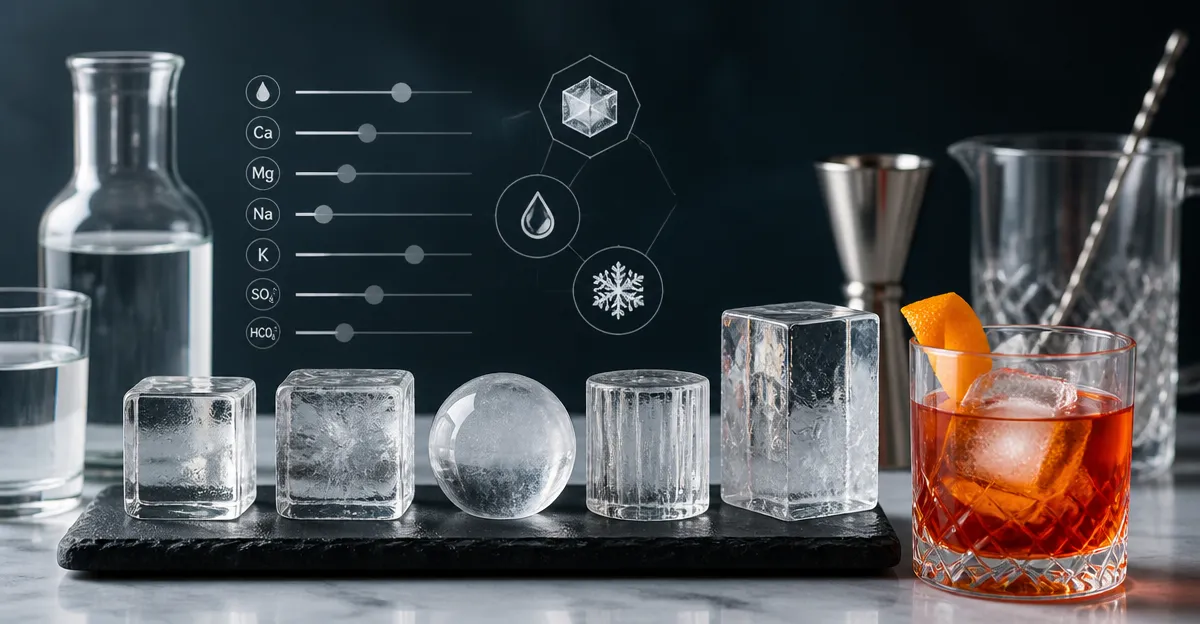
The Complete Guide to Ice Mineral Profiles for Cocktails: How Water Chemistry Impacts Flavor, Clarity & Texture
Introduction
When a bartender speaks of the perfect cocktail, the conversation often turns to the quality of the ice. Ice is not merely frozen water; it is a carrier of minerals, a temperature regulator, and a visual element that influences perception. This guide explores how the mineral composition of water shapes the flavor, clarity, and texture of ice, and consequently, the drinking experience. Readers will learn the science behind water hardness, the role of dissolved solids, and practical methods for creating crystal‑clear ice at home. In addition, the guide recommends two premium ice‑making products that embody the principles discussed, helping enthusiasts achieve professional‑grade results without expensive equipment.
Background and Context
Water chemistry is defined by the concentration of dissolved minerals such as calcium, magnesium, sodium, and potassium. Hard water, which contains high levels of calcium and magnesium, tends to produce cloudy ice because the minerals form microscopic air pockets during freezing. Soft water, on the other hand, yields clearer ice but may lack the subtle mineral taste that can enhance certain spirits. The balance between hardness and purity determines how quickly ice melts, how it dilutes a drink, and how it reflects light in a glass.
Historically, bartenders have used techniques such as directional freezing and pre‑boiling to reduce dissolved gases and improve clarity. Modern silicone molds, like the ones featured later in this article, replicate natural freezing processes, allowing home users to achieve laboratory‑grade results with minimal effort. Understanding the underlying chemistry empowers the enthusiast to select the appropriate water source, adjust mineral content, and choose the right mold for the desired ice geometry.
Key Concepts in Ice Mineral Profiles
Three primary factors influence the final ice product: mineral concentration, freezing rate, and mold design. Mineral concentration affects taste and melt rate. A higher total dissolved solids (TDS) level can impart a faint mineral flavor that complements whiskey or aged rum, while a low TDS level preserves the pure taste of delicate gin or vodka.
Freezing rate determines crystal size. Slow, directional freezing encourages the formation of large, uniform crystals that exclude impurities, resulting in transparent ice. Rapid freezing traps air and minerals, producing a cloudy appearance and a softer texture.
Mold design shapes the surface area to volume ratio. Larger cubes or spheres melt more slowly, reducing dilution. The geometry also influences visual appeal; a perfectly clear sphere refracts light like a gemstone, enhancing the cocktail’s presentation.
Product Recommendations
To apply the concepts above, two products stand out for their ability to produce clear, slow‑melting ice while minimizing mineral interference.
The first product, True Cubes Clear Ice Cube Mold, utilizes BPA‑free silicone to create four 2"×2"×2" cubes. The mold mimics natural directional freezing, allowing regular tap water to yield ice that is up to 98% pure, removing most total dissolved solids. With a rating of 4.4 out of 5 stars from 4,425 reviewers, it is praised for its ease of use and consistent results.
The second product, Berlinzo Clear Ice Ball Mold, produces four 2.4‑inch spheres. Its BPA‑free silicone construction and non‑stick surface ensure effortless removal, while the larger surface area reduces melt speed, keeping cocktails colder longer. The mold is marketed as an ideal gift for whiskey lovers, emphasizing the visual impact of a crystal‑clear sphere.
Comparison and Selection Guide
| Feature | True Cubes Cube Mold | Berlinzo Ball Mold |
|---|---|---|
| Ice Size | 2"×2"×2" cubes | 2.4" diameter spheres |
| Material | BPA‑free silicone | BPA‑free silicone |
| Purification Rate | Removes up to 98% of TDS | Reduces impurities through slow freezing |
| User Rating | 4.4/5 (4,425 reviews) | Not listed |
| Ideal For | Cocktails requiring rapid chilling and easy stacking | Whiskey, bourbon, and Old Fashioned presentations |
Choosing between the two depends on the intended cocktail style. For high‑volume bars that favor mixed drinks, the cube mold offers quick cooling and convenient storage. For spirit‑forward drinks where visual elegance is paramount, the ball mold provides a slower melt and a striking aesthetic.
Best Practices & Tips
- Use filtered or distilled water when possible; this reduces mineral content and improves clarity.
- Boil water for three minutes, then let it cool to room temperature before filling the mold. Boiling expels dissolved gases that cause cloudiness.
- Set the freezer temperature to 0°F (-18°C) or lower. A colder environment encourages directional freezing.
- For the True Cubes Clear Ice Cube Mold, fill the tray only to the recommended level and allow 18‑22 hours for full crystallization.
- When using the Berlinzo Clear Ice Ball Mold, submerge the bottom of the mold in warm water for 15 seconds to release the sphere without cracking.
- Store finished ice in a sealed bag to prevent freezer burn, which can introduce off‑flavors.
- Experiment with mineral additives such as a pinch of sea salt or calcium carbonate to subtly enhance the flavor profile of whiskey‑based drinks.
Frequently Asked Questions
- Why does my ice appear cloudy even when I use filtered water? Cloudiness often results from trapped air bubbles formed during rapid freezing. Slowing the freeze by using a silicone mold and a colder freezer mitigates this issue.
- Can I reuse the same water for multiple batches of ice? Reusing water can increase mineral concentration, leading to taste changes. It is advisable to start with fresh water for each batch to maintain consistent flavor.
- Do larger ice spheres dilute drinks less than cubes? Yes, because spheres have a lower surface‑area‑to‑volume ratio, they melt more slowly, delivering a cooler drink with reduced dilution.
- Is BPA‑free silicone safe for long‑term use? BPA‑free silicone is food‑grade and does not leach harmful chemicals, making it suitable for repeated freezing cycles.
- How can I test the hardness of my tap water? Home testing kits are available at hardware stores; they measure calcium and magnesium concentrations, providing a hardness rating in ppm.
- Will adding mineral salts improve the taste of my cocktails? Adding a small amount of mineral salts can enhance mouthfeel and complement spirits that benefit from a subtle mineral backbone, such as rye whiskey.
- Do these molds work in standard home freezers? Both molds are designed for conventional freezers set at 0°F (-18°C). No special equipment is required.
Conclusion
The chemistry of water profoundly influences the quality of ice, and by extension, the overall cocktail experience. By controlling mineral content, employing directional freezing, and selecting the appropriate mold geometry, one can produce clear, slow‑melting ice that elevates flavor, reduces dilution, and enhances visual appeal. The True Cubes Clear Ice Cube Mold and the Berlinzo Clear Ice Ball Mold embody these principles, offering accessible solutions for both home enthusiasts and professional bartenders.
Products Featured in This Guide
True Cubes Clear Ice Cube Mold
Rating: 4.4/5.0 (4,425 reviews)
Why featured: Provides a BPA‑free silicone tray that removes up to 98% of total dissolved solids, delivering crystal‑clear 2" cubes that melt slowly and preserve cocktail integrity.
Berlinzo Clear Ice Ball Mold
Rating: Not listed
Why featured: Produces 2.4‑inch crystal‑clear spheres that melt slower than cubes, ideal for whiskey and bourbon presentations, and includes an XL storage bag for convenience.