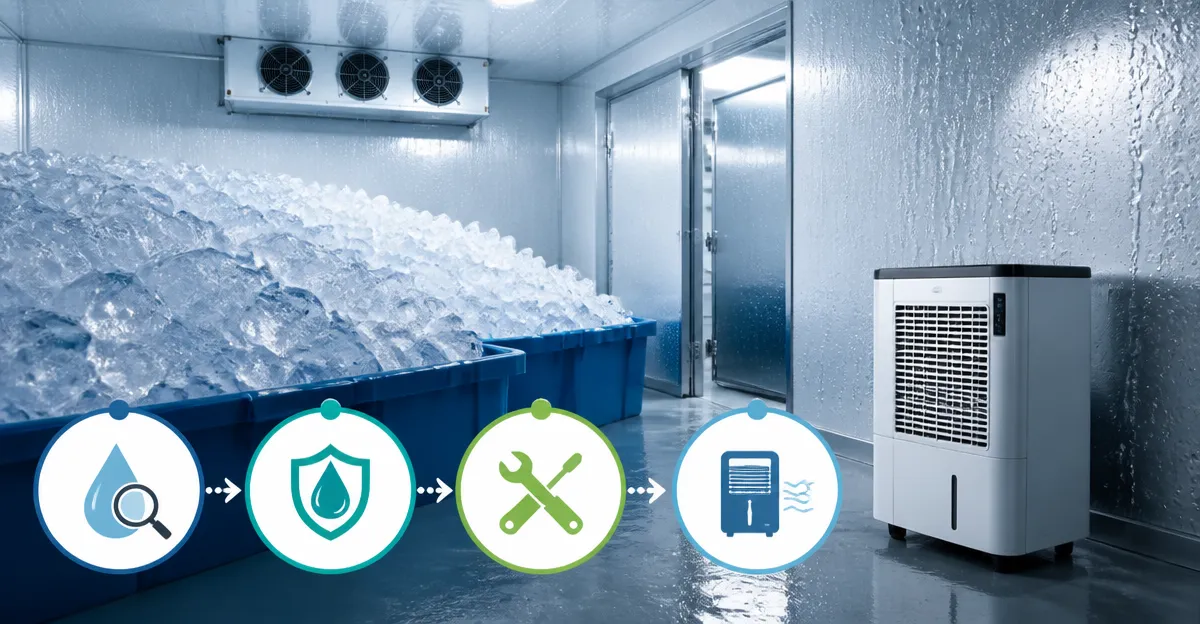
How to Manage Ice Storage Condensation Events: Causes, Prevention, and Step‑by‑Step Solutions
Ice storage systems are increasingly used for thermal regulation in commercial and residential settings. When condensation forms on the exterior of the storage unit, it can lead to mold growth, structural damage, and reduced efficiency. This guide explains the underlying causes, offers proven prevention techniques, and provides a detailed, actionable workflow that includes recommended dehumidification tools.
Readers will learn how to assess the environment, select appropriate equipment, monitor humidity levels, and maintain a dry condition over the long term. By following the steps, one can protect assets, lower energy costs, and extend the lifespan of the ice storage installation.
What You Will Need
- Commercial‑grade dehumidifier with built‑in pump (e.g., ALORAIR 180 PPD LGR Dehumidifier)
- Flexible drainage hose (typically included with the dehumidifier)
- Digital hygrometer for precise humidity readings
- Insulation blankets or vapor barriers for pipe and conduit protection
- Protective gloves and safety goggles
- Basic hand tools (screwdriver, wrench)
Step 1: Diagnose the Condensation Source
Begin by inspecting the ice storage enclosure during both peak cooling and ambient temperature periods. Look for water droplets on the outer shell, pipe sleeves, and any vent openings. Record temperature and relative humidity with a digital hygrometer; values above 60 % RH in a cold environment often indicate excess moisture in the surrounding air.
Identify whether the moisture originates from ambient humidity, inadequate insulation, or a leak in the condensate drainage system. In many cases, the condensation is a result of warm, moist air contacting the cold surface of the storage tank, causing the water vapor to condense similarly to dew on a glass.
Document the findings with photographs and note the square footage of the area being cooled. This data will guide the sizing of the dehumidification equipment in the next step.
Understanding the root cause prevents unnecessary purchases and ensures that the chosen solution directly addresses the problem.
Step 2: Deploy a Commercial‑Grade Dehumidifier
Position a high‑capacity dehumidifier near the ice storage unit to remove ambient moisture efficiently. The ALORAIR 180 PPD LGR Dehumidifier is designed for large spaces up to 2,300 sq ft, extracting up to 180 pints per day at saturation. Its 210 CFM airflow and built‑in pump make it ideal for continuous operation in crawl spaces and basements where ice storage units are often installed.
Why this model? The unit offers automatic pump drainage, eliminating the need for manual water removal, and includes a 19.6‑ft hose that can reach floor drains or external sump pits. The auto‑defrost feature allows the dehumidifier to operate in temperatures as low as 41 °F without frost buildup, preserving energy efficiency during cold cycles.
Set the target humidity between 30 % and 45 % RH, which is optimal for preventing condensation on cold surfaces. Enable the AUTO ON/OFF function so the unit cycles on only when humidity exceeds the set point, reducing wear and electricity consumption.
Secure the unit on a level surface, connect the drain hose to a suitable disposal point, and verify that the pump is primed according to the manufacturer’s instructions. The 6‑year limited warranty provides confidence in long‑term reliability.
Step 3: Optimize Airflow and Insulation
Effective airflow prevents pockets of stagnant, moist air from forming around the storage tank. Install the dehumidifier’s intake and exhaust vents at opposite sides of the enclosure to create a cross‑draft. Use fans or ducting if the space is confined.
Insulate any exposed piping, vent ducts, and the outer shell of the ice storage unit with vapor‑barrier blankets. This reduces the temperature differential that drives condensation. Ensure that insulation seams are sealed with appropriate tape to avoid gaps.
Regularly check that the dehumidifier’s filter remains clean; a clogged filter reduces airflow and can cause the unit to overheat. The ALORAIR model includes a washable filter that can be removed and rinsed without tools.
By combining proper airflow with insulation, one creates a controlled micro‑environment that minimizes moisture migration onto cold surfaces.
Step 4: Manage Drainage and Water Removal
If the built‑in pump cannot reach a gravity drain, consider a secondary pump system or a portable condensate pump. The Moiswell 200 Pint Commercial Dehumidifier also features a built‑in pump capable of moving water vertically up to 16.4 ft, providing flexibility for installations where floor drains are not directly adjacent.
Why choose Moiswell for this step? Its larger 200‑pint capacity offers a margin of safety in extremely humid climates, and the included 16.4‑ft hose can be routed to a remote drain or outside discharge point. The unit’s large rear wheels and detachable handles facilitate repositioning during maintenance.
Connect the pump’s discharge hose to a sealed container or a floor drain, ensuring that the hose is free of kinks. Verify that the pump activates automatically when the water level reaches the sensor threshold.
Regularly inspect the hose for wear and replace it if cracks appear, as a leaking hose can re‑introduce moisture into the environment.
Step 5: Monitor and Adjust Humidity Settings
After the dehumidifier is operational, monitor humidity levels at least twice daily for the first week. Use the digital hygrometer to compare readings at the dehumidifier’s location and directly adjacent to the ice storage surface.
If humidity remains above the target range, increase the dehumidifier’s fan speed or lower the set point by five percent increments. Conversely, if the environment becomes overly dry (<30 % RH), raise the set point to prevent static electricity buildup on sensitive equipment.
Document any adjustments in a logbook, noting the date, time, and ambient conditions. This record assists in fine‑tuning the system and provides evidence for maintenance schedules.
Periodic calibration of the hygrometer ensures accuracy; many devices require recalibration every six months.
Tips & Pro Tips
- Place the dehumidifier on a vibration‑absorbing mat to reduce noise and protect the compressor.
- When working in confined crawl spaces, wear a respirator to avoid inhaling mold spores that may have formed prior to remediation.
- Use a UV‑light air purifier in conjunction with the dehumidifier to inhibit microbial growth on damp surfaces.
- Schedule quarterly maintenance: clean filters, inspect pump hoses, and verify that the auto‑defrost cycle engages correctly.
Troubleshooting
| Problem | Possible Cause | Solution |
|---|---|---|
| Unit shuts off prematurely | Water tank full or pump blockage | Empty tank, clear hose, ensure pump inlet is not obstructed. |
| Humidity does not drop | Insufficient capacity for space size | Upgrade to a higher‑capacity unit such as the Moiswell 200 Pint model. |
| Frost on coils | Ambient temperature below defrost threshold | Verify auto‑defrost is enabled; if not, manually initiate a defrost cycle. |
| Excessive noise | Loose components or uneven flooring | Tighten mounting bolts and place unit on a level surface. |
Conclusion
Effective management of ice storage condensation requires a systematic approach: diagnose the source, deploy a capable dehumidifier, optimize airflow, ensure reliable drainage, and continuously monitor humidity. By integrating commercial‑grade tools such as the ALORAIR 180 PPD LGR Dehumidifier, the Moiswell 200 Pint model, or the AVAHUM 160 Pint unit, one can achieve consistent moisture control with minimal manual effort.
Implementing the steps outlined in this guide will safeguard equipment, improve energy efficiency, and reduce long‑term maintenance costs. Remember that regular inspection and timely adjustments are key to sustaining a dry, healthy environment around your ice storage system.
Products Mentioned in This Guide
Frequently Asked Questions
What causes condensation on the exterior of an ice storage unit?
Warm, humid air contacts the cold surface of the unit, causing water vapor to condense and form droplets.
How can a commercial‑grade dehumidifier prevent ice storage condensation?
It removes excess moisture from the surrounding air, keeping relative humidity below the dew point and stopping condensation formation.
Why is a digital hygrometer essential for managing ice storage condensation?
It provides accurate, real‑time humidity readings so you can adjust dehumidifier settings before condensation occurs.
What role do insulation blankets or vapor barriers play in condensation control?
They create a thermal barrier that reduces surface temperature differences and blocks moisture migration into the unit’s exterior.
How often should I inspect and maintain the dehumidifier and drainage system?
Check the unit and hose weekly for ice buildup or clogs, and clean the filter and water collection tank monthly to ensure optimal performance.